


Why Are Quality Sheds Expensive? Real Costs Explained
Table of Contents
- Why Quality Sheds Cost More: The Short Answer
- Storage Shed Material Comparison: Where Your Money Goes
- Foundation Requirements for Storage Sheds (And What They Add to the Bill)
- Cost of Building a Shed vs Buying: The Hidden DIY Math
- Supply Chain, Labor, and Permits: The Costs You Never See
- Longevity ROI: Why Paying More Upfront Saves Money Later
- How to Judge Whether a Shed Is Worth the Price
- Frequently Asked Questions
Last Updated: September 13, 2026
Why Quality Sheds Cost More: The Short Answer
Quality sheds are expensive because the price reflects structural integrity, not just square footage. A shed that holds up through a decade of storms, snow load, and summer heat is built from heavier framing, better roofing materials, and corrosion-resistant panels, and those materials cost real money. Labor, delivery, foundation work, and permit fees add to the total before a single tool goes inside.
If you have ever stood in a big-box aisle wondering why two sheds that look identical carry wildly different price tags, you are asking the right question. The answer is not marketing markup. It is what happens behind the siding.
Below, we break down exactly where the money goes, so you can tell a genuinely well-built shed from one that just looks the part.
Storage Shed Material Comparison: Where Your Money Goes
Material choice drives most of the price gap. Galvanized steel, resin, and wood each carry different costs for raw material, weather resistance, and upkeep, and each suits a different climate and budget.
Galvanized Steel vs. Resin vs. Wood
Galvanized steel sheds cost more upfront than basic resin models because the steel is coated to resist corrosion, and the panels are stamped and reinforced rather than molded thin. They handle wind resistance and snow load capacity better than most alternatives, which matters if you live where winter bites.
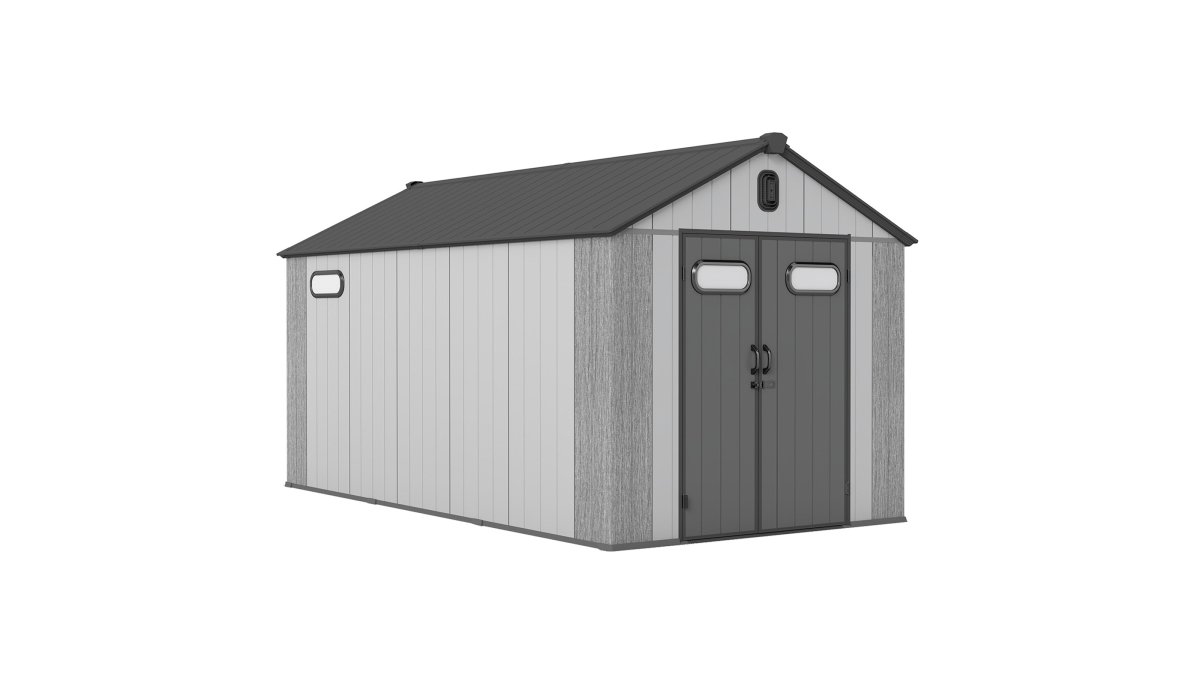
Resin sheds sit in the middle. They never rot and never need painting, but cheaper resin panels can grow brittle in extreme cold. Higher-grade resin, like the kind used in the 8x16Ft Resin Outdoor Storage Shed with Carpet, holds up far better than the bargain versions.

Wood sheds often cost the most to build well. Nominal lumber and pressure-treated wood are not cheap, and a wood shed needs a moisture barrier, regular sealing, and periodic repairs. Skip that maintenance and you will replace rotted framing within a few seasons.
| Material | Upfront Cost | Maintenance | Best For |
|---|---|---|---|
| Galvanized steel | Higher | Low | Storm-prone, snowy regions |
| Resin | Mid-range | Very low | Wet climates, low upkeep |
| Wood | Highest | High | Custom builds, aesthetics |
Foundation Requirements for Storage Sheds (And What They Add to the Bill)
Foundation requirements for storage sheds are the cost most buyers forget. A shed needs a level, stable base, and depending on size and local rules, that can mean a gravel pad, a concrete slab, or a pier-and-beam setup. Site preparation alone can run into real money once you account for grading, leveling, and materials.
A gravel pad is the budget option, but it settles over time and can let moisture creep under the floor. A concrete slab costs more but gives you a rock-solid base and better moisture control. For larger sheds, a proper foundation is not optional; it is what keeps the walls square and the doors closing years down the road.
Here is where the hidden math starts to bite. If you buy a shed that needs a slab, you are paying for concrete, labor, and curing time on top of the shed itself. That is a big part of why a "cheap" shed can end up costing more than a well-built one that sits on a simpler base.
Cost of Building a Shed vs Buying: The Hidden DIY Math
The cost of building a shed vs buying looks lopsided on paper, and that is exactly the trap. DIY appears cheaper because you are not paying for labor. In practice, the gap closes fast once you count the costs that never make it onto a lumber-list spreadsheet: tool acquisition, waste disposal, permit fees, and the price of your own mistakes. Most first-time builders underestimate the total by a wide margin because they only budget for the visible materials.
The Line Items DIY Budgets Always Miss
A common pattern is to price out framing lumber, siding, roofing, and hardware, then stop. Here is what actually lands on the ledger:
- Tool rental or purchase. A framing nailer, circular saw, miter saw, level, chalk line, and ladder add up fast. If you do not already own them, renting for a weekend project is often cheaper than buying, but the rental clock starts the moment you pick up the tool and keeps running through every rework trip.
- Waste disposal. Cutoffs, damaged panels, and packaging do not vanish. A dumpster rental or a series of trips to a transfer station is a real cost, and some municipalities charge by weight.
- Permit and inspection fees. Many jurisdictions require a permit for sheds above a certain square footage, and the fee is separate from the shed itself. Inspections may also require your presence during work hours, which is a soft cost if you are taking time off.
- Fasteners and connectors. Structural screws, joist hangers, hurricane ties, and flashing are not cheap, and skipping them is how sheds fail.
- Rework. Cut a rafter wrong and you buy more lumber. Set the frame out of square and the siding never lines up. Every error is a second trip to the store and a second hit to the budget.
The Time Cost Nobody Prices In
A first-time build can eat multiple weekends, and that time has an opportunity cost. If you would otherwise be working, the value of those hours can easily exceed the labor you saved by not buying a factory-built unit. Add the cost of a second person for lifting walls and roofing panels, and the DIY math tilts further.
Where Buying Wins the Math
Buying a factory-built shed shifts that risk to the manufacturer. The panels arrive cut, drilled, and tested, and on-site assembly is far faster than building from raw stock. The manufacturer absorbs the waste, the rework, and the tooling cost, and you get a warranty instead of a pile of cutoffs. That is the real reason a quality shed's price tag can beat a DIY build once every hidden line is counted.
Supply Chain, Labor, and Permits: The Costs You Never See
Three costs sit invisibly inside every shed price: raw material volatility, labor overhead, and permit fees. None of them show up in a showroom, and all of them move the final number. Understanding the mechanism behind each one is what separates a buyer who can judge a price from one who just reacts to it.
Raw Material Volatility: Why the Same Shed Costs More This Fall
Lumber, steel, and resin are commodities, and their prices move with the broader market. When demand for new housing spikes, framing lumber gets bid up, and that increase flows into every shed that uses it. Steel prices track global scrap and energy costs, so a mill shutdown or a tariff change can ripple into panel pricing within months. Resin is tied to petrochemical feedstocks, which means oil market swings eventually show up in the price of a plastic shed.
Labor: The Skilled-Hands Premium
Framing standards, wiring for ventilation, and roofing all take skilled hands, and skilled labor is not cheap. The labor line includes not just the carpenter's hourly rate but also the overhead of running a shop: insurance, equipment maintenance, and the cost of keeping trained workers on payroll between jobs. Factory-built efficiency reduces that burden by moving most of the work into a controlled setting where jigs and repeatable processes cut the per-unit labor hours. That is one reason a pre-fabricated kit can undercut a custom build even when the materials are comparable.
Permit Fees and Zoning Rules That Change Your Budget
Building codes and zoning rules vary by jurisdiction, and they can add real cost. Many areas require a permit for sheds above a certain size, and some homeowners associations restrict height, placement, or materials. The mechanism is straightforward: once a shed crosses a size threshold, it may be classified as an accessory structure, which triggers engineering requirements for wind and snow loads. In high-wind or heavy-snow regions, those requirements can force heavier framing, additional anchoring, and stamped plans, all of which raise the price of the shed itself, not just the permit.
Before you buy, check with your local permitting office; the U.S. Small Business Administration's local assistance guide is a useful starting point for finding the right office. Permit fees and inspection requirements are not optional, and skipping them can force you to tear down or relocate a shed later. That is a cost no price tag warns you about.
Longevity ROI: Why Paying More Upfront Saves Money Later
A better-built shed costs more once and less every year after. That is the cost-to-value ratio in plain terms. A cheap shed that fails in five years means you pay twice, plus the hassle of moving everything out and starting over.
Long-term value comes from the parts you cannot see: pressure-treated framing, a proper moisture barrier, heavy-duty hardware, and roofing that sheds water instead of pooling it. These are the features that separate a shed that lasts from one that limps.
Run the numbers over a decade and the pattern is clear. A shed that survives fifteen years at a higher price usually beats two cheap sheds that each die in seven.
How to Judge Whether a Shed Is Worth the Price
Judge a shed by its materials, framing, and hardware, not by how it photographs. Walk through this checklist before you commit.
- Confirm the panel material and coating (galvanized steel, quality resin, or treated wood)
- Check framing thickness and whether it meets local framing standards
- Look for a moisture barrier and ventilation systems
- Ask about snow load capacity and wind resistance ratings
- Verify roofing materials and how water drains off the roof
- [ ]
- Confirm delivery logistics
- Check permit and zoning requirements for your lot
For a large, storm-ready option, our 13'x20' Metal Shed with Double Front Doors & Side Entry Door uses anti-UV galvanized steel coating for corrosion resistance, and its double doors plus side entry make it genuinely usable as a workshop or equipment store. If you want something smaller and lower-maintenance, the XWT012 6x8ft Plastic Storage Shed covers lawn and garden gear without the upkeep of wood.


A well-chosen shed is not a splurge. It is storage capacity, weather resistance, and peace of mind rolled into one purchase, and it keeps your garage from becoming the overflow zone.
Frequently Asked Questions
What factors contribute most to the price of a storage shed?
Material grade, framing standards, and site preparation drive most of the cost. Galvanized steel and pressure-treated wood cost more than thin resin panels because they resist corrosion and hold structural integrity for decades. Labor, delivery logistics, and permit fees add the rest. A quality sheds price reflects engineering that meets building codes, not just square footage.
Is it cheaper to build a shed from scratch or buy a pre-built kit?
The cost of building a shed vs buying often looks cheaper on paper for DIY, but once you add nominal lumber, heavy-duty hardware, concrete for the foundation, and your own hours, the gap narrows fast. Factory-built kits cut waste and include pre-cut framing, so you spend less on mistakes and leftover material. Most homeowners find a kit delivers better cost-to-value ratio.
How do material choices like resin, wood, and metal affect shed longevity?
Resin resists rot and insects but can crack under heavy snow load. Wood offers custom craftsmanship and easy repairs but needs regular sealing. Galvanized steel with an anti-UV coating handles wind resistance and moisture barrier demands best in storm-prone areas. A storage shed material comparison usually shows metal and quality resin lasting 15 to 20 years with minimal upkeep.
Do high-quality sheds add value to your property?
A well-built shed can support property value by adding functional storage capacity that buyers notice, especially in areas with limited garage space. The key is matching the shed to the home's style and meeting local building codes so it counts as a permanent improvement. Cheap sheds that sag or leak do the opposite. Long-term maintenance and warranty coverage matter more than the initial price tag.
Cluttered garages and scattered tools cost you time every single week, and a flimsy shed just moves the problem outdoors. Home Outpost Supply builds its catalog around durable materials, insured shipping, and a support team that stays with you before and after purchase. Browse our metal and resin sheds to find the size and material that fits your yard, then add to cart with confidence.



Leave a comment
This site is protected by hCaptcha and the hCaptcha Privacy Policy and Terms of Service apply.