

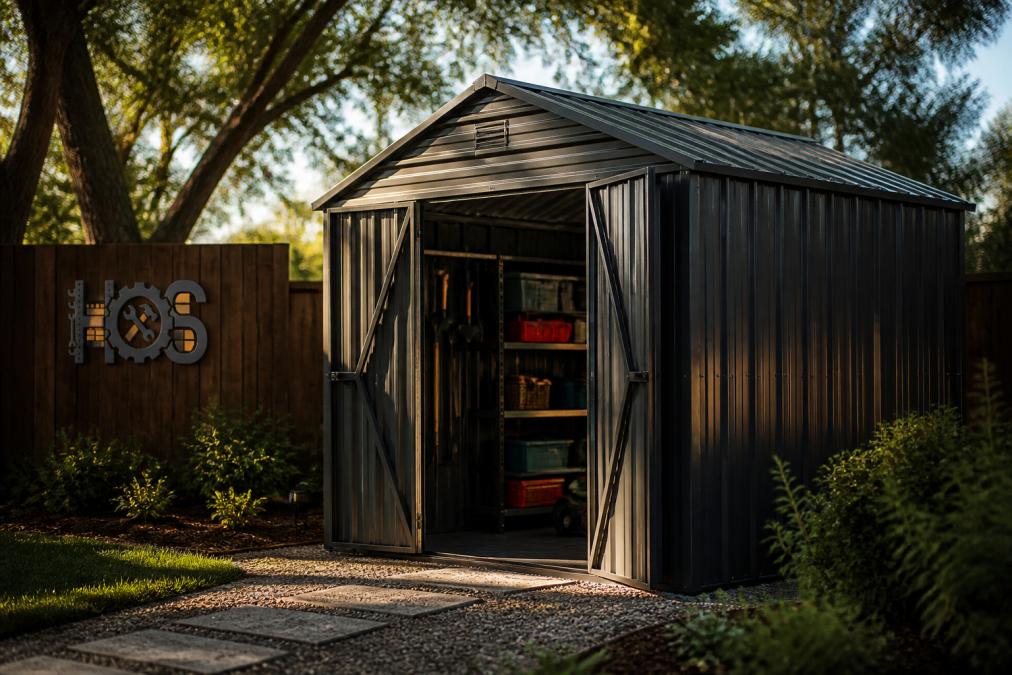
Benefits of Metal Storage Sheds: Complete 2026 Guide
Table of Contents
- Why Metal Storage Sheds Are Winning Over Homeowners
- Durability, Longevity, and Weather Resistance
- Metal vs Wood Shed Cost Comparison: Upfront and Long-Term
- Best Foundation for Metal Storage Sheds: What Actually Works
- Metal Shed Maintenance Tips for a Longer-Lasting Structure
- Customization, Security, and Real-World Storage Capacity
- Frequently Asked Questions
Last Updated: September 11, 2026
Why Metal Storage Sheds Are Winning Over Homeowners
The benefits of metal storage sheds come down to one trade-off most buyers only recognize after living with a wooden building for a few seasons: you pay a little more upfront and spend almost nothing afterward.
Metal storage sheds are prefabricated outdoor structures built from galvanized or powder-coated steel panels, assembled on site with bolts and self-tapping screws rather than framing and shingles. That construction difference drives everything else: no rot, no warping, no repainting, and a lifespan that typically outlasts a wooden building by a wide margin.
Below, we break down what actually matters when you're choosing between materials, where the real costs hide, and how to set up a steel shed so it lasts decades instead of seasons. The American Society of Civil Engineers' hazard research on wind and snow loads is a useful starting point if you want to understand what your structure needs to withstand.
What Sets Metal Apart From Other Materials
Steel is dimensionally stable. It doesn't absorb water, so it doesn't swell in humid summers or crack in freezing winters. Wood does both, and every one of those cycles widens gaps around doors and windows.
Three properties do most of the work:
- Corrosion resistance. Galvanized steel carries a zinc coating that sacrifices itself before the base metal rusts. Powder coating adds a second barrier on top.
- Fire performance. Steel won't feed a fire the way timber framing does, which matters if the shed sits near a fence line or your house.
- Pest immunity. Termites, carpenter ants, and rodents have no interest in steel. A wooden shed is a food source.
The one honest drawback: steel conducts heat. Without ventilation, a closed metal shed traps summer heat and creates condensation in shoulder seasons. We'll cover the fix later.

Durability, Longevity, and Weather Resistance
A quality galvanized steel shed should hold its structure for 15 to 25 years with basic care, and many outlast that. The panels are the reason. Zinc coating thickness determines how long the steel resists rust, and powder coating handles the cosmetic side by blocking UV degradation.
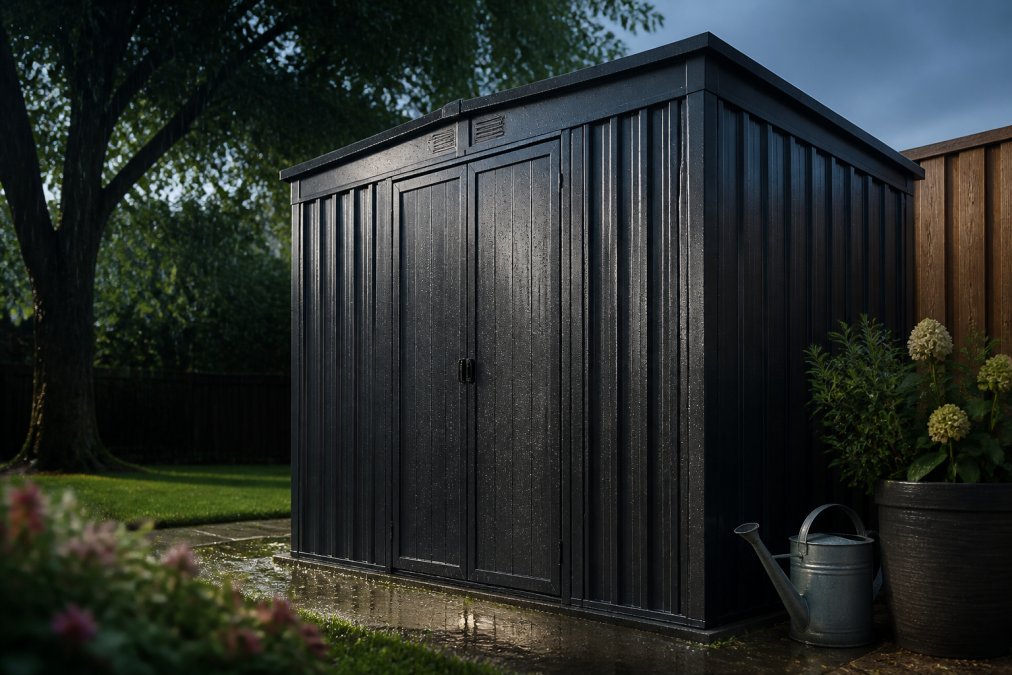
How Galvanized Steel Handles Rain, Snow, and UV Exposure
Rain is the easy test. Water sheets off a pitched steel roof and evaporates from the panels without soaking in.
Snow is harder. Roof pitch and panel gauge determine snow load capacity, and a flat-roofed metal shed in a heavy-snow region will deflect or buckle. Check the manufacturer's rated snow load against your local building requirements before you buy. The International Code Council's building code resources publishes the load standards your area follows.
UV exposure degrades paint, not steel. Powder-coated finishes hold color for years, but cheaper painted panels chalk and fade within a few seasons. Look for a powder coat if appearance matters to you.
Metal vs Wood Shed Cost Comparison: Upfront and Long-Term
Metal costs more at purchase and less every year after. Wood costs less at purchase and more every year after. That's the whole comparison in two sentences.
Purchase Price, Assembly Costs, and Maintenance Spending
A mid-size steel shed typically runs higher upfront than a comparable wooden kit, but the gap narrows fast once you add the costs wood buyers tend to forget: annual staining or sealing, roof repairs, and eventual panel or siding replacement.
| Cost Category | Metal Shed | Wood Shed |
|---|---|---|
| Upfront purchase | Higher | Lower |
| Assembly | DIY-friendly, fewer parts | More framing and finish work |
| Annual maintenance | Minimal | Staining, sealing, repairs |
| Pest treatment | None needed | Ongoing risk |
| Replacement timeline | 15-25+ years | Often shorter |
For a concrete example, our 13'x20' Metal Shed with Double Front Doors & Side Entry Door lists at $690.00, and the Outdoor Storage Shed 20x13 FT runs $2,040.95 for a considerably larger footprint.

Best Foundation for Metal Storage Sheds: What Actually Works
Most buying guides stop at "put it on a level surface." That advice is why so many steel sheds twist, leak, and blow over within two seasons. The foundation is not a formality, it is the single component that determines whether your shed stays square, stays dry, and stays anchored when wind loads hit.
The best foundation for metal storage sheds is a reinforced concrete slab or a compacted crushed-stone pad with a pressure-treated perimeter frame. Concrete wins on anchoring and moisture control. Gravel wins on cost and drainage, provided it is compacted in lifts and contained at the edges. Everything else is a compromise.
Matching the Foundation to Your Anchoring Method
Anchoring is not one product. It is a system, and it has to match the base you pour or build:
- Concrete slab. Use wedge anchors or expansion bolts drilled into the cured slab. This is the strongest option and the one most manufacturers reference in their wind-rating documentation.
- Gravel or crushed-stone pad. Use ground anchors, helical or auger-style, driven through the shed's base rail and into undisturbed soil below the pad. The pad alone will not hold the building down.
- Pavers or plastic base grids. Acceptable only for light storage in sheltered yards. These bases offer almost no uplift resistance, so a shed on pavers should be treated as a fair-weather structure.
- Asphalt or existing hardscape. Possible, but anchoring options are limited and moisture control is poor. Drill-and-epoxy anchors are the usual workaround.
A common pattern among owners who lose sheds in storms: they built a solid base, then skipped the anchor kit because the shed "felt heavy enough." A 10x12 steel shed can weigh under 300 pounds empty. That is not heavy enough.
Site Prep Details That Prevent Long-Term Problems
Before any base goes down, the ground under it has to be right. Three details do most of the work:
- Remove organic material. Grass, roots, and topsoil decompose and settle. Strip them, then compact the subgrade.
- Extend the pad past the footprint. The base should overhang the shed by a few inches on every side so runoff never pools against the base rail. This one detail prevents the majority of base-level rust.
- Slope for drainage. A slab should fall slightly away from the structure, enough to shed water, not enough to throw the walls out of plumb. Gravel pads should be crowned or sloped the same way.
If your area has frost heave, a slab needs to sit below the local frost line, or it will crack and shift. Your local building department can tell you the depth that applies where you live.
Metal Shed Maintenance Tips for a Longer-Lasting Structure
"Low maintenance" is the phrase every metal shed guide uses, and it is technically true, but it hides the fact that steel asks for a small amount of attention on a predictable schedule. Owners who give it that attention routinely get 20+ years out of a galvanized building. Owners who ignore it get rust blooms, seized fasteners, and doors that no longer close square.
The maintenance routine is not complicated. It is two habits: inspect on a schedule, and keep air moving through the structure.
A Seasonal Maintenance Checklist
Twice a year, typically spring and fall, walk the shed and work through the same list. It takes under an hour.
Spring (after winter):
- Check the roof and panels for dents, lifted seams, or snow-load damage
- Look for standing water at the base and correct any drainage issue
- Inspect the base rail for the first signs of rust, especially where panels meet the foundation
- Test the door track and lubricate rollers or hinges
- Re-tighten any fasteners that loosened through freeze-thaw cycles
Fall (before winter):
- Clear gutters, if fitted, and remove debris from the roof
- Touch up any scratched or chipped paint before wet weather arrives
- Confirm anchor bolts or ground anchors are still tight
- Check door seals and thresholds for gaps that will let snow or driving rain in
- Move stored items off the floor and away from the walls to allow airflow
A scratch left exposed through one wet season becomes a rust bloom. Touch-up paint is the cheapest maintenance you will ever do.
Condensation: The Real Enemy, and How to Stop It
Condensation is an issue many owners do not anticipate, and it can cause quiet damage. Warm, moist air inside a shed can meet a cold roof panel, causing moisture to condense on the underside of the steel, and over time it can drip onto whatever is stored below. In humid climates or during shoulder seasons, this can happen almost every night.
The fix is airflow, not insulation alone. Insulation without ventilation traps moisture against the panels and makes the problem worse.
- Add vents. Soffit vents, gable vents, or a ridge vent let moist air escape. Two well-placed vents solve most condensation problems.
- Keep items off the floor. Pallets, shelving, or a raised deck keep stored goods out of the drip zone and allow air to move under them.
- Leave a gap at the walls. Stacking boxes against the panels blocks airflow and traps moisture against the steel.
- Consider an anti-condensation roof coating. These are applied to the underside of roof panels and absorb moisture before it drips. They are common on higher-end sheds and can be added aftermarket.
- Use a moisture absorber in humid climates. A desiccant or rechargeable absorber helps in small, tightly sealed sheds where ventilation is limited.
Customization, Security, and Real-World Storage Capacity
Steel sheds adapt to how you actually use them, which is where they pull ahead of wooden kits. Sliding doors, side entry doors, and double front doors change how you load equipment. Window kits add light. Shelving and wall-mounted hooks convert vertical space into usable storage.
Security comes down to the door and the lock. A steel building with a hasp and padlock compatibility is harder to breach than a wooden shed with a standard latch, simply because there's no soft material to pry or cut. Reinforce the door frame if you're storing anything valuable.
On capacity, plan in usable volume rather than footprint. A 12x20 footprint sounds generous until you account for door swing, aisle space, and the fact that you can't stack to the ceiling. For vehicles and large equipment, our 12x20ft Outdoor Metal Garage Shed at $2,568.95 and the 12x25FT Outdoor Metal Garage Shed at $2,994.95 cover the range most homeowners need.

U.S. Department of Energy guidance on home energy and storage efficiency
Frequently Asked Questions
Are metal storage sheds better than wood?
Metal storage sheds offer advantages in pest resistance, fire resistance, and low maintenance. They do not rot, warp, or attract termites. Wood sheds can look more traditional and may be easier to customize on-site, but they require staining, sealing, and regular repairs. For homeowners who want durable construction with minimal upkeep, metal storage sheds are often the more practical choice, especially in areas with heavy rain, snow, or insect activity.
Do metal sheds rust easily?
Most modern metal storage sheds use galvanized steel with a powder coating or anti-UV coating that resists corrosion. Rust appears when the protective layer is scratched or when the shed sits in constant moisture without ventilation. Touch up scratches with matching paint, keep the foundation dry, and ensure airflow inside the shed. With those steps, rust prevention is manageable and the structure holds up for years.
How long do metal storage sheds last?
A well-maintained metal storage shed typically lasts 15 to 25 years or longer, depending on climate, foundation quality, and maintenance. Galvanized steel resists corrosion and UV damage better than untreated wood. In coastal or high-humidity areas, lifespan depends heavily on ventilation and prompt scratch repair. Choosing a shed with powder coating and anchoring it properly to a level foundation extends material longevity significantly.
Do I need a concrete foundation for a metal shed?
Concrete is not always required, but it is the most stable option. A poured concrete pad or concrete pavers provide a level, permanent base that resists shifting and moisture. Gravel with a pressure-treated frame works for lighter sheds in dry climates. The best foundation for metal storage sheds depends on your soil, shed footprint, and local freeze-thaw cycles. Whichever you choose, anchor kits secure the shed against wind uplift.
A cluttered garage and a failing shed both come down to the same problem: storage that wasn't built to last. Home Outpost Supply carries metal sheds sized for real backyards, from compact garden units to full vehicle garages, each backed by tracked and insured shipping, secure payment processing, and a support team that answers questions before and after delivery. Get started with Home Outpost Supply and turn that overflow into organized, weatherproof space.



Leave a comment
This site is protected by hCaptcha and the hCaptcha Privacy Policy and Terms of Service apply.