


How to Choose Shed Size: A Complete Guide for 2026
Table of Contents
- Start by Measuring Your Available Backyard Space
- Assess Your Storage Needs with a Simple Inventory
- How to Use a Shed Size Calculator to Match Items to Square Footage
- Understanding Common Shed Sizes: 6x8, 8x10, 10x12, and Beyond
- Best Shed Sizes for Lawn Equipment and Garden Tools
- Storage Shed Zoning Laws, HOA Rules, and Setback Requirements
- Choosing a Shed Style and Foundation That Fits Your Plan
- Common Mistakes When Choosing a Shed Size
- Frequently Asked Questions
Last Updated: September 10, 2026
Start by Measuring Your Available Backyard Space
Learning how to choose shed size starts with one number: the square footage you can actually spare. Before you browse a single model, walk your yard with a tape measure and mark the true outer limits of your placement zone.
Most buyers skip this step and shop by looks. That's backwards. The yard sets the ceiling on everything else, including the door swing, the roof overhang, and the clearance you need to walk around the structure.
Measure fence line to fence line, then subtract:
- Setback distance required by your local zoning ordinances
- At least 0.6 m (2 ft) of working clearance on every side for maintenance and airflow
- Any path, patio, or driveway you need to keep clear
A guide to planning a shed project from the USDA's extension service makes the same point: site planning comes before product selection, not after.
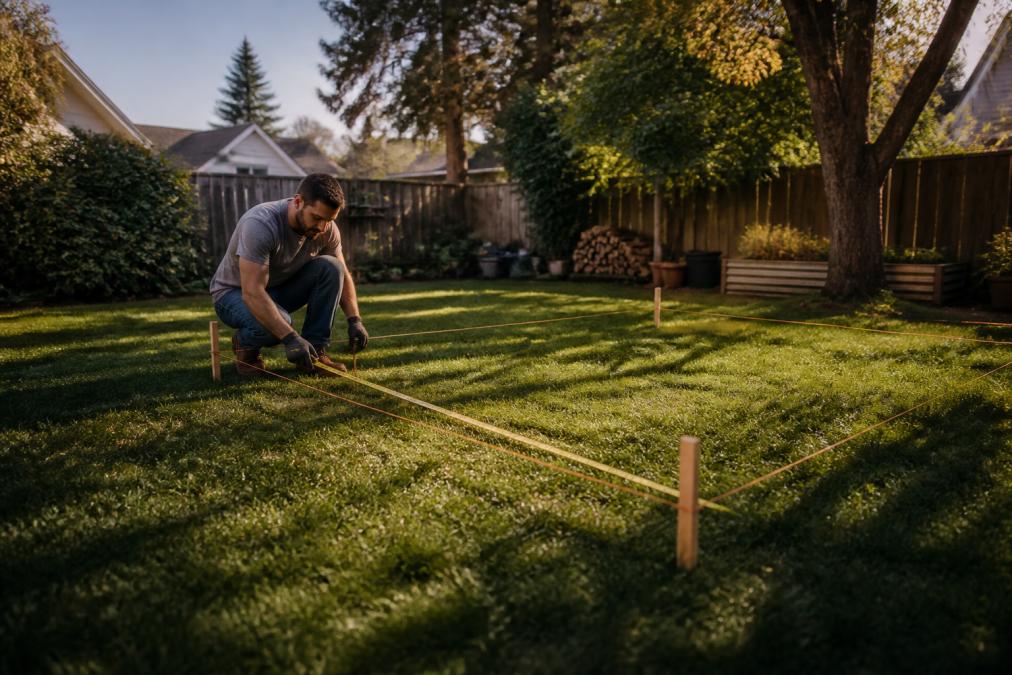
Use Physical Markers to Visualize the Footprint
Numbers on paper lie. Stakes and string tell the truth.
Drive four stakes into the ground at the corners of your planned footprint, then run string between them. Walk the perimeter. Stand inside it. This is the single fastest way to catch a size mistake before you order.
A 10x12 shed sounds modest. Staked out on grass, it often looks enormous. That gut check saves returns, restocking fees, and a lot of frustration.

Assess Your Storage Needs with a Simple Inventory
The right shed size is the one that holds everything you own today, plus room to grow. Build that number from an actual inventory, not a guess.
Walk your garage, basement, and side yard with a notepad. List every item you intend to move, then note its rough dimensions and whether it needs vertical clearance.
Group your inventory into three buckets:
- Bulky items: riding mower, wheelbarrow, ladders, bikes
- Stackable items: bins, paint cans, seasonal decor
- Tall items: rakes, shovels, ladders, long-handled tools
Bulky items eat floor space. Tall items eat wall space. Knowing which you have more of tells you whether you need a wider footprint or a taller wall.
The 25% Rule for Future-Proofing Your Shed
Plan for 25% more storage capacity than your current inventory requires. That buffer absorbs the pressure washer you buy next spring and the holiday bins that multiply every year.
Homeowners who skip this rule end up buying a second shed within a few years. A little future-proofing now costs far less than a second structure later.
How to Use a Shed Size Calculator to Match Items to Square Footage
A shed size calculator converts your inventory list into a minimum square footage figure. The math is simple: total the floor area each item occupies, add circulation space, then apply the 25% buffer.
Here's the formula most contractors use:
Required square footage = (total item footprint × 1.4) × 1.25
The 1.4 multiplier covers walking room and access. The 1.25 is your growth buffer.
Run your own numbers with this table:
| Inventory Profile | Typical Floor Area Needed | Suggested Footprint |
|---|---|---|
| Hand tools, small bins | 4-5 sq m (45-55 sq ft) | 6x8 |
| Push mower, bikes, shelving | 7-9 sq m (75-95 sq ft) | 8x10 |
| Riding mower, workbench | 11-13 sq m (120-140 sq ft) | 10x12 |
| Tractor, trailer, workshop | 20+ sq m (215+ sq ft) | 12x20 or larger |
If your number lands between two standard sizes, size up. There is no such thing as too much shed, but there is definitely such a thing as too little.
Understanding Common Shed Sizes: 6x8, 8x10, 10x12, and Beyond
Standard shed sizes exist for a reason: they match common lumber dimensions and keep costs down. Knowing what each size actually holds is the fastest shortcut to a decision.
- 6x8: The starter size. Holds a push mower, a few long-handled tools, and a shelf of bins. Best for small yards with light storage needs.
- 8x10: The most popular footprint. Fits a riding mower, bikes, and a modest workbench with room to move.
- 10x12: The workshop tier. Add a bench, a stool, and wall-mounted shelving and you have a functional workspace.
- 12x20 and up: Vehicle storage, trailers, or a full hobby shop.
For a deeper look at how these dimensions translate into real products, browse the sheds and outdoor storage collection at Home Outpost Supply.

Door width matters as much as floor area. A 1.2 m (4 ft) double door lets you roll a wheelbarrow straight in. A single 0.8 m (32 in) door forces you to lift and angle everything.
Best Shed Sizes for Lawn Equipment and Garden Tools
Lawn equipment drives shed size more than any other category. Riding mowers, aerators, and spreaders take up floor area fast, and they need door clearance to roll in and out.
For a typical suburban lot with a push mower, trimmer, and garden tools, an 8x10 is the sweet spot. It fits the mower along one wall, leaves a clear center aisle, and gives you wall space for vertical storage.
If you own a riding mower, jump to 10x12 at minimum. Riders need roughly 1.8 m (6 ft) of length and 1.2 m (4 ft) of width, plus turning room to park.
A few practical moves that buy back space:
- Hang long-handled tools on a wall rack instead of leaning them in a corner
- Use a loft or overhead shelf for seasonal items
- Keep a rolling cart for loose hand tools so the floor stays clear
For a compact option that handles the basics, [the 6x8 ft plastic storage shed covers mowers, garden supplies, and tools without swallowing your](/products/xwt012-6-8ft-plastic-storage-shed-for-backyard-garden-big-spire-tool-storage) yard.

Storage Shed Zoning Laws, HOA Rules, and Setback Requirements
Storage shed zoning laws and HOA rules can shrink your buildable footprint before you ever pick a model. Check both before you buy, not after.
Setback requirements define how far a structure must sit from property lines. A common range is 0.9 m to 1.5 m (3 to 5 ft), but local rules vary widely, and some jurisdictions allow smaller setbacks for sheds under a certain square footage.
Building permits are often required above a size threshold, and many HOAs impose their own limits on height, color, roof pitch, and placement. Some prohibit sheds entirely in front-facing yards.
Verify three things with your local planning office and your HOA board:
- Maximum allowed footprint without a permit
- Required setback from property lines and easements
- Any design or material restrictions
For official guidance on permits and inspections, check your municipal building department's website, which publishes the current rules for your jurisdiction.
Choosing a Shed Style and Foundation That Fits Your Plan
Shed style and foundation type should follow your size decision, not lead it. Once you know your footprint, the style question becomes practical rather than aesthetic.
Three styles dominate residential yards:
- Gable or barn style: peaked roof, extra loft space, best for tall items and overhead storage
- Lean-to: sloped roof against a wall or fence, ideal for narrow side yards
- Garden shed: classic peaked profile, balanced storage and curb appeal
Foundation choice depends on your ground and your climate. A gravel base drains well and costs less. A concrete slab offers the most stable floor for heavy equipment and workbenches. Ground leveling is non-negotiable either way; a shed on uneven ground will rack, leak, and warp over time.
FEMA guidance on anchoring outdoor structures against high winds is worth reading if you live in a storm-prone region. Proper anchoring protects both the shed and everything inside it.
For larger footprints that need vehicle or trailer access, the 13x20 metal shed with double front doors and a side entry door handles heavy-duty storage with galvanized steel construction that resists corrosion.
Common Mistakes When Choosing a Shed Size
Most shed size errors trace back to the same handful of shortcuts. Avoid these and you will get the size right the first time.
| Mistake | Why It Hurts | The Fix |
|---|---|---|
| Shopping before measuring | You fall for a model that will not fit | Measure your space first |
| Skipping the 25% buffer | You outgrow the shed in two years | Add 25% to your inventory total |
| Ignoring door width | Large equipment will not fit through | Match door width to your widest item |
| Forgetting setbacks | The shed sits illegally | Check zoning and HOA rules early |
| Choosing looks over footprint | Poor storage capacity | Size first, style second |
| Skipping site prep | Floor warps and leaks | Level the ground and build a proper base |
What most guides miss is the door. A shed is only as useful as its opening, and a wide double door often matters more than an extra half meter of floor.
The National Association of Home Builders notes that outdoor storage ranks among the most requested features in residential remodels, which is why getting the footprint right pays off at resale.
If you would rather skip the guesswork, an 8x16 resin outdoor storage shed offers weatherproof durability and a mid-size footprint that suits most suburban yards.
Sizing a shed is a math problem wrapped in a site problem. Get the measurements, run the inventory, check the rules, and the right footprint becomes obvious.
Home Outpost Supply carries sheds across every common size, from compact 6x8 units to 13x20 metal structures, each backed by tracked and insured shipping and a support team that helps before and after purchase. Browse the collection, match your square footage, and add to cart with confidence.
Frequently Asked Questions
What are the most common mistakes when choosing a shed size?
The biggest mistake is guessing instead of measuring. Homeowners often buy based on how the shed looks online, then find it overwhelms the yard or cannot fit a riding mower. Skipping the 25% rule leaves no room for future tools or seasonal items. Not checking setback requirements before delivery is another costly error. Measure your items, mark the footprint in your yard, and confirm local rules before you buy.
Is a 10x12 shed a good size for most homeowners?
A 10x12 shed offers 120 square feet, which fits a riding mower, garden tools, bikes, and shelving with room to walk. It works well for suburban yards that cannot accommodate a larger footprint. If you plan to add a workbench or store bulky equipment, consider stepping up to a 12x16 or larger. Always apply the 25% rule so you are not maxed out on day one.
What should I consider regarding local zoning and HOA shed size restrictions?
Check your local zoning ordinances for maximum square footage, height limits, and setback requirements from property lines. Many jurisdictions require a building permit above a certain size, often 100 or 120 square feet. HOAs may impose stricter rules on materials, roof pitch, and placement. Call your planning department and review HOA covenants before ordering. A shed that violates these rules may need to be removed at your expense.
How do I calculate the square footage needed for my storage items?
List every item you plan to store, including lawn equipment, bikes, tools, and seasonal decor. Measure the footprint of large items and add 25% for walking space and shelving. A riding mower needs roughly 20 square feet, while a push mower takes about 6. Add loft space for vertical storage to free up floor area. Our shed size calculator method turns this inventory into a target square footage before you shop.


Leave a comment
This site is protected by hCaptcha and the hCaptcha Privacy Policy and Terms of Service apply.