


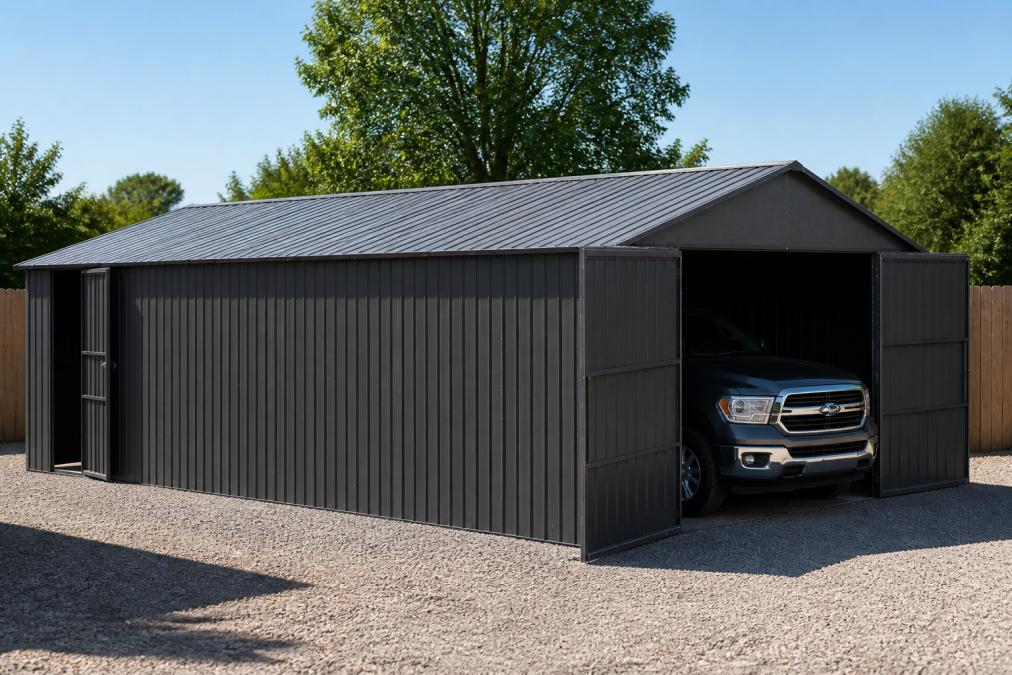
Will Garage Storage Fit My Car? A Measurement Guide
Table of Contents
- Standard Garage Dimensions for Cars
- Vehicle Size Classifications and Measurements
- How to Measure Your Garage for Storage and Vehicle Clearance
- Overhead Garage Storage Clearance: What You Need to Know
- How to Organize Small Garage Spaces Without Sacrificing Vehicle Access
- Door Clearance, Turning Radius, and Maneuverability Factors
- Ventilation, Humidity Control, and Long-Term Storage Safety
- Conclusion
Last Updated: August 20, 2026
Standard Garage Dimensions for Cars
A standard single-car garage measures 12 feet wide by 20 feet deep, with an interior height of 8 feet from floor to ceiling. These dimensions accommodate most sedans and compact cars comfortably, though height clearance becomes critical when overhead storage enters the equation. A two-car garage typically measures 20 feet wide by 20 feet deep, providing significantly more flexibility for both vehicle parking and storage solutions.
Understanding your garage's exact dimensions is the foundation of determining whether garage storage will fit your car. Many homeowners assume their space matches these standard measurements, but older homes and custom builds often deviate. Before investing in any overhead storage system or organizational solution, measure your garage width, depth, and ceiling height. This takes fifteen minutes and prevents costly mistakes later.
The challenge isn't just fitting your vehicle, it's fitting your vehicle plus the storage systems you want to install. A sedan parked in a 12-foot-wide garage leaves roughly 18 inches of clearance on each side, which is tight but functional. Add wall-mounted shelving or a storage rack, and that margin shrinks further. At Home Outpost Supply, we help homeowners understand these spatial constraints before purchasing storage solutions, ensuring your setup actually works for your daily routine.
Ceiling height matters more than most people realize. Standard 8-foot ceilings limit overhead storage options significantly. If your garage has 9 or 10 feet of clearance, you gain meaningful options for ceiling-mounted racks and storage systems that won't interfere with vehicle access.
Vehicle Size Classifications and Measurements
Vehicles fall into distinct size categories, and each has specific dimensional requirements for safe garage storage and maneuverability. A sedan typically measures 15 feet long, 6 feet wide, and 4.5 feet tall, the most common vehicle type in residential garages. Compact cars are smaller, around 13 feet long and 5.5 feet wide, making them easier to fit in tight spaces. SUVs and crossovers range from 16 to 18 feet long and 6 to 7 feet wide, requiring more square footage and clearance.
Pickup trucks present unique challenges. Full-size trucks measure 17 to 20 feet long and 6.5 to 8 feet wide, often exceeding standard single-car garage dimensions. Many homeowners with trucks use carports or oversized garage structures instead. If you're considering whether garage storage will fit your car, truck owners should evaluate whether their vehicle even fits the base garage first.
Recreational vehicles, campers, travel trailers, and motorhomes, require completely different storage solutions. A small travel trailer might be 20 feet long, while a motorhome can exceed 35 feet. These vehicles rarely fit inside standard residential garages and typically require external storage structures like the 12x25FT Outdoor Metal Garage Shed or similar carport solutions.

Door width and vehicle width work together to determine actual fit. Your garage door opening width (typically 8 to 9 feet for single-car doors, 16 to 18 feet for two-car doors) must accommodate your vehicle's width plus clearance. A sedan at 6 feet wide fits comfortably through a standard 8-foot door opening, but an SUV at 7 feet wide leaves only 6 inches of margin on each side, tight and potentially risky with poor visibility.
How to Measure Your Garage for Storage and Vehicle Clearance
Accurate measurement prevents expensive mistakes. Start with width: measure from the inside of one wall to the inside of the opposite wall at three points, near the garage door, in the middle, and at the back. Garages aren't always perfectly rectangular; older structures especially may vary by several inches. Record the smallest measurement, as that's your actual usable width.
Next, measure depth from the inside of the garage door to the back wall, again at three points (left, center, right). Finally, measure ceiling height from the floor to the lowest point of the ceiling structure. Don't measure to the garage door track or any hanging fixtures, measure to the actual ceiling or truss system. If your garage has a peaked roof, measure at the lowest point where you'd install storage.
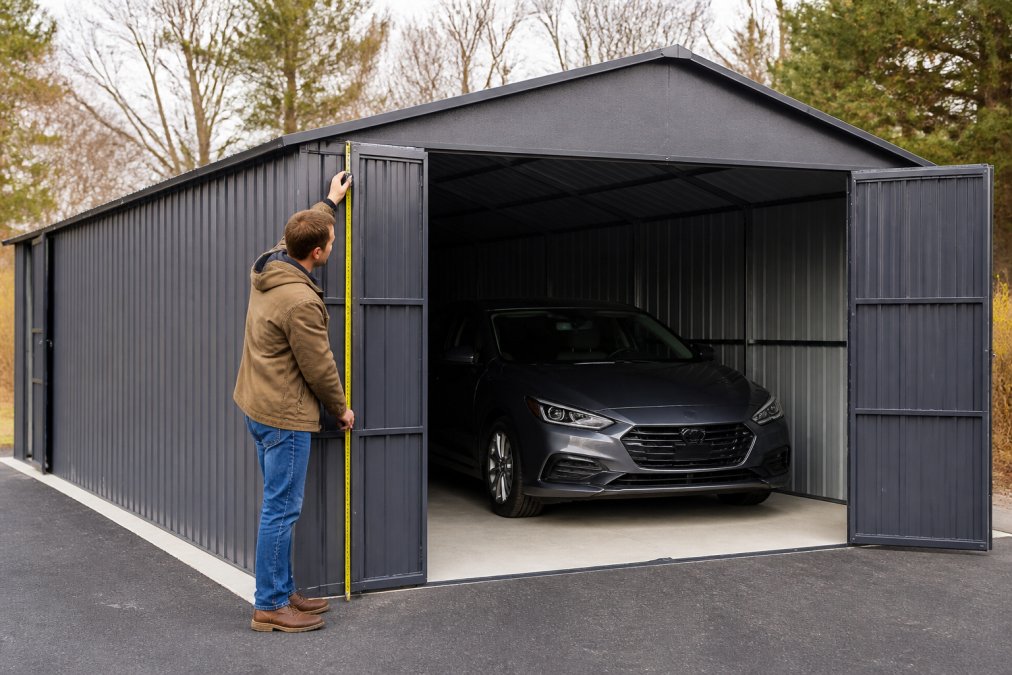
Now measure your vehicle. Length is straightforward: measure from the front bumper to the rear bumper. Width requires measuring from the outside of the driver's-side mirror to the outside of the passenger's-side mirror (mirrors are the widest point). Height should be measured from the ground to the roof's highest point, or to the top of any roof rack if you use one regularly.
Calculate usable floor space by multiplying your garage width by your garage depth. A 12x20 garage provides 240 square feet. Your vehicle occupies roughly 90 square feet (a 15-foot sedan at 6 feet wide). This leaves 150 square feet theoretically available, but that calculation oversimplifies reality. You need circulation space, room to open car doors, walk around the vehicle, and access storage areas.
Overhead Garage Storage Clearance: What You Need to Know
Overhead storage is the most space-efficient solution for small garages, but it requires careful clearance planning. Most overhead racks and storage systems mount 12 to 18 inches below the ceiling. This means a standard 8-foot ceiling leaves only 6.5 to 7.5 feet of clearance above your vehicle, tight for taller vehicles or those with roof racks.
If your vehicle height is 5 feet (typical for sedans), an 8-foot ceiling with an overhead rack 12 inches below the ceiling provides 3 feet of vertical clearance above the vehicle. That's adequate for most purposes, though it leaves little margin if you ever add a roof rack or carrier. SUVs at 6 feet tall leave only 2 feet of clearance in the same setup, which feels cramped and creates safety concerns.
The solution is straightforward: measure your vehicle's height and your ceiling height, then subtract 12 to 18 inches for the storage system. If the result is less than 2 feet above your vehicle, overhead storage isn't practical. Consider wall-mounted shelving, vertical storage racks, or external solutions instead.
Door clearance compounds this challenge. Your garage door itself typically requires 12 to 18 inches of clearance above the vehicle when opening and closing. A sedan with a roof rack might measure 5.5 feet tall; add the 18-inch door clearance requirement, and you need 7 feet of interior height just to open the door safely. An 8-foot ceiling provides only 12 inches of margin for error.
How to Organize Small Garage Spaces Without Sacrificing Vehicle Access
Small garages demand ruthless prioritization. Your vehicle must fit and park safely, everything else is secondary. Start by identifying your actual vehicle dimensions and your garage dimensions, then design your storage plan around those constraints.
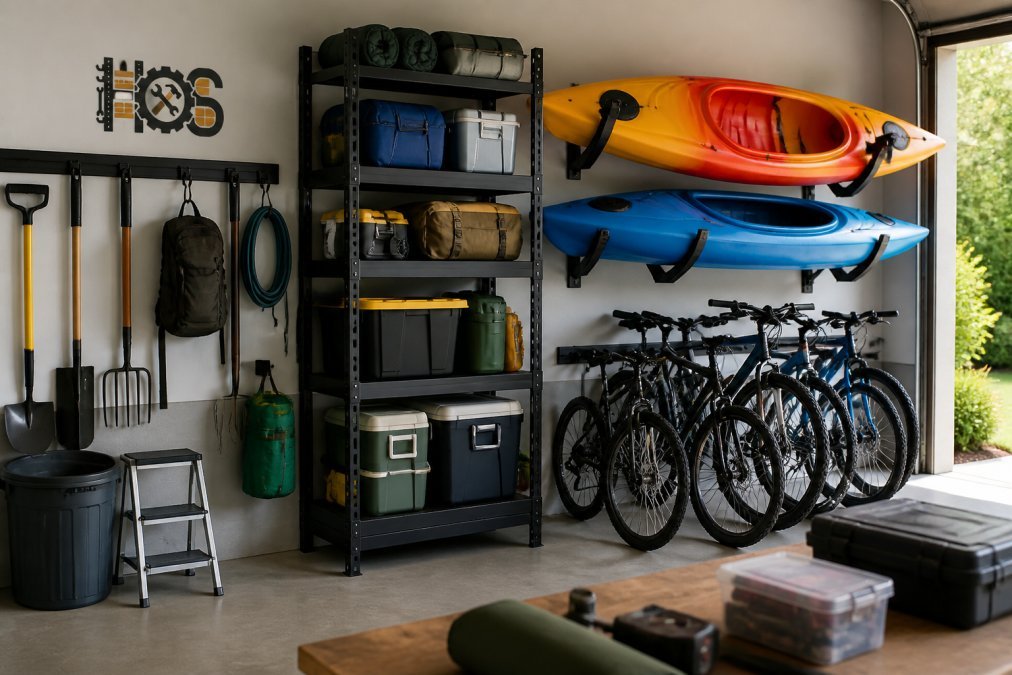
Wall-mounted storage is the most effective approach for small spaces. Vertical shelving, pegboards, and wall-mounted cabinets keep frequently used items accessible without consuming floor space. Install these systems on walls opposite the vehicle's parking side, or along walls where the vehicle won't interfere with access. A typical 12-foot-wide garage can accommodate wall storage on both sides while maintaining safe vehicle clearance.
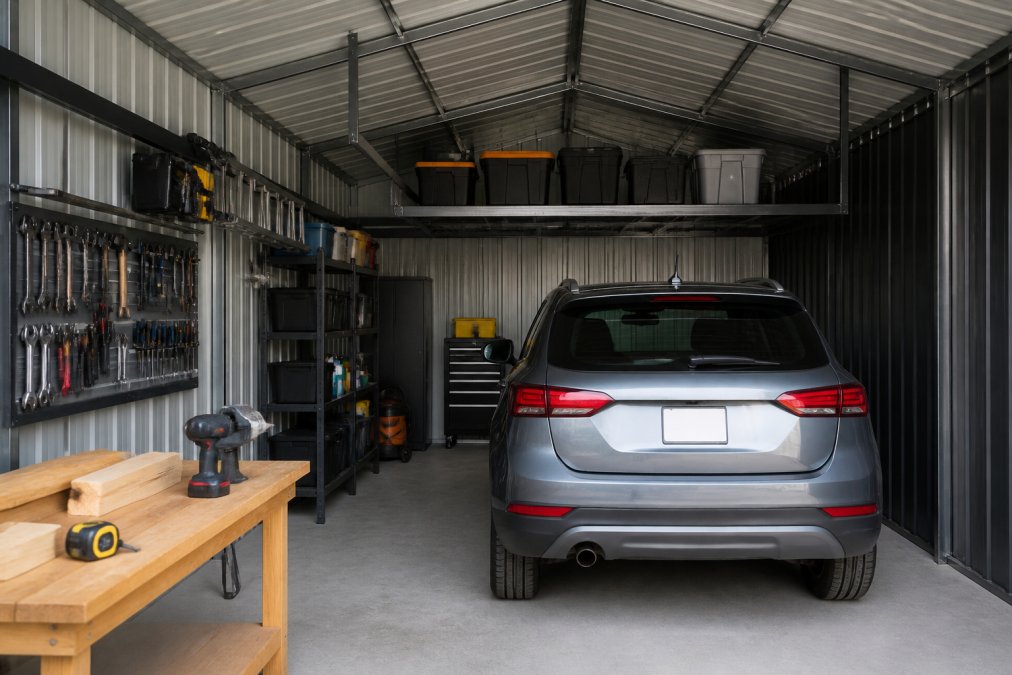
Overhead storage works in small garages only if your ceiling height and vehicle height allow adequate clearance. If overhead storage isn't viable, focus on corner storage, wall-mounted cabinets, and vertical racks. Corners are often wasted space; corner shelving units maximize this area without interfering with vehicle access.
Floor space should remain mostly clear. Your vehicle needs room to park and for doors to open fully. Plan for at least 3 feet of clearance on each side of the vehicle and at the rear. This allows safe entry and exit, prevents door dings from wall-mounted storage, and provides space for basic movement and maintenance.
Consider a rolling storage system or mobile shelving unit that can be moved when you need full floor space. This hybrid approach gives you storage flexibility without permanent floor occupation. Many homeowners use a combination of wall-mounted storage, corner solutions, and one or two mobile units to maximize small garage functionality.
Vertical organization is your best friend in tight spaces. Use wall hooks for tools, pegboards for frequently accessed items, and shelving for less-used equipment. This approach keeps items visible and accessible while freeing floor space for your vehicle and basic movement.
Door Clearance, Turning Radius, and Maneuverability Factors
Door width and height are critical constraints that many homeowners overlook. Standard single-car garage doors measure 8 feet wide and 7 feet tall. Your vehicle must fit through this opening with clearance for mirrors and any roof-mounted equipment. A sedan at 6 feet wide passes through with 12 inches of margin on each side, functional but not generous.
If you've installed wall-mounted storage, shelving, or organizational systems, ensure they don't extend into the door opening area. Even 6 inches of protrusion reduces your effective door width and creates a safety hazard. Measure from the inside edge of your garage door frame to any wall-mounted storage to confirm adequate clearance.
Turning radius becomes relevant if your garage isn't a straight-in, straight-out configuration. If your driveway approaches the garage at an angle or if you need to maneuver your vehicle within the garage, you need space for the vehicle's turning arc. A sedan requires roughly 35 feet of space to complete a three-point turn. In a 20-foot-deep garage, tight maneuvering is inevitable, but basic parking and exiting should remain safe.
Threshold height, the transition between your driveway and garage floor, affects vehicle clearance. If your driveway is higher than your garage floor, the approach angle becomes steeper. Low-clearance vehicles may scrape when entering. Measure your vehicle's approach angle (ground clearance at the front bumper) and your threshold height to confirm safe entry and exit.
Ventilation, Humidity Control, and Long-Term Storage Safety
Enclosed garage storage creates humidity and ventilation challenges that affect both your vehicle and stored items. Moisture accumulation causes rust on metal tools, corrosion on vehicle components, and mold on stored materials. If you're storing your vehicle long-term or using your garage for extended equipment storage, ventilation becomes critical.
Natural ventilation through windows and doors works for typical daily garage use. If you park your vehicle daily and open the garage door regularly, air circulation prevents moisture buildup. However, if you store your vehicle for weeks or months, or if your garage lacks windows, consider additional ventilation.
A basic exhaust fan or ventilation system removes moisture and improves air quality. Many garages benefit from a simple wall-mounted fan or roof vent. These systems are inexpensive and dramatically improve long-term storage conditions. If you're storing valuable tools, equipment, or a vehicle you don't drive regularly, proper ventilation is worth the investment.
Humidity control is especially important in climates with high moisture or seasonal temperature swings. A garage dehumidifier removes excess moisture and protects stored items from rust and mold. This is particularly relevant if your garage is partially below grade or if you live in a humid climate.
Floor protection matters for long-term vehicle storage. A concrete floor absorbs moisture from below, which transfers to vehicles parked on it. A simple vapor barrier or epoxy floor coating reduces moisture transfer and protects both your vehicle and stored items. This is a moderate investment that pays dividends for long-term storage.
Conclusion
Determining whether garage storage will fit your car requires honest measurement of three variables: your garage dimensions, your vehicle dimensions, and your storage system specifications. A standard 12x20 garage accommodates most sedans comfortably, but overhead storage, wall-mounted systems, and door clearance constraints complicate the equation. Measure your space, measure your vehicle, and plan your storage around those facts, not around what you hope will fit.
Home Outpost Supply offers garage storage solutions designed for real homes with real vehicles. Our systems prioritize vehicle access and safety while maximizing usable storage. Whether you need wall-mounted organization, overhead racks, or external storage structures like our 12x25FT Outdoor Metal Garage Shed, we help you reclaim your garage without sacrificing functionality. Get started with Home Outpost Supply and transform your cluttered garage into an organized, functional space that works for your vehicle and your life.
Frequently Asked Questions
What size storage unit will fit a car?
A standard sedan requires a minimum of 10x20 feet of floor space for safe parking and basic clearance around the vehicle. Compact cars may fit in 10x14.5 feet, while SUVs and trucks need 12x20 feet or larger. Remember to account for door swing space and any storage systems you plan to install above or beside the vehicle. Measure your specific vehicle's length, width, and height before purchasing storage solutions to ensure proper fit.
How much clearance do I need around my car in a garage?
Plan for at least 1 foot of clearance on each side of your vehicle for comfortable entry and exit, plus 2-3 feet in front and behind for maneuvering. If you're adding overhead storage, maintain a minimum of 6-12 inches above your vehicle's roof to prevent damage and allow for air circulation. Door clearance is equally critical: ensure your garage door opening is at least 1 foot wider than your vehicle's width to prevent side-swiping during entry and exit.
Can I install overhead storage without hitting my car roof?
Yes, but only if you calculate clearance carefully. Measure your vehicle's height from the floor to its roof, then add 12 inches of safety clearance. Mount overhead storage racks or shelving at that height or higher. Standard garage ceilings are 8 feet; most sedans are 4.5-5.5 feet tall, leaving 2.5-3.5 feet for overhead storage. Avoid mounting directly above where your car parks, instead, position racks above the hood or trunk area to protect your vehicle from accidental contact.
How do I know if my garage storage system will actually work in a small space?
Start by measuring your garage floor space and ceiling height, then compare those dimensions to your vehicle's footprint plus desired clearance. Sketch a simple floor plan showing your car's position, door swing, and proposed storage locations. Account for the turning radius your vehicle needs when entering and exiting. Test storage placement with temporary boxes before purchasing permanent systems. Many homeowners discover that vertical wall storage and overhead racks work better than floor-based systems in tight spaces, preserving precious maneuvering room.
This article was written using GrandRanker



Leave a comment
This site is protected by hCaptcha and the hCaptcha Privacy Policy and Terms of Service apply.