


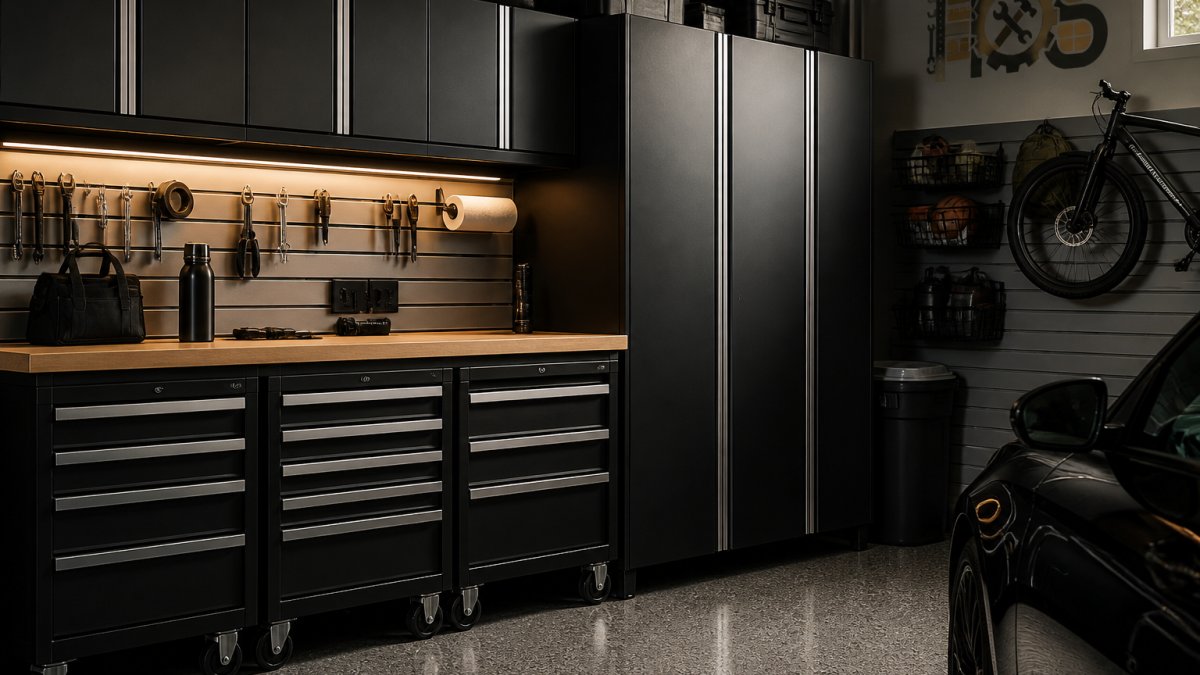
Why Premium Garage Storage Is Worth It
Table of Contents
- The Real Cost of Garage Clutter
- How Garage Storage Systems Transform Your Space
- Understanding Garage Cabinet Cost and Long-Term Value
- Durability, Construction Quality, and Material Performance
- Garage Wall Storage Systems That Maximize Usable Space
- Overhead Garage Storage Racks and Vertical Organization
- Is Premium Garage Storage Right for Your Home?
- Frequently Asked Questions
Last Updated: October 10, 2026
The Real Cost of Garage Clutter
Garage clutter costs time, frustration, and money when you can't find items and rebuy them.
The real question isn't whether you can afford premium garage storage. It's whether you can afford not to have it.

A disorganized garage wastes time searching for tools, loses track of seasonal items, and prevents parking. Multiplied across months and years, this friction becomes a real cost.
Premium garage storage systems give everything a dedicated place and transform your garage into a functional space.
How Garage Storage Systems Transform Your Space
A well-designed garage storage system fundamentally changes how you use your garage by reducing search time and enabling projects.
Wall-mounted cabinets and overhead storage eliminate floor clutter, freeing space for vehicles and projects. A coordinated cabinet system creates visual order and multiplies effective storage through vertical organization.
A garage with organized hand tools in soft-close drawers, equipment in tall cabinets, and frequently used items on pegboards saves minutes per search. Over a year, that's hours reclaimed.
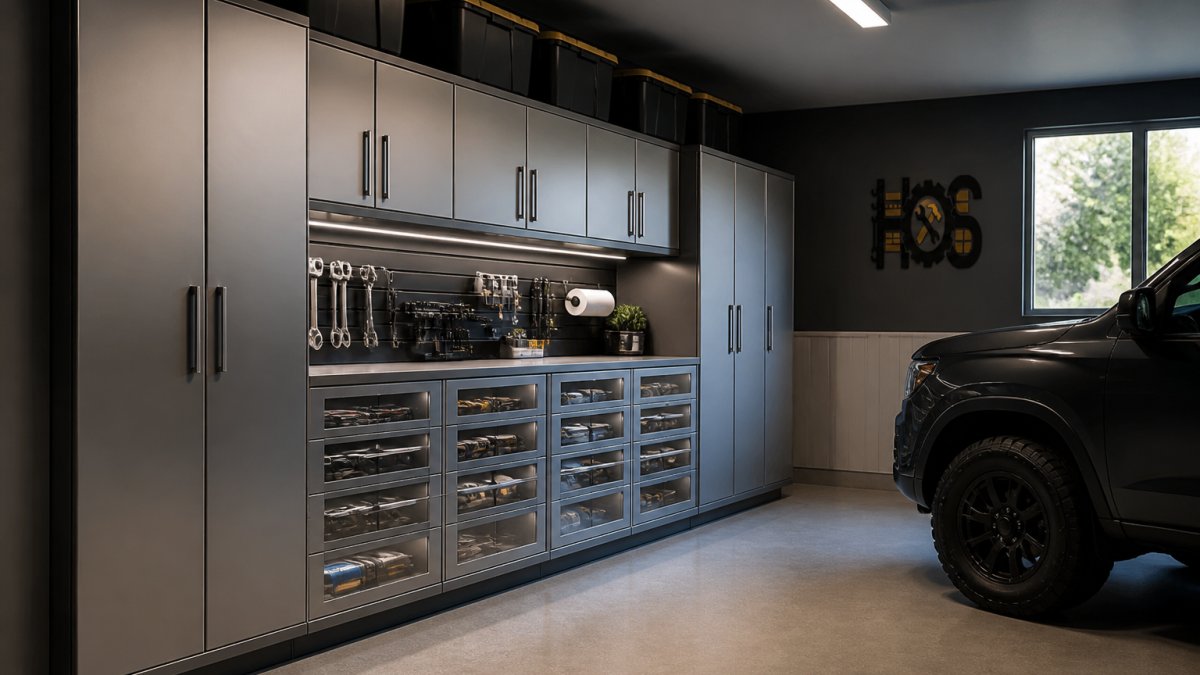
The Nova Series Garage Cabinet Set C features wall-mounted design with extra-deep storage, soft-closing hardware, and a metallic gray finish that creates a polished appearance.

Understanding Garage Cabinet Cost and Long-Term Value
Premium garage storage costs thousands upfront, but total cost of ownership over 15-20 years tells a different story.
The True Cost of Ownership Framework
Budget Storage Example:
- Initial purchase: $400-600 (plastic bins, basic metal shelving, wall hooks)
- Installation: $0-100 (DIY or minimal labor)
- Annual maintenance: $20-50 (replacing cracked bins, tightening bolts, reorganizing)
- Replacement cycle: 3-5 years (plastic becomes brittle; metal shelves sag under load; fasteners corrode)
- 15-year TCO: $2,000-3,500 (requires 3-5 complete replacements)
- Cost per year: $133-233
Premium Storage Example (Astro Series 96" 3-Piece Set):
- Initial purchase: $1,972.95
- Installation: $200-400 (wall anchoring, leveling, hardware assembly)
- Annual maintenance: $0-30 (occasional soft-close hinge adjustment, cleaning)
- Replacement cycle: 20+ years (E0-grade melamine and cold-rolled steel resist degradation)
- 15-year TCO: $2,372.95-2,752.95 (no replacement needed)
- Cost per year: $158-184
Over 15 years, premium systems cost only $20-50 more per year than budget alternatives while delivering superior durability and flexibility. Over 20 years, the premium system's annual cost drops to $109-118.
Why Budget Storage Costs More Than It Appears
Budget storage fails because standard steel shelving sags under weight, plastic bins become brittle in temperature swings, budget hardware corrodes in humid garages, and fixed designs can't adapt when needs change.
Premium Materials Justify the Upfront Cost
The Astro Series uses E0-grade melamine with 2X thicker edge banding to resist warping and moisture. The Nova Series incorporates soft-close hardware. The HPDMC system uses 100% cold-rolled steel, which won't warp or corrode.

Flexibility Adds Long-Term Value
Premium systems offer height-adjustable shelves and modular designs that adapt as needs change. A homeowner can adjust shelves at year 3, add cabinet sections at year 7, and integrate pegboards at year 12 without replacing the original investment. Budget systems lock you into fixed configurations and require complete replacement when needs change.
Durability, Construction Quality, and Material Performance
Garages are harsh environments with temperature swings, humidity, dust, and water exposure. Material choice determines whether your investment lasts 5 or 20 years.
Garage Environmental Stressors and Material Response
Temperature Swings: Garages experience 40°F to 100°F+ variations that stress fasteners and warp wood-based materials. Metal systems handle swings better if fasteners are corrosion-resistant.
Humidity: Humid garages (60-80% relative humidity) cause unsealed wood and particleboard to swell and warp. Sealed materials and proper edge banding prevent moisture intrusion.
Water Exposure: Garages flood or experience water splash from vehicles and cleaning. Particleboard absorbs water and swells permanently; melamine and steel resist water if edges are sealed.
Dust and Corrosion: Garage dust accelerates corrosion on hardware. Powder-coated steel and sealed finishes resist corrosion better than bare metal.
Pests: Sealed cabinets with tight-fitting doors prevent pests from nesting in stored items.
Material Specifications That Matter
E0-Grade Melamine Board
E0-grade melamine is denser and more stable than standard particleboard, resisting warping in temperature and humidity swings. Limitation: Melamine can absorb moisture if edges aren't sealed and is lighter than steel for heavy loads.
Cold-Rolled Steel
Cold-rolled steel won't warp, absorb moisture, or degrade under temperature swings and handles heavy loads without flexing. Limitation: Steel is heavy and more expensive than melamine.
Edge Banding and Sealing
Astro Series 128 in. W x 79 in. H x 20 in. D Garage Cabinet Set A (7-Piece) →
Thick edge banding seals cabinet edges against moisture; thin banding peels off easily. The Nova Series and Astro Series use 2X thicker edge banding than budget alternatives.
Hardware Quality
Soft-close hardware extends component life. Stainless steel fasteners resist corrosion; zinc-plated fasteners corrode in 3-5 years.
Climate-Specific Material Recommendations
Humid Climates: Choose cold-rolled steel or melamine with sealed edges and powder-coated hardware. Dry Climates: Melamine and steel perform well; ensure UV-resistant finishes. Moderate Climates: Melamine with quality edge banding and soft-close hardware. Frequent Water Exposure: Cold-rolled steel only; elevate storage and seal fastener holes.
Garage Wall Storage Systems That Maximize Usable Space
Wall storage is where premium systems earn their value. Your garage walls are real estate. How you use them determines whether you have floor space for vehicles and projects or whether clutter claims every square foot.
Wall-mounted cabinets keep items off the floor while using space that would otherwise go unused. The Nova Series is specifically designed as a wall-mounted system. By mounting cabinets at eye level and above, you preserve floor space entirely. This is crucial in smaller garages where every square foot matters. A homeowner with a single-car garage can store significantly more by mounting cabinets than by using floor-based shelving.
Depth matters for wall-mounted storage. Shallow cabinets (12-14 inches deep) look sleek but limit what you can store. Deeper cabinets (18-20 inches) accommodate larger items, paint cans, tool cases, storage containers. The Nova Series and Astro Series both offer 20-inch depth, striking a balance between storage capacity and room to move around your garage.
Wall storage also creates visual zones. Instead of random items scattered across the garage, a coordinated cabinet system creates a defined storage area. This psychological shift matters more than people expect. A garage with a dedicated storage zone feels organized even if other areas need work. It sets a standard that makes you more likely to maintain organization.
Pegboards complement cabinet storage perfectly. Frequently used hand tools belong where you can see and reach them without opening drawers. The HPDMC system includes four pegboard panels, allowing you to organize tools by type and frequency of use. Tools you grab weekly go at eye level. Occasional tools go higher or lower.
Overhead Garage Storage Racks and Vertical Organization
Overhead space is the most underutilized real estate in most garages. The area above vehicles and workspaces is perfect for seasonal items, sports equipment, and supplies you don't access frequently.
Overhead storage works best for lightweight items. Heavy loads require strong ceiling joists and professional installation. Seasonal decorations, holiday gear, camping equipment, and off-season sporting goods are ideal candidates. Items you need frequently belong in accessible wall storage or cabinets.
The key to successful overhead storage is accessibility. A system that requires a ladder to reach anything defeats the purpose. Pulley systems and motorized lifts exist but add complexity and cost. For most homeowners, overhead racks work best for items needed a few times per year.
Ventilation matters for overhead storage. Items stored directly against the ceiling in humid garages can develop mold or mildew. Slatted racks allow air circulation. Sealed containers prevent moisture from reaching stored items.
Organization at height requires the same intentionality as lower storage. Labeling containers, grouping similar items, and keeping an inventory prevents the "I know it's up there somewhere" problem that defeats the purpose of overhead storage.
Is Premium Garage Storage Right for Your Home?
Not every home needs premium garage storage. The decision depends on your space, your needs, and your long-term plans.
Premium storage makes sense if you own your home and plan to stay for at least five years. The upfront cost only makes sense across a reasonable timeframe. Renters should skip premium systems, the investment won't follow you to your next place.
If your garage regularly hosts vehicles, projects, or hobbies, premium storage is worthwhile. Homeowners with serious tool collections, seasonal equipment, or DIY interests benefit from the organization and durability. A garage that's primarily a storage room for items you rarely access doesn't justify premium investment.
Space constraints favor premium systems. Small garages benefit disproportionately from wall-mounted storage and vertical organization. A 200-square-foot garage with a premium cabinet system functions better than a 400-square-foot garage with scattered shelving.
Consider climate. Garages in humid regions benefit more from water-resistant materials and quality construction. Garages in areas with extreme temperature swings need systems that won't warp or fail. Cold-rolled steel systems excel in harsh climates.
Budget matters, obviously. The Astro Series 96" 3-Piece Set starts at $1,972.95. The Nova Series Garage Cabinet Set C is $1,103.95. The HPDMC 15-Piece Corner System is $5,947.47. These are significant investments. If your budget is under $1,000, premium systems aren't realistic. Explore mid-range options or plan to save and purchase in phases.
The HPDMC system makes sense if you're creating a dedicated workshop. The integrated workbench, pegboards, and multiple storage types create a complete workspace. For general household garage organization, the Astro or Nova series are more practical.
| System | Best For | Starting Price | Key Advantage |
|---|---|---|---|
| Nova Series Set C | Wall-mounted, smaller spaces | $1,103.95 | Extra-deep storage, floor space preservation |
| Astro Series 96" Set D | Balanced storage, 8 feet width | $1,972.95 | Coordinated 3-piece design, soft-close hardware |
| Astro Series 128" Set A | Maximum storage width | $2,490.95 | 10+ feet of coordinated storage |
| HPDMC 15-Piece | Dedicated workshop spaces | $5,947.47 | Integrated workbench, corner optimization |
Premium garage storage is worth the investment when it solves a real problem in your home. If your garage is cluttered, your tools are scattered, and you waste time searching for things, premium storage delivers measurable value. Home Outpost Supply offers durable systems, the Astro Series with soft-close hardware and water-resistant construction, the Nova Series for space-constrained homes, and the HPDMC system for serious workshops. Each system transforms your garage from a storage room into a functional space. Start with the Nova Series if you're testing the concept, or go full-scale with the Astro or HPDMC systems if you're ready to reclaim your garage completely.
Frequently Asked Questions
Are premium garage cabinets worth the cost?
Yes, premium garage storage is worth the investment when you factor in durability, protection, and time savings. Quality cabinets like the Astro Series ($1,832-$2,490) or Nova Series ($1,103) use E0-grade melamine and heavy-duty brackets that resist water, heat, and wear for years. Budget alternatives often fail within 2-3 years, meaning you replace them multiple times. Premium storage also protects tools from moisture and pests, reduces time hunting for items, and improves garage appearance and home functionality.
How do garage wall storage systems help organize a small garage?
Wall-mounted garage storage systems like the Nova Series keep your floor clear, making small spaces feel larger and giving you room for vehicles or projects. By using vertical space instead of floor space, wall systems provide substantial storage without eating into the footprint of your garage. This is critical in tight spaces where every square foot matters. Elevated cabinets also make cleaning easier and prevent moisture pooling underneath.
What should I look for in durable garage cabinet construction?
Look for E0-grade melamine board (low formaldehyde, water-resistant), heavy-duty metal brackets, soft-close doors and drawers, and 2X thicker edge banding to prevent damage from daily wear. Cold-rolled steel construction, like the HPDMC system, is ideal for heavy-duty workshop environments.
Can premium garage storage add value to my home?
Premium garage storage can improve home appeal and functionality, which may help with resale value. Buyers value organized, finished garages that feel like usable space rather than cluttered storage rooms. A clean, professionally organized garage with quality cabinets signals that the home is well-maintained. However, storage alone won't dramatically increase home value; the real benefit is creating a more functional, stress-free space for daily use.


Leave a comment
This site is protected by hCaptcha and the hCaptcha Privacy Policy and Terms of Service apply.