


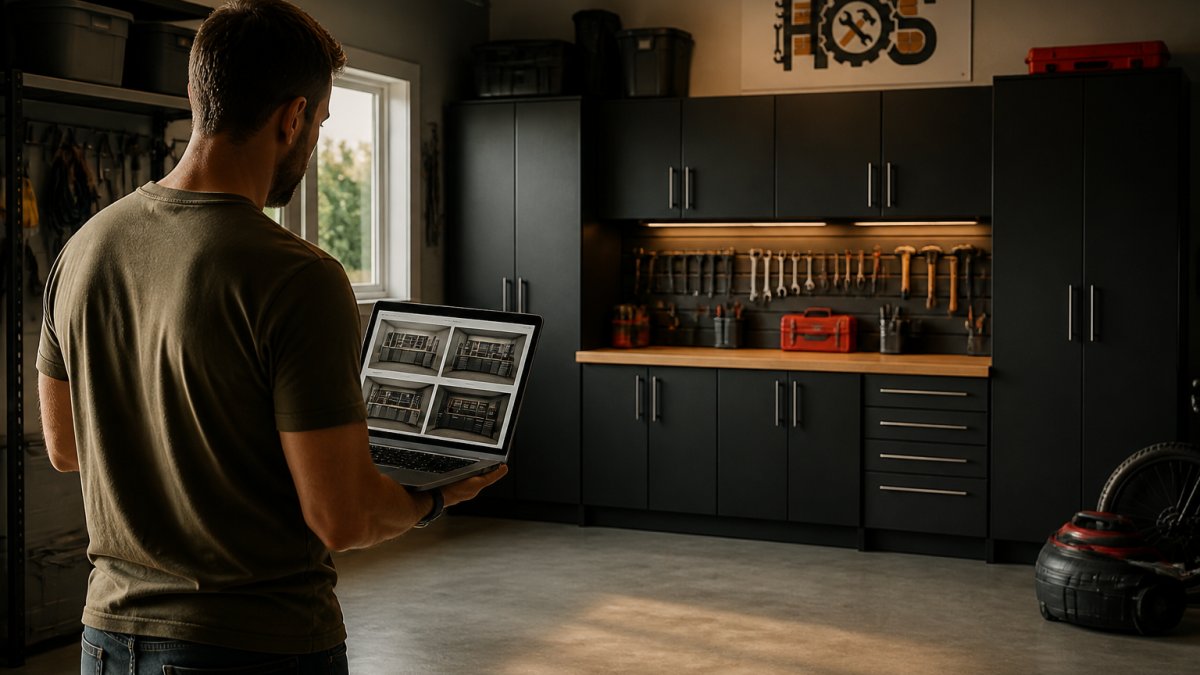
Garage Cabinets Online: Alternatives for Homeowners
Table of Contents
- Why Homeowners Choose Garage Cabinets Online
- Garage Shelving Systems vs. Cabinet Storage
- Garage Wall Storage Systems: Maximizing Vertical Space
- Overhead Garage Storage Racks for Extra Capacity
- Small Garage Organization Ideas That Actually Work
- Comparing Cabinet Materials, Durability, and Long-Term Value
- How to Choose the Right Garage Cabinet System for Your Home
- Frequently Asked Questions
Last Updated: October 10, 2026
Why Homeowners Choose Garage Cabinets Online
When you're drowning in garage clutter, the appeal of garage cabinets online is immediate. You can browse options from your couch, compare prices without a salesperson hovering, and have everything delivered to your door. But here's what most homeowners discover after their first search: the real decision isn't whether to buy online, it's which storage solution actually solves your problem.
At Home Outpost Supply, we work with homeowners constantly wrestling with this choice. The garage cabinets online market has exploded because people are tired of tools scattered across the floor, sports equipment blocking the car, and seasonal items creating chaos. What works for one garage might fail spectacularly in another. This guide breaks down the real alternatives available to you, what each one delivers, and how to pick the right fit for your specific space and needs.
The truth is simpler than marketing makes it sound: organized garages reduce stress, save time hunting for tools, and actually make your garage usable again. Whether you go with premium cabinet systems, wall-mounted shelving, overhead racks, or a combination approach depends on your space, budget, and what you actually need to store.
Garage Shelving Systems vs. Cabinet Storage
Shelving and cabinets solve different problems, even though both organize your garage.
Shelving systems keep items visible and accessible. You can grab what you need instantly without opening doors. Shelving works well for items you use regularly, paint cans, gardening supplies, seasonal decorations you rotate. The trade-off is that everything shows. Your garage looks like a storage facility, not a finished space.
Cabinets hide clutter behind closed doors. Your garage looks cleaner and more intentional. Cabinets protect tools and supplies from dust, moisture, and temperature swings. They're better for items you don't access constantly or items you want secured. The downside: you need to remember what's inside and open doors each time.
Here's the practical difference: If you want your garage to feel like part of your home, a space guests won't judge, cabinets win. If you prioritize speed and convenience, shelving wins. Many homeowners use both. Wall-mounted cabinets store seasonal items and supplies you access monthly. Open shelving holds everyday tools and supplies.
According to the National Association of Professional Organizers, homeowners who combine closed and open storage report higher satisfaction with their organization systems than those using one method alone. The combination approach lets you hide what doesn't need to be visible while keeping frequently used items within arm's reach.
Garage Wall Storage Systems: Maximizing Vertical Space
Your garage walls are real estate you're probably wasting.
Wall storage systems transform unused vertical space into functional storage without eating into your floor area. This matters especially if your garage doubles as a workspace, parking area, or hobby zone. The more you store vertically, the more floor space you keep clear.
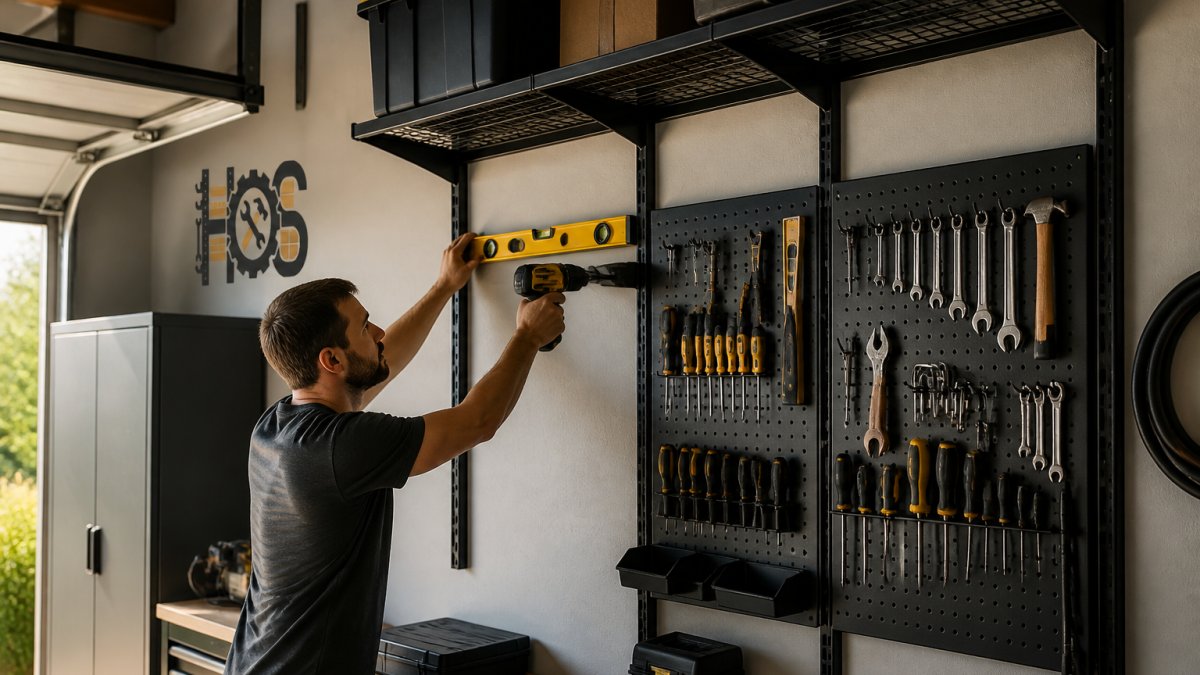
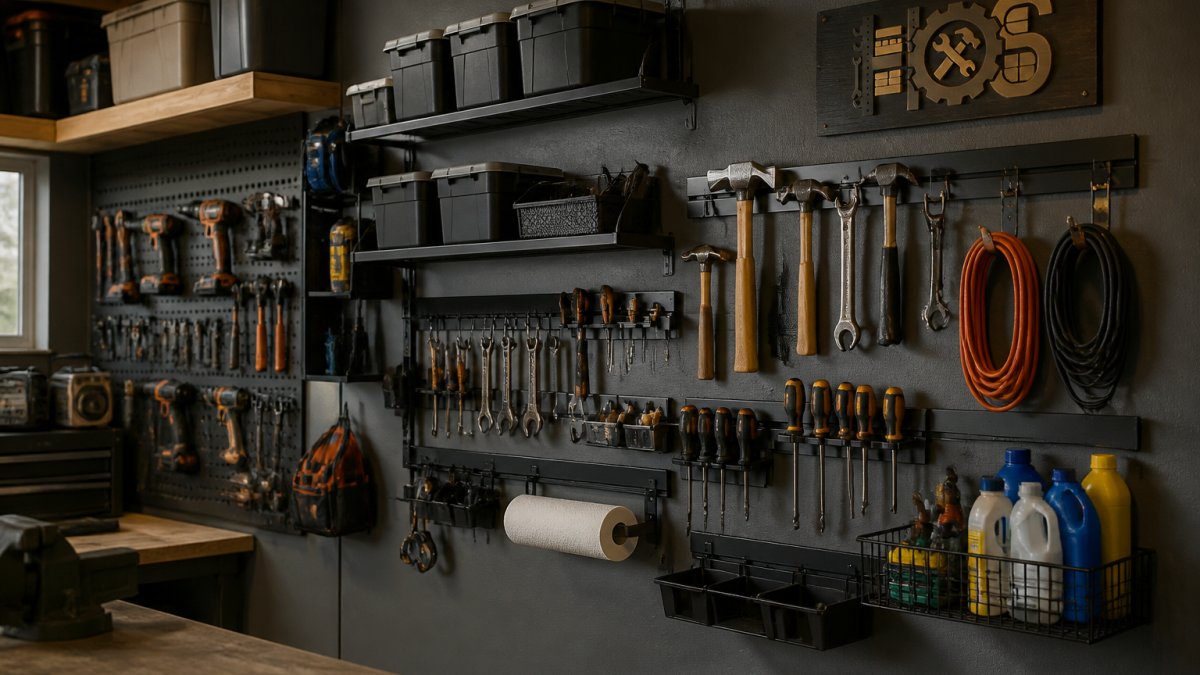
Wall storage comes in several forms. Mounted cabinets sit permanently on studs and hold substantial weight. Wall shelving systems use brackets and rails for adjustable storage. Pegboards and slatwall panels accept hooks, bins, and accessories that you customize. Each approach has different weight capacity, flexibility, and appearance.
Wall storage works best when you match the system to your actual usage patterns. Heavy tools and equipment need sturdy cabinets anchored to wall studs. Lighter seasonal items and supplies work fine on shelving. Frequently rotated items belong on pegboards where you can see everything.
Installation matters more than most people realize. Wall storage systems must be anchored properly to prevent failure. Studs provide the strongest anchor point. Drywall anchors work for lighter loads but fail under sustained weight. If you're uncertain about your walls or installation, professional help pays for itself through safety and durability.
Overhead Garage Storage Racks for Extra Capacity
Overhead storage is the secret weapon for garages where floor space is already claimed by vehicles or projects.
Ceiling-mounted racks and storage systems use the space between your roof and the top of your vehicles or workbench. This area typically sits empty. Overhead racks reclaim that real estate for seasonal items, holiday decorations, sports equipment, and supplies you access a few times per year.
The advantage is obvious: you store more without losing floor space. The disadvantage is accessibility. Reaching overhead storage requires a ladder or step stool. Items you need frequently don't belong up there. Overhead storage works best for items you grab once or twice annually.
Weight capacity matters critically with overhead systems. The system must be properly installed and anchored to roof trusses or joists, not just drywall. Installation mistakes create serious safety risks. If you're uncomfortable with installation, hire a professional. The cost is worth avoiding a ceiling collapse or dropped items.
Overhead racks come in different styles. Some are simple metal frames you load manually. Others include pulley systems that lower and raise storage platforms. The pulley systems cost more but make access easier if you're storing heavier items. Consider your physical ability and the weight of what you're storing when choosing between manual and pulley systems.
Small Garage Organization Ideas That Actually Work
Small garages demand different thinking than large ones.
You don't have room for every storage solution. Every decision carries weight because space is precious. The winning approach focuses on vertical storage, wall systems, and selective cabinet placement rather than trying to fit multiple large units.
Start by removing everything you don't actually use. Small garages amplify clutter's impact. A single shelf of rarely-used items eats 10% of your space. Multiply that across the garage and you've lost half your usable area to things you forgot you owned.
Next, identify your core storage needs. Tools, automotive supplies, seasonal items, sports equipment, what actually needs to live in your garage? Prioritize ruthlessly. Items you use weekly stay accessible. Items you use monthly can go higher or deeper. Items you use yearly go overhead or in the back.
Astro Series 96 in. W x 79 in. H x 20 in. D Garage Cabinet Set B →
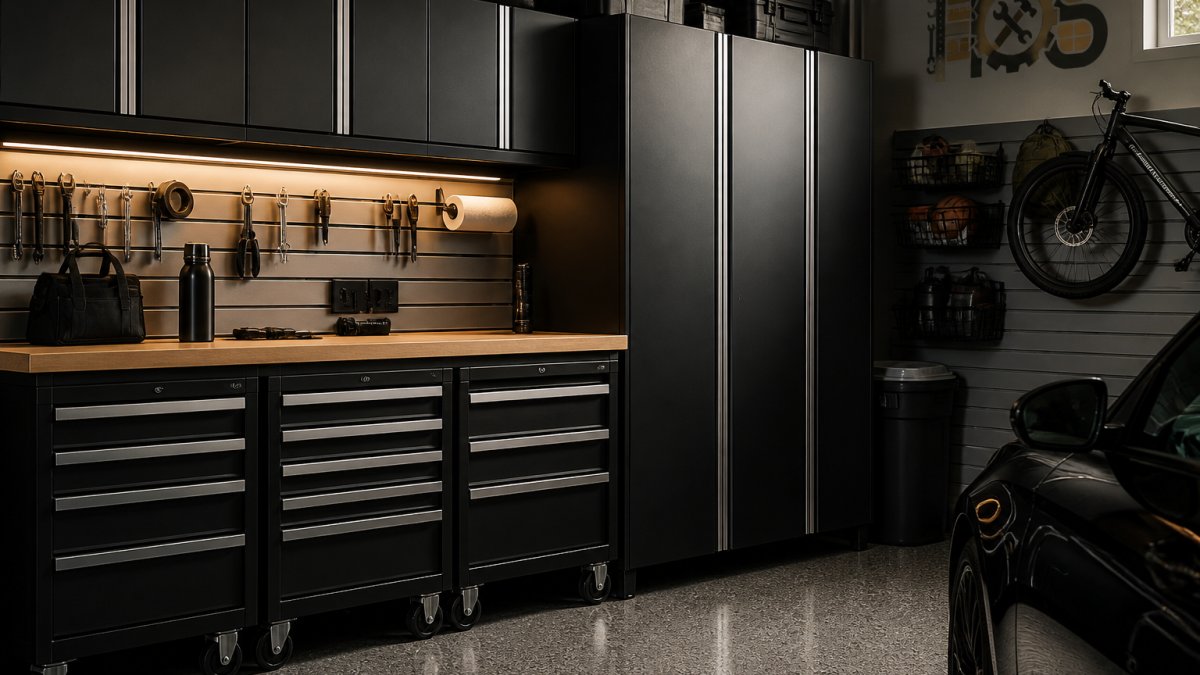
Wall-mounted cabinets and shelving systems work better than freestanding units in small spaces. Freestanding cabinets consume floor space and reduce flexibility. Wall-mounted systems keep the floor clear. The Nova Series Garage Cabinet Set C from Home Outpost Supply demonstrates this approach, it's wall-mounted with extra-deep storage, so you get substantial capacity without sacrificing floor space.

For small garages, consider combination systems that blend cabinets, shelving, and pegboards rather than standalone units. A single coordinated system looks intentional and uses space efficiently. Mixing mismatched storage creates visual chaos that makes small spaces feel even smaller.
Comparing Cabinet Materials, Durability, and Long-Term Value
Not all garage cabinets are built the same, and the differences matter for long-term satisfaction.
Melamine board is the most common material for affordable garage cabinets. It's engineered wood with a plastic veneer. Melamine resists moisture and heat better than solid wood, which makes sense for garages. It's lightweight, affordable, and comes in various finishes. The trade-off is durability. Melamine can chip, crack, or swell if exposed to extreme moisture. It won't last as long as steel or solid wood in harsh conditions.
The Astro Series cabinets from Home Outpost Supply use E0-grade melamine board, which has lower formaldehyde emissions than standard melamine. The edge banding is 2X thicker than typical cabinets, adding durability where cabinets take the most wear. Soft-close doors and drawers reduce slamming, which extends hardware life. These details matter for long-term performance.
Cold-rolled steel is the premium choice for serious workshop environments. Steel resists moisture, handles heavy loads, and lasts decades with minimal maintenance. The HPDMC 15-Piece Corner Garage Storage System uses 100% cold-rolled steel construction. Steel cabinets cost significantly more than melamine but deliver superior durability. They're heavier, which matters for installation but also means they won't shift or wobble under load.
Durability factors beyond material:
- Edge banding thickness (thicker = longer-lasting)
- Hardware quality (soft-close mechanisms prevent damage)
- Water and heat resistance (critical in garages with temperature swings)
- Adjustable shelving (lets you adapt storage as needs change)
- Warranty coverage (indicates manufacturer confidence)
Research from the American Society of Interior Designers suggests that storage system longevity depends more on installation quality and maintenance than material alone. Properly installed and maintained melamine cabinets outlast poorly installed steel systems.
|
Material |
Durability |
Cost |
Best For |
Maintenance |
|---|---|---|---|---|
|
Melamine |
5-10 years |
Lower |
Moderate-use garages |
Occasional cleaning |
|
Steel |
15-20+ years |
Higher |
Heavy-use workshops |
Minimal |
|
Solid Wood |
10-15 years |
Medium-High |
Climate-controlled spaces |
Regular |
How to Choose the Right Garage Cabinet System for Your Home
The right system depends on your space, budget, and actual storage needs, not on what looks best online.
Start with honest assessment. Measure your garage walls. Identify which areas get direct sunlight, moisture, or temperature swings. Note where vehicles park and what floor space you need to keep clear.
Next, determine your budget range. Garage cabinets online range from a few hundred dollars for basic shelving to several thousand for comprehensive systems.
Consider your installation comfort level. Some systems require professional installation. Others are designed for DIY assembly. Professional installation costs money but ensures proper anchoring and safety.
Evaluate these specific factors:
- Wall condition: Do you have solid walls with accessible studs? Are there windows, electrical outlets, or plumbing in the way?
- Load requirements: What are you storing? Tools are heavier than seasonal decorations.
- Accessibility needs: Do you need daily access or occasional access?
- Climate control: Is your garage heated and cooled, or does it experience seasonal extremes?
- Appearance priorities: Do you want your garage to look finished, or is function-only acceptable?
The Astro Series 96" 3-Piece Garage Storage Cabinet Set D works well for most homeowners because it balances capacity, durability, and cost.
For smaller spaces or tighter budgets, the Nova Series Garage Cabinet Set C at $1,204.95 provides wall-mounted storage with extra-deep compartments. The wall-mounted design keeps your floor clear, which matters in tight garages.
For serious workshops or larger garages, the Astro Series 128" 7-Piece set at $2,490.95 provides approximately 128 inches of coordinated storage.

For homeowners who want workspace alongside storage, the HPDMC 15-Piece Corner Garage Storage System at $5,947.47 combines cabinets, drawers, pegboards, and workbench surfaces. This system transforms an entire garage corner into a functional workshop.
The garage you actually use beats the garage you wish you had. Choosing garage cabinets online or alternative storage systems means matching the solution to your real situation, not the Pinterest version.
Frequently Asked Questions
Are garage cabinets worth it for homeowners?
Yes, garage cabinets deliver measurable value by reclaiming floor space, protecting tools from moisture and dust, and reducing time spent searching for equipment. The Nova Series Garage Cabinet Set C starts at $1,204.95 and provides years of organized storage. Quality cabinets also improve home appearance and can support future resale value by showing a well-maintained garage space.
What's the difference between garage cabinets and garage shelving systems?
Cabinets offer enclosed storage with doors that hide clutter and protect contents from dust and moisture, while shelving systems provide open-access storage for frequently used items. Shelving costs less upfront but requires items to be organized neatly. Many homeowners use both: cabinets for seasonal items and supplies, shelving for everyday tools. The choice depends on what you're storing and how often you need access.
How much does a quality garage cabinet system cost?
Home Outpost Supply offers garage cabinets ranging from $1,204.95 for the Nova Series wall-mounted system to $2,490.95 for the Astro Series 7-piece set. The HPDMC 15-piece corner system with workbench costs $5,947.47 and includes pegboards and integrated work surfaces. Prices reflect construction quality, materials, and storage capacity. Investing in durable cabinets avoids the cost of replacing cheaper alternatives that fail after a few years.
Can I organize a small garage without buying cabinets?
Yes. Small garage organization works with wall-mounted shelving, pegboards, overhead racks, and vertical storage solutions. The key is using wall space instead of floor space to keep your vehicle accessible. Overhead racks store seasonal items, pegboards hold hand tools at eye level, and shelving keeps supplies organized. Many small garages benefit from a combination approach rather than a single large cabinet system.


Leave a comment
This site is protected by hCaptcha and the hCaptcha Privacy Policy and Terms of Service apply.