


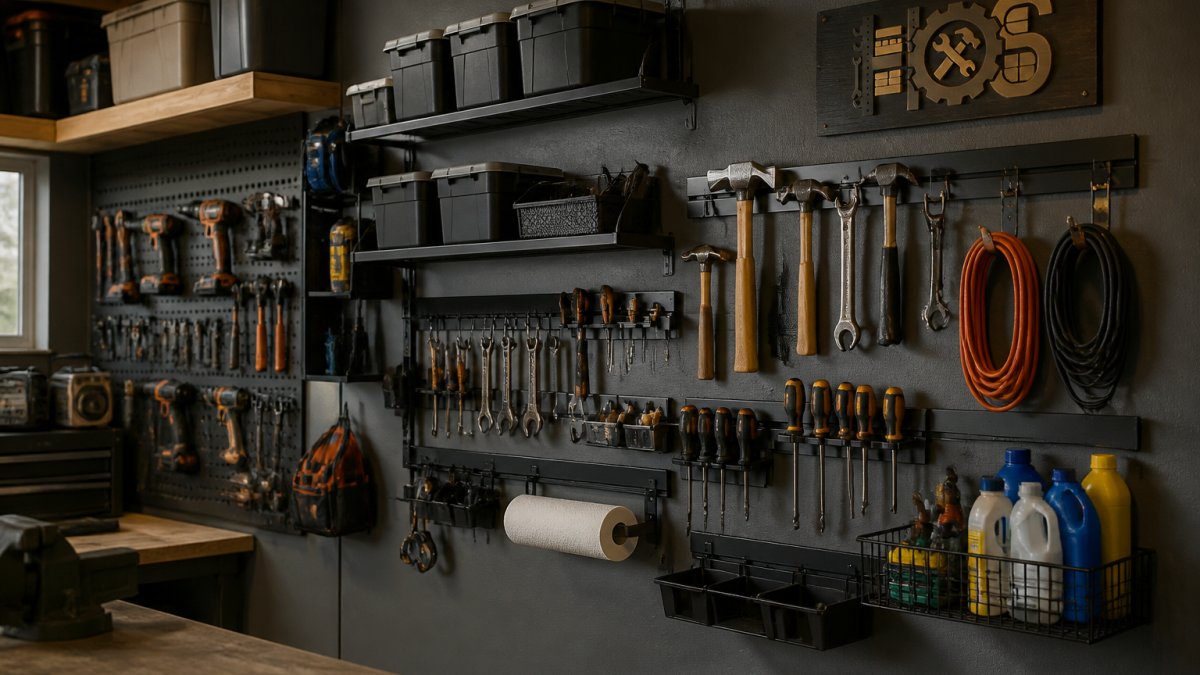
DIY Garage Wall Organization Ideas for Beginners
Table of Contents
- Wall-Mounted Shelves for Vertical Storage
- Pegboard Layouts for Tools and Small Items
- Hooks and Racks for Bulky Gear
- DIY Garage Tool Organizer Ideas
- Garage Wall Storage Ideas on a Budget
- Step-by-Step Wall Planning Method
- Common Mistakes to Avoid
- Frequently Asked Questions
Last Updated: October 12, 2026
Wall-Mounted Shelves for Vertical Storage
Wall-mounted shelves are the foundation of effective garage wall organization. They move storage off the floor and create usable vertical space without consuming the square footage you need for vehicles or projects. At Home Outpost Supply, we've helped thousands of homeowners transform cramped garages by starting with a solid shelving strategy.
The beauty of wall-mounted shelves lies in their flexibility. You can install them at any height, adjust spacing between tiers, and reconfigure as your needs change. Unlike freestanding racks that consume floor area, wall-mounted systems maximize the one resource every garage has plenty of: wall space.
Finding Studs and Safe Anchoring
Before you drill a single hole, locate the wall studs behind your drywall. Studs are the vertical wooden frames that support your home's structure, they're typically spaced 16 inches apart. A stud finder (a basic one costs $15-30) makes this straightforward. Mark each stud location with a pencil.
Why studs matter: drywall alone cannot support heavy shelves. A shelf loaded with tools, equipment, and supplies can weigh hundreds of pounds. Mounting into studs distributes that weight into your home's structural frame. Mounting into drywall alone risks the shelf pulling away from the wall, potentially dropping everything on the garage floor, or worse, on someone below.
Use lag bolts or heavy-duty screws rated for your shelf's intended load. Most quality wall-mounted shelves come with hardware specifications. Follow those exactly. If a shelf is rated for 100 pounds per tier and you're mounting into studs, install the bolts into the studs themselves, not between them.
Shelf Sizing and Weight Limits
Standard garage shelves come in widths from 24 inches to 72 inches. Wider shelves hold more but can sag under weight if not properly supported. The rule of thumb: narrower shelves (24-36 inches) can handle heavier loads per square foot than wider ones.
Most residential shelves rate between 50-150 pounds per tier when properly installed into studs. Industrial-grade shelving like the WORKPRO 68" Heavy-Duty Garage Shelving with up to 7,200 lbs total capacity is built for demanding loads, up to 1,800 pounds per tier when evenly distributed.

Start conservative. If you're new to garage organization, mount shelves rated for more weight than you think you'll need. This gives you room to add items later without worrying about exceeding capacity.
Pegboard Layouts for Tools and Small Items
Pegboards are the versatile workhorse of garage wall organization. They're sheets of hardboard with evenly spaced holes that accept standard 1/4-inch and 1/8-inch hooks, bins, and accessories. A pegboard transforms a blank wall into an organized display of frequently used tools.
The advantage: you can rearrange the layout anytime. As your tool collection grows or your projects change, move hooks around without permanent modifications to the wall.
Customizing Your Pegboard Layout
Start by grouping tools by category: hand tools together, power tools in one area, automotive supplies in another. This logical arrangement means you'll spend less time hunting for what you need.
Map out your pegboard on paper before installing it. Sketch the layout, marking where each hook will go. This prevents the common mistake of installing hooks randomly, then realizing you've wasted valuable space or created an inefficient workflow.
Consider frequency of use. Tools you reach for daily should hang at eye level or slightly below. Seasonal items or backup supplies can go higher or lower. The HPDMC 7-Piece Garage Storage System includes two pegboard panels pre-configured with standard hook compatibility, letting you customize around your actual tool collection.

Pegboard Hooks and Accessories
Standard pegboard hooks come in dozens of styles: simple J-hooks for hanging hand tools, specialty hooks for power cords, bins for small parts, and shelves for larger items. A well-stocked pegboard uses a mix.
Buy more hooks than you think you'll need. A typical 4-by-8-foot pegboard can accommodate 40-60 hooks depending on spacing. Start with essential tools visible, leave 20-30% of the board empty for growth, and add hooks as your needs evolve.
Hooks and Racks for Bulky Gear
Not everything fits on a shelf or pegboard. Bicycles, ladders, sports equipment, and seasonal gear need different storage solutions. Hooks and racks designed for bulky items are the answer.
Wall-mounted bike hooks hang bicycles vertically, freeing valuable floor space. Ladder racks secure ladders horizontally along the wall. Specialized hooks hold garden tools, extension cords, and hoses. A single wall-mounted hook rated for 50 pounds can hold a ladder or multiple coiled cords.
The key: mount these into studs. Bulky items are heavy, and the concentrated weight demands structural support. A ladder hook mounted into drywall alone will eventually fail. Use lag bolts directly into studs, and you'll have reliable storage that lasts years.
DIY Garage Tool Organizer Ideas
Building your own tool organizer combines wall storage with workspace. This approach gives you complete control over layout and function while often costing less than pre-built systems.
Tool Chest and Workbench Combinations
A workbench with integrated storage solves two problems at once: you get a work surface for projects and storage underneath. The 7ft Heavy Duty Workbench with 10 Drawers & 2 Cabinets from Home Outpost Supply costs $1,899.00 and combines a sturdy work surface with 10 lockable drawers plus two cabinets, all in one footprint.
This approach is ideal for beginners because you're not piecing together mismatched components. Everything is coordinated, tested, and ready to use.
Rolling Storage for Easy Access
A rolling tool cabinet moves with you. Need tools across the garage? Roll the cabinet there. Done with the project? Roll it back to its home spot. The HPDMC 7-Piece system includes a 4-drawer rolling cabinet, letting you position tool storage wherever you're working.
Rolling cabinets work especially well in smaller garages where floor space is tight. You can tuck them into a corner when not in use, then pull them out for projects.
Garage Wall Storage Ideas on a Budget
Effective garage wall organization doesn't require spending thousands. Strategic choices and a bit of DIY work deliver professional results on a modest budget.
Low-Cost Materials and Reclaimed Options
Reclaimed wood makes excellent shelving material. Salvage yards, demolition sites, and online marketplaces often have quality lumber at a fraction of new wood prices.
Nova Series - Garage Cabinet Set C - Metallic Gray →
Pallets are another budget option. Free or nearly-free pallets can be disassembled and reassembled into shelves.
PVC pipe and fittings create surprisingly durable storage racks. These work well for lightweight items like sports equipment or seasonal decorations.
Budget Project Timelines and Skill Levels
A basic wall-mounted shelf project takes 2-3 hours for a beginner: locate studs, mark holes, install hardware, and mount the shelf. Skill level: minimal. You need a drill, level, and stud finder.
A DIY pegboard layout takes 1-2 hours once the pegboard is mounted. Skill level: minimal. The hardest part is planning the layout; installation is straightforward.
Building a reclaimed-wood shelf from scratch takes 4-6 hours for a beginner. Skill level: intermediate. You'll need basic carpentry tools and comfort with a saw and drill.
Step-by-Step Wall Planning Method
Before installing a single shelf or hook, plan your layout. A thoughtful plan prevents mistakes, wasted materials, and frustration.
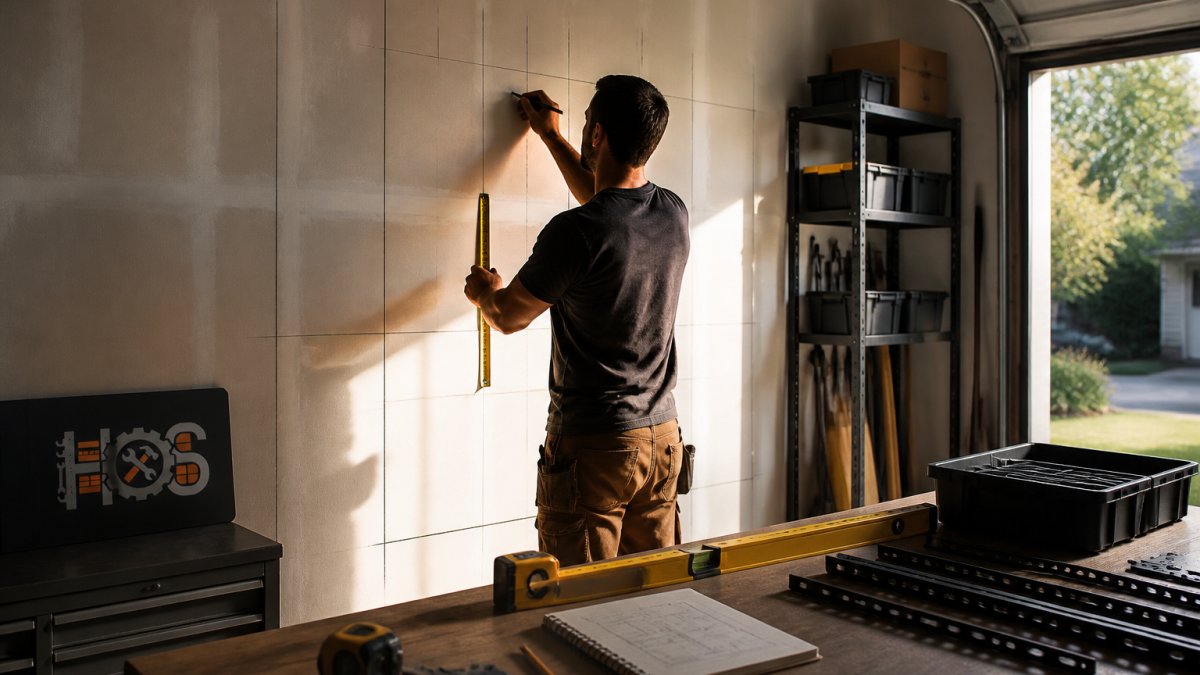
Measuring and Mapping Your Space
Start with accurate measurements. Measure your garage wall height and width. Note any obstacles: windows, electrical outlets, light switches, doors. Sketch these on paper or use a simple digital tool.
Next, identify what needs storage. Walk through your garage and list every item that doesn't have a home. Group similar items: all hand tools together, all power tools together, all seasonal items together.
Sketch zones on your wall plan. High shelves for items you rarely use. Eye-level storage for frequently accessed tools. Lower storage for heavy items. This logical arrangement makes the garage easier to navigate.
Categorizing and Organizing Items
Sort everything into categories: hand tools, power tools, automotive supplies, seasonal gear, cleaning products, sports equipment. Be ruthless. Donate or discard items you haven't used in two years.
Assign each category a storage zone. Hand tools on pegboard at eye level. Power tools in a cabinet or on a shelf. Seasonal items on high shelves. This system means anyone in your household can find what they need and return it to the right place.
Count items in each category to estimate storage space needed. If you have 40 hand tools, you need pegboard space or drawer storage for 40 items. If you have three bicycles, you need three wall-mounted bike hooks. Accurate counting prevents over-building or under-building storage.
Common Mistakes to Avoid
The most common mistake is mounting shelves into drywall without studs. It fails, sometimes dramatically. Always locate studs and mount into them.
Second mistake: overcrowding. Just because you can fit something on a shelf doesn't mean you should. Overcrowded storage becomes disorganized storage. Leave 20-30% of shelf and pegboard space empty for growth and easier access.
Third mistake: poor workflow planning. Storing frequently used tools in hard-to-reach places defeats the purpose. Put everyday tools at eye level or slightly below. Reserve high shelves for occasional items.
Fourth mistake: mixing storage systems without coordination. A wall covered in mismatched shelves, pegboards, and hooks looks chaotic. Choose a cohesive approach: either all wall-mounted shelves, or shelves plus pegboard plus hooks in a planned layout.
Fifth mistake: ignoring weight limits. Overloading shelves causes failure. Know your shelf's rated capacity and respect it. When in doubt, install more shelves at lighter loads rather than fewer shelves at maximum load.
The HPDMC 15-Piece Corner Garage Storage System ($5,947.47) solves many of these problems at once. It combines shelves, pegboards, drawers, and workbench space in a coordinated system designed for real garage use.

Reclaiming your garage starts with one decision: commit to a plan.
Home Outpost Supply offers garage storage systems designed for real homeowners, not showroom perfection. Our products combine durable materials with practical layouts that work for busy families.
Storage Type |
Best For |
Cost Range |
Installation Time |
Skill Level |
|---|---|---|---|---|
Wall-mounted shelves |
General storage, medium loads |
$50-200 per shelf |
2-3 hours |
Beginner |
Pegboard system |
Hand tools, frequently used items |
$40-150 per board |
1-2 hours |
Beginner |
Hooks and racks |
Bicycles, ladders, bulky gear |
$20-80 each |
30 minutes |
Beginner |
Workbench with storage |
Tool organization + workspace |
$1,899-4,299 |
Assembly varies |
Beginner to intermediate |
Rolling cabinets |
Mobile tool storage |
$400-1,200 |
Assembly required |
Intermediate |
DIY reclaimed shelves |
Budget-conscious storage |
$80-150 per shelf |
4-6 hours |
Intermediate |
Frequently Asked Questions
What's the easiest garage wall organization idea for a beginner?
Wall-mounted shelves are the simplest starting point. They require only basic tools, don't demand advanced carpentry skills, and provide immediate vertical storage. Find the studs in your wall, use appropriate anchors, and install shelves at a height that suits your most-used items. Most beginners can complete a single shelf installation in 1-2 hours.
How do I choose between pegboard, shelves, and wall hooks?
Pegboards work best for frequently used hand tools and small items you want visible. Wall-mounted shelves suit larger containers, storage bins, and equipment you access less often. Hooks and racks handle bulky gear like bikes, ladders, and sports equipment. Many successful garage organizations combine all three: shelves for bins, pegboards for tools, and hooks for oversized items.
How can I organize my garage wall on a budget?
Use reclaimed wood for shelves, repurpose old pegboards, and install basic metal hooks from hardware stores at a fraction of cabinet costs. DIY projects using basic materials cost significantly less than pre-built storage systems. Focus on one wall section at a time to spread costs across several months.
What weight can garage wall storage actually hold?
Weight capacity depends on your wall construction and anchoring method. Shelves mounted directly into wall studs can safely hold 50-100 pounds per shelf. Drywall anchors alone typically support 10-25 pounds. Always locate studs before mounting heavy storage, use appropriate anchors for your wall type, and distribute weight evenly. When in doubt, consult your shelf manufacturer's guidelines.
How do I organize tools on a garage wall effectively?
Group similar tools together and place frequently used items at eye level for easy access. Hand tools work well on pegboards with labeled hooks. Power tools fit better in drawers or cabinets to protect them from dust. Heavy items like sledgehammers belong on lower shelves. Create zones: one area for automotive tools, another for woodworking, another for general maintenance supplies. This method saves time searching for what you need.


Leave a comment
This site is protected by hCaptcha and the hCaptcha Privacy Policy and Terms of Service apply.