


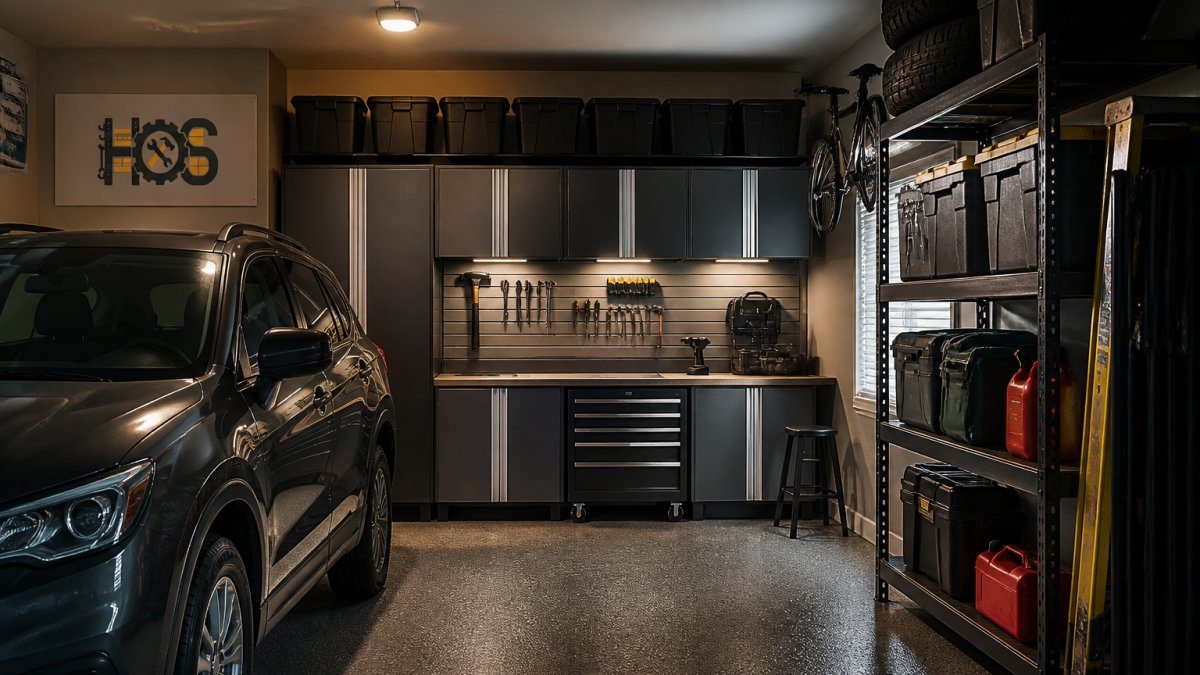
Maximize Space in a One-Car Garage: A Practical Guide
Table of Contents
- Assess Your Current Space and Prioritize What Stays
- One-Car Garage Storage Ideas: A Layout Blueprint
- Garage Wall Storage Ideas to Reclaim Floor Space
- Overhead Garage Storage to Use Ceiling Space
- Garage Layout Ideas for One Car: Zones and Flow
- Install and Organize: Step-by-Step Implementation
- Common Mistakes to Avoid When Organizing a One-Car Garage
- Maximize Space in a One-Car Garage: Final Steps
- Frequently Asked Questions
Last Updated: October 12, 2026
Assess Your Current Space and Prioritize What Stays
The first step to maximize space one-car garage isn't buying storage, it's understanding what you have and what you need. Most garages fail because homeowners add shelves before clearing out what doesn't belong, storing clutter more efficiently instead of solving anything. Measure, sort, then store.
Measure Your Garage Dimensions
Grab a tape measure and record width, length, and ceiling height, these numbers dictate everything that follows. A standard one-car garage runs about 12 feet wide by 20 feet long with 8 to 10 feet of ceiling clearance. A narrow garage needs vertical solutions; low ceilings rule out overhead lifts. Measure wall space too, noting outlets, windows, and doors, and take photos from multiple angles to visualize changes before committing.
Sort Items: Keep, Relocate, or Discard
Pull everything out of your garage and create three piles: keep, relocate, and discard.
Keep items that you use regularly or seasonally in your garage:
- Tools and equipment you actually use
- Seasonal gear (holiday decorations, camping equipment)
- Sports equipment and hobby supplies
- Automotive maintenance items
- Items you need quick access to
Relocate items that don't belong in your garage:
- Boxes of old paperwork (store in the attic or basement)
- Duplicate tools and equipment
- Broken items you keep "just in case"
- Furniture you're not using
- Expired chemicals or paint cans
Discard items you don't need:
- Broken tools and equipment beyond repair
- Dried-up paint cans and adhesives
- Duplicate items
- Anything you haven't used in two years
You've already won before you buy a single shelf.
One-Car Garage Storage Ideas: A Layout Blueprint
Once you know what stays, design a layout that keeps your vehicle accessible while maximizing every inch of storage. An organized one-car garage balances three zones: parking space, work area, and storage.
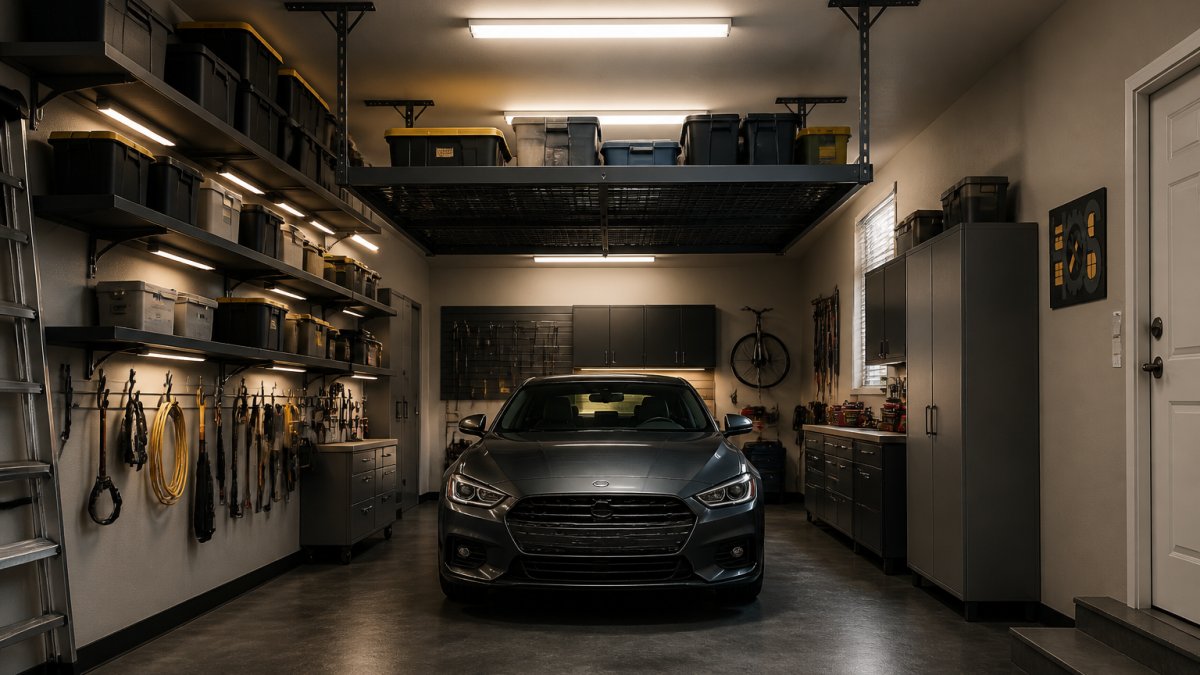
Sample Layout for a 12 x 20 Foot Garage
Here's how to divide a typical 12 by 20 foot garage:
Parking zone (8 feet wide by 18 feet long): Your vehicle's space. Keep it clear.
Right wall (12 feet wide): Hooks and hanging storage for bikes, ladders, and seasonal equipment.
Back wall (12 feet wide): Overhead storage zone.
Front area (near the door): Keep this clear to open your car door and move in and out.
This layout keeps your vehicle accessible while storing everything else vertically or overhead.
Ensuring Safe Vehicle Access and Clearance
Your vehicle needs to fit and move freely, non-negotiable. Most one-car vehicles are about 6 feet wide and 15 feet long; add 2 feet on each side for doors, giving a 10-by-19-foot minimum. A 12-by-20-foot garage has room, but barely, so don't fill the parking zone with storage. Keep the front 3 feet near the garage door clear, and maintain at least 2 feet of clearance on each side.
Garage Wall Storage Ideas to Reclaim Floor Space
Walls are your secret weapon, every square foot is storage you're not using yet. Wall storage keeps items accessible while freeing up floor space for your vehicle and work area.
Wall-Mounted Racks and Shelves
Wall-mounted shelves are the foundation of a one-car garage storage system, holding tools and equipment without taking up floor space.

The WORKPRO 68" 4-Tier Heavy-Duty Garage Shelving offers 7,200 pounds of total capacity across four tiers.
Install shelves at eye and waist level, with overhead shelves for less-used items, and space them 12 to 18 inches apart vertically to fit bins and equipment.
Hooks and Hanging Storage for Tools and Equipment
Hooks turn dead wall space into active storage for a few dollars each. Install them at varying heights: lower hooks (5 to 6 feet) for frequently used items, higher hooks for seasonal equipment.
Common items to hang:
- Bicycles and scooters
- Ladders and step stools
- Garden tools and rakes
- Sports equipment (baseball bats, tennis rackets)
- Extension cords and hoses
- Lawn equipment handles
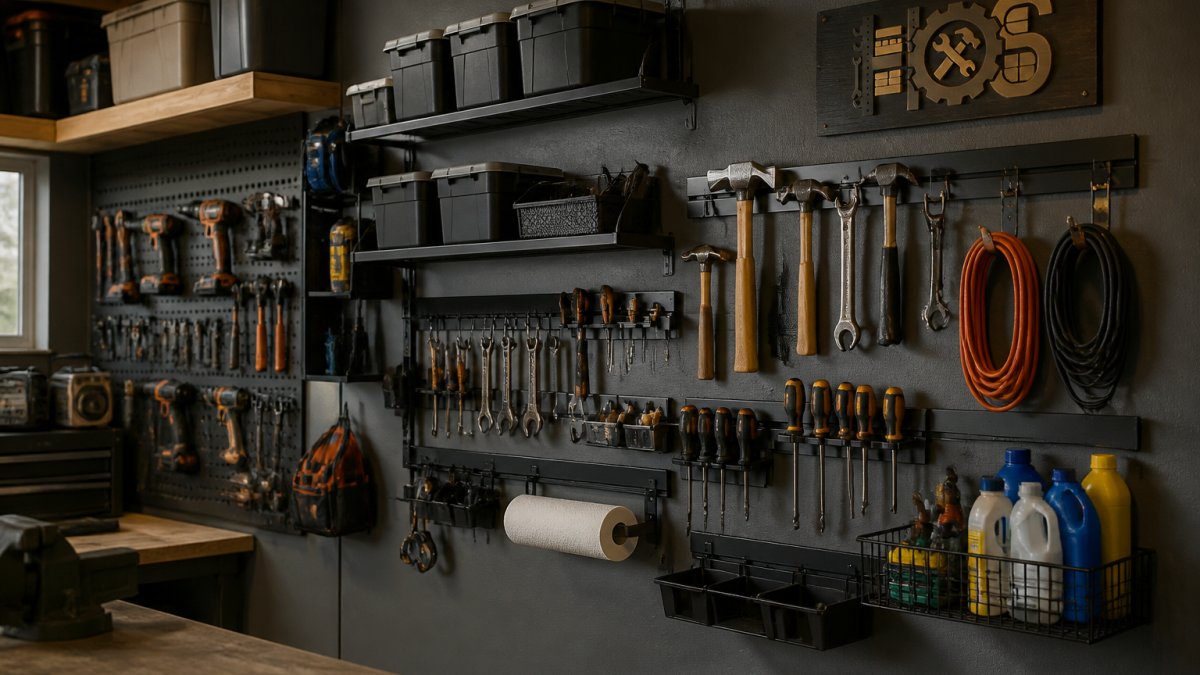
Heavy-duty hooks rated for 25 to 50 pounds are standard; anchor them into wall studs. A pegboard system works well for smaller tools, holding adjustable hooks, baskets, and tool holders you can reconfigure as needs change.
Cabinets for Tools, Chemicals, and Supplies
Cabinets store items you want out of sight and protected from dust. They're ideal for chemicals, cleaning supplies, and valuable tools.
Wall-mounted cabinets keep these items off the floor while keeping them accessible.
Cabinets come in different depths. Standard cabinets are 12 inches deep.
Consider cabinet height. Cabinets that reach to 7 feet use vertical space efficiently.
Lock cabinets if you store chemicals or tools around children or pets.
Overhead Garage Storage to Use Ceiling Space
Your ceiling is wasted storage space. Overhead storage is perfect for seasonal items you don't access frequently, motorized lifts and ceiling racks turn dead space into active storage.
Motorized Lifts for Heavy and Seasonal Items
A motorized garage storage lift changes everything.

The Auxx-Lift Motorized Garage Storage Lift uses a wireless remote to raise and lower a storage platform.
A 400-pound lift handles most seasonal storage needs.
Install the lift above your parking area, not above where you work.
Motorized lifts cost more than static ceiling racks, but they're worth it if you access overhead storage regularly.
Ceiling Racks and Soffit Cabinets
Static ceiling racks cost less than motorized lifts but require more effort to load. They mount directly to ceiling joists and hold 500 to 1,000 pounds, best for infrequently accessed items. Soffit cabinets mount along upper walls just below the ceiling, easier to load at shoulder height, but they take up more wall space.
Garage Layout Ideas for One Car: Zones and Flow
A successful one-car garage layout separates storage, parking, and working. Think of it like a small workshop: parking in the center, storage lining the walls and ceiling, and a small work area in a corner if you have room.
Create Dedicated Zones for Tools, Seasonal Items, and Supplies
Tool zone: Mount your most-used tools on one wall with pegboards, racks, and hooks so they stay visible and accessible.
Seasonal zone: Dedicate one area for seasonal items, holiday decorations, camping gear, grouped together so you know where they are.
Vehicle zone: The center of your garage is your parking space. Keep it clear.
This zoning system keeps your garage organized and functional.
Storage Solutions Compared: Cost, Installation, and Load Capacity
Different storage solutions serve different needs. Here's how they compare:
| Storage Solution | Cost Range | Installation | Load Capacity | Best For |
|---|---|---|---|---|
| Wall-Mounted Shelves | $100-$400 | Moderate (anchor to studs) | 50-200 lbs per shelf | Tools, bins, supplies |
| Hooks and Pegboards | $20-$150 | Easy (surface mount) | 25-50 lbs per hook | Hand tools, equipment |
| Wall Cabinets | $300-$1,200 | Moderate (anchor to studs) | 100-300 lbs per cabinet | Chemicals, valuable tools |
| Ceiling Racks | $200-$600 | Difficult (ceiling joist installation) | 500-1,000 lbs | Seasonal items, bulky gear |
| Motorized Lifts | $2,000-$3,500 | Difficult (professional recommended) | 400-800 lbs | Frequent overhead access |
Budget matters, but so does what you're storing: heavy tools need sturdy shelves, seasonal decorations work fine on ceiling racks, and chemicals need locked cabinets. Start with affordable, easy-to-install wall-mounted shelves and hooks, then add cabinets and overhead storage as your budget allows.
Install and Organize: Step-by-Step Implementation
Follow this sequence to avoid mistakes.
Step 1: Anchor Wall-Mounted Storage Securely
Find your wall studs with a stud finder and mark them, typically 16 inches apart, they're the strongest part of your wall. Use 3-inch wood screws into studs for shelves and cabinets; they hold far better than drywall anchors. Install shelves level, space them 12 to 18 inches apart, and start low, building upward to prevent items from falling during installation.
Step 2: Set Up Overhead Storage Systems
Ceiling racks and motorized lifts require ceiling joist installation, which is more complex than wall mounting. Locate joists with a stud finder, mark them, and use lag bolts rated for the weight you're storing, bolted directly into joists. If you're not comfortable working overhead, hire a professional. Test with light weight before loading fully.
Step 3: Organize Storage Bins and Label Everything
Clear plastic bins let you see what's inside without opening them. Label each bin with its contents and storage date, group similar items together, and stack neatly to save floor space. Keep frequently used items at eye or waist level; rarely used items can go higher or lower.
Step 4: Maintain Clear Floor Space for Your Vehicle
Your vehicle comes first. Keep the center of your garage clear, no storage, no projects. Park in the same spot each time to build a habit and avoid bumps into stored items, keep the front 3 feet near the garage door clear, and sweep monthly to keep the space feeling larger and more organized.
Common Mistakes to Avoid When Organizing a One-Car Garage
Most garage organization fails because people repeat the same mistakes.
Mistake 1: Storing items you don't need. If you haven't used it in two years, donate, sell, or discard it.
Mistake 4: Using the wrong anchors. Drywall anchors fail under weight; anchor to studs with wood screws.
Mistake 5: Not labeling bins. You'll forget what's inside.
Mistake 6: Overstuffing shelves. Leave room to access items.
Mistake 7: Ignoring safety. Store chemicals in locked cabinets away from children and pets, and keep flammables away from heat sources.
Maximize Space in a One-Car Garage: Final Steps
To maximize space one-car garage, you can hold your vehicle, tools, and seasonal gear with planning.
At Home Outpost Supply, we help homeowners like you transform cluttered garages into functional spaces.
The Nova Series Garage Cabinet Set provides deep storage with soft-close doors. The WORKPRO Heavy-Duty Shelving holds serious weight without breaking.

Every product is built for durability, every order ships insured, and our team supports you before and after purchase.
Frequently Asked Questions
How can I organize a one-car garage and still park my car?
The key is vertical storage. Use wall-mounted cabinets, overhead storage lifts, and ceiling racks to move items off the floor. Plan your layout so your vehicle's parking space is clear and accessible, typically a 9-foot-wide lane down the center of the garage. Wall storage and overhead systems let you store tools, seasonal items, and supplies without sacrificing the parking area. A motorized lift like the Auxx-Lift can store up to 800 lbs of seasonal decorations or camping gear overhead, keeping your floor completely clear.
What are the best storage ideas for a small one-car garage?
Combine multiple storage types: wall-mounted racks for tools and small items, cabinets for chemicals and supplies, hooks for hanging equipment, and overhead storage for bulky seasonal items. Heavy-duty shelving units work well for storage bins and larger equipment. The Nova Series Garage Cabinet Set provides extra-deep wall-mounted storage without taking up floor space. Prioritize items you use frequently, store them at arm's reach, and move seasonal items overhead or to the back wall.
How do I store bikes and tools in a one-car garage without losing floor space?
Mount bikes vertically on the wall using hooks or bike-specific wall racks. Store hand tools in wall-mounted cabinets or pegboards. Power tools fit in lockable cabinets or heavy-duty shelving units anchored to the wall. This approach keeps everything accessible and organized while preserving your vehicle's parking area. Label storage bins clearly so you can find items quickly without rummaging through the garage.
Should I use plastic bins or built-in cabinets for garage storage?
Both serve different purposes. Plastic storage bins work well for seasonal items you store overhead or on shelves, they're affordable and stackable. Built-in cabinets like the Nova Series are better for items you access regularly or hazardous materials that need secure, enclosed storage. Cabinets protect tools and chemicals from dust and moisture, while bins are ideal for decorations and camping gear. Use cabinets for frequently accessed tools and supplies; reserve bins for seasonal overflow stored overhead or in dead space.
A cluttered garage steals your peace of mind and your parking space. Home Outpost Supply provides the durable storage systems and expert guidance you need to maximize space in your one-car garage. Our motorized lifts, wall-mounted cabinets, and heavy-duty shelving are built to last and designed to work in real garages. Transform your garage from chaotic to controlled. Browse our full selection of garage storage solutions and get started with a clearer, more functional space today.


Leave a comment
This site is protected by hCaptcha and the hCaptcha Privacy Policy and Terms of Service apply.