


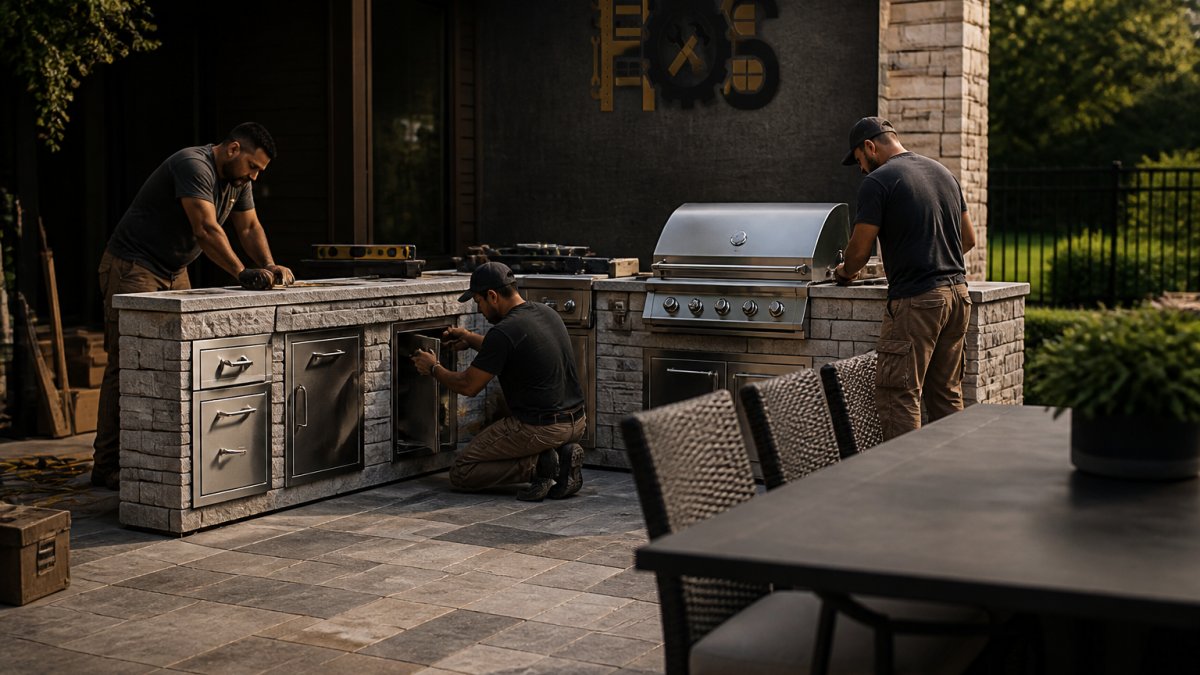
Outdoor Kitchen Installation for Non-DIY Homeowners
Table of Contents
- Why Non-DIY Homeowners Choose Professional Outdoor Kitchen Installation
- Outdoor Kitchen Installation Cost Breakdown
- Choosing the Right Outdoor Kitchen Contractor
- Outdoor Kitchen Installation Timeline: What to Expect
- Outdoor Kitchen Utility Requirements and Connections
- Site Preparation and Permits Before Installation Begins
- Preassembled and Modular Kitchen Options for Faster Installation
- Post-Installation Testing, Handover, and Maintenance
- Frequently Asked Questions
Last Updated: October 9, 2026
Why Non-DIY Homeowners Choose Professional Outdoor Kitchen Installation
Professional outdoor kitchen installation transforms your backyard into a fully functional entertaining space without requiring you to become a general contractor. Homeowners who lack construction experience or time find that hiring a professional delivers results faster, safer, and with fewer costly mistakes than DIY.

The decision to hire professionals for outdoor kitchen installation comes down to complexity. Your project involves multiple trades: gas line connections, electrical work, plumbing for water supply and drainage, grading to prevent standing water, and often permit compliance.
We understand that not every homeowner wants to spend weekends learning construction. Professional installers bring experience, proper tools, and knowledge of local building codes, complete projects far faster than a first-time builder, and carry insurance that protects you if something goes wrong.
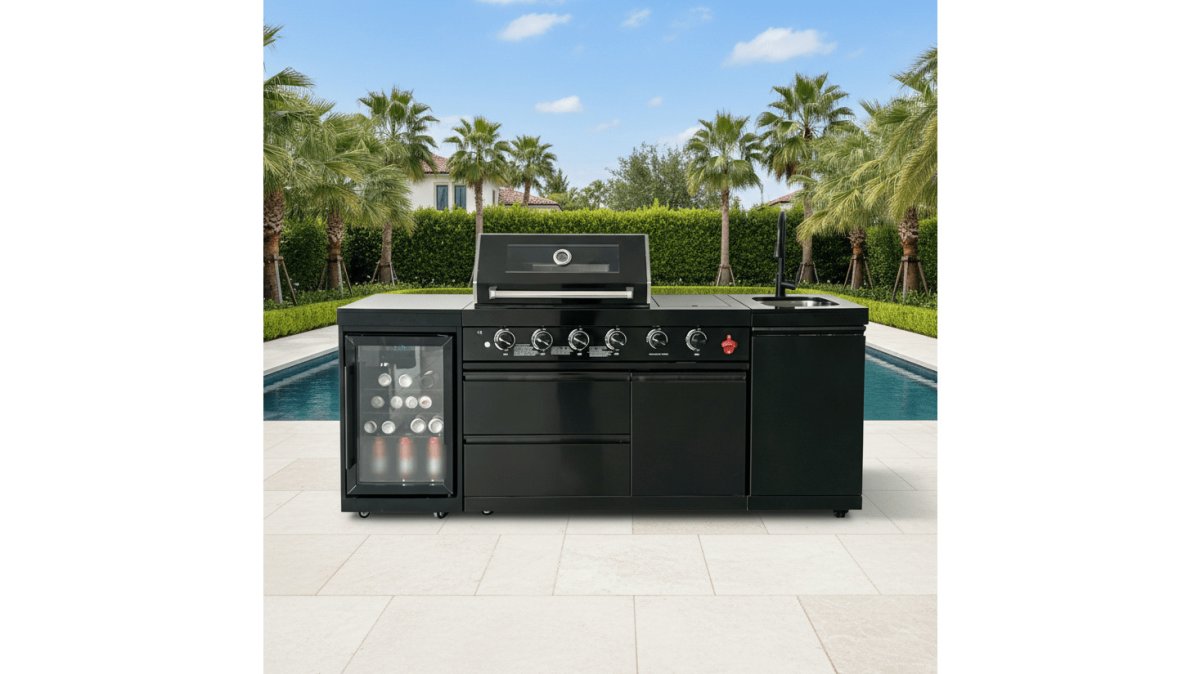
The modular outdoor kitchen options available today make professional installation faster and more affordable than custom-built alternatives. Our 5' WPPO Outdoor Kitchen with Blaze Grill and 85" Outdoor Kitchen with Refrigerator & Sink are designed for quick assembly, meaning professional installers can have your kitchen operational in days rather than weeks.

Outdoor Kitchen Installation Cost Breakdown
Understanding what you'll spend on outdoor kitchen installation helps you budget and compare contractor quotes. Total cost divides into equipment, site preparation, utility connections, labor, and permits.
Equipment costs vary widely depending on your choices. Our 63" Outdoor Kitchen with Refrigerator & Sink runs $3,499, while the larger 85" model costs $4,359. If you want to add a dedicated sink cabinet like our 20" Black Stainless Steel Outdoor Kitchen Sink Cabinet with Faucet at $1,139, those costs accumulate.

Labor costs typically represent 30-50% of your total project budget, with hourly rates varying by market and experience. A straightforward modular kitchen installation might take 8-16 hours; complex custom-built kitchens with extensive stonework or multiple cooking stations take significantly longer.
Utility connections add their own expenses. Gas line installation requires a licensed plumber or gas technician, electrical work needs a licensed electrician, and water supply and drainage require professional work in most jurisdictions.
Site preparation costs depend on your yard's condition. An existing level patio needs minimal preparation; bare ground requires grading, compaction, and potentially a concrete pad or paver base. This ranges from a few hundred dollars for simple leveling to several thousand for extensive site work.
Permits and inspections vary by location but typically cost between $200 and $800. Some jurisdictions require multiple inspections, one for electrical, one for gas, one for plumbing. These aren't optional expenses; building without proper permits creates liability issues and can complicate future home sales.
Choosing the Right Outdoor Kitchen Contractor
Finding a qualified contractor who understands outdoor kitchen installation is your most important decision. The wrong choice leads to delays, cost overruns, and a finished product that doesn't meet your expectations or local building codes.
What to Look for in a Contractor
Start by verifying licensing and insurance. Your contractor should hold current licenses for any trades they perform directly and clearly identify which work they subcontract to licensed specialists.
Ask about experience specifically with outdoor kitchen projects; a contractor who mainly builds decks may not understand outdoor cooking spaces. Request references from at least three previous installations and ask: Did the project finish on time and within budget? How does the kitchen perform months later?
Examine their understanding of modular versus custom-built kitchens. Experienced contractors recognize that preassembled components from quality manufacturers like WPPO offer faster installation, proven designs, and built-in warranties, and can advise which approach fits your space.
Look for contractors who ask detailed questions about your site. Do they visit your property before estimating? Do they ask about utility locations, drainage patterns, and sun exposure? Contractors who skip site visits often miss important factors.
Getting and Comparing Quotes
Request detailed written quotes from at least three contractors. The quote should itemize equipment costs, labor hours, utility connection work, site preparation, permits, and timeline, and specify what's included versus extra.
Compare apples to apples. If one quote includes a concrete pad and another doesn't, you can't compare them directly. Ask each contractor to clarify exactly what work is included, since some bundle permits into labor and others bill separately.
Watch for unusually low quotes, which often signal corner-cutting, underestimation, or planned upsells. The highest quote isn't necessarily best either; mid-range quotes from experienced contractors usually represent fair market value.
Ask each contractor about their payment schedule. Reputable contractors typically request a 25-50% deposit before starting, with the balance due on completion. Be wary of full payment upfront or cash-only arrangements.
Outdoor Kitchen Installation Timeline: What to Expect
Professional outdoor kitchen installation typically takes 3-7 days for a modular system, varying with site complexity and utility work. Understanding the timeline helps you plan around the disruption.
Pre-installation work happens before the contractor arrives. Site preparation may take 1-3 days for grading, compaction, or a concrete pad.
Installation days vary by scope. A modular kitchen on an existing level patio might take 2-3 days: assembling components, making utility connections, testing systems, and cleanup. Complex projects with custom stonework or multiple utility connections stretch to 5-7 days or longer.
Utility connection work often happens alongside kitchen assembly, with licensed electricians, plumbers, and gas technicians coordinating schedules. Some contractors hire these specialists; others require you to arrange them separately.
Post-installation testing and inspection adds 1-2 days. Gas connections are pressure-tested, electrical circuits verified, and water pressure and drainage tested. If permits require inspections, an inspector verifies code compliance before you can use the kitchen.
Plan for weather delays. Rain can halt site preparation and concrete work. Cold temperatures affect certain installations. Discuss weather contingencies with your contractor before work begins.
Outdoor Kitchen Utility Requirements and Connections
Your outdoor kitchen requires three separate utility connections, each with specific requirements and safety considerations. Understanding these upfront prevents expensive mistakes and ensures your kitchen operates safely.
Gas Line Installation
Natural gas or propane powers your grill and other cooking appliances. Gas line installation requires a licensed professional in most jurisdictions and must be sized for your equipment's BTU requirements, sloped to prevent condensation, and pressure-tested before use.
5' WPPO Outdoor Kitchen with Blaze Grill. →
With natural gas, the line typically extends from your existing meter: the contractor trenches to the kitchen, installs copper or black iron pipe to code, and connects the grill. With propane, you'll need a tank at or near the kitchen with proper clearances from structures and property lines.
Gas line costs range from several hundred to over a thousand dollars depending on distance from your home's existing gas supply. Longer runs cost more. Underground installation costs more than above-ground. Your contractor can estimate the specific cost after assessing your property.
Electrical and Water Connections
Electrical work powers your refrigerator, outdoor lighting, and small-appliance outlets. A licensed electrician runs conduit from your panel, installs a dedicated circuit with appropriate amperage, and creates weatherproof outlets meeting code for GFCI protection and wire gauging.
Water supply for your sink requires a properly sized, insulated line from your home's main supply with a shutoff valve. Drainage needs a separate line that slopes to prevent standing water and connects to your septic system or municipal sewer.
Both electrical and water connections typically cost several hundred dollars each. The total depends on distance from your home's existing utilities and local labor rates.
Drainage and Grading
Proper drainage prevents water from pooling around your kitchen or flowing toward your foundation. Your site must slope away from structures at a minimum 2% grade. The contractor assesses natural drainage, adds fill and compaction if needed, and may install French drains or dry wells.
Poor drainage creates expensive problems: foundation damage, standing water that breeds mosquitoes, and deterioration of your kitchen's base materials. This is worth doing correctly the first time.
Site Preparation and Permits Before Installation Begins
Before your contractor arrives, your site must be properly prepared and permitted. Skipping these steps creates legal liability and installation problems.
Permits are required in most jurisdictions for outdoor kitchen installation, particularly with utility connections. Contact your local building department to determine requirements; typically you'll need permits for gas, electrical, and plumbing work, involving plan submission, fees, and inspections after completion.
Permit timelines vary dramatically. Some jurisdictions approve permits within days; others take weeks. Budget 2-4 weeks for the permit process and plan your installation accordingly. Your contractor can often handle permit applications, though you might pay an additional fee for this service.
Site assessment identifies existing utilities, drainage patterns, and structural considerations. Call 811 before digging to mark utility lines and avoid hitting gas, electric, or water lines. Observe where water flows during rain and identify trees or structures that affect placement or shade.
Ground preparation may involve removing sod, grading for slope, compacting soil, and installing a base layer. On bare earth you'll need a stable foundation, either a concrete pad or compacted gravel with pavers, to prevent settling and keep the kitchen level.
Preassembled and Modular Kitchen Options for Faster Installation
Modular outdoor kitchens install significantly faster than custom-built alternatives because components arrive ready to assemble, with no waiting for masons, carpenters, or multiple trades to coordinate over weeks.
Modular kitchens like our 5' WPPO Outdoor Kitchen with Blaze Grill feature natural stone construction with preassembled components that arrive ready for placement, grill installed and countertops finished. Your contractor positions the unit, makes utility connections, and tests systems, so installation takes days instead of weeks.
These modular systems also offer customization through components. Start with a basic grill island, then add a sink cabinet, refrigerator, or storage modules as your budget allows. Our 20" Black Stainless Steel Outdoor Kitchen Sink Cabinet with Faucet integrates seamlessly, giving you a full-featured kitchen without building everything at once.
Modular kitchens also include manufacturer warranties covering structure and appliances, while custom-built kitchens rely on your contractor's workmanship guarantees.
Post-Installation Testing, Handover, and Maintenance
After installation, proper testing and handover ensure everything works safely and you understand how to maintain your new kitchen.
System testing happens before you use the kitchen. Gas connections are pressure-tested for leaks, electrical circuits verified for voltage and grounding, water pressure checked, drainage tested, and the grill fired up at full capacity.
Code inspection occurs after testing if your project required permits. An inspector verifies that gas, electrical, and plumbing work meets local code. Only after passing inspection can you legally use your kitchen.
Handover is when your contractor reviews operation and maintenance with you: demonstrating the grill, explaining special features, providing equipment documentation, and covering maintenance like cleaning grease traps, inspecting gas connections, and winterizing water lines in cold climates.
Maintenance keeps your kitchen functioning safely and extends its lifespan.
Professional outdoor kitchen installation removes the complexity and risk from creating your backyard entertaining space. Start with the 85" Outdoor Kitchen with Refrigerator & Sink or the 63" model if space is limited; both deliver professional results when installed by experienced contractors.
Frequently Asked Questions
How much does outdoor kitchen installation cost?
Professional outdoor kitchen installation costs vary based on size, materials, and utility connections. A compact modular kitchen island typically starts around $3,500-$4,800 before installation labor. Full installation with gas, electrical, and water connections can add $1,500-$5,000 or more, depending on your site's existing infrastructure. Get quotes from at least three contractors to compare labor costs in your area.
What utilities are needed for an outdoor kitchen?
Most outdoor kitchens require gas for the grill, electrical power for refrigerators and lighting, and water supply for sinks and faucets. Natural gas or propane lines must meet code standards and be installed by a licensed professional. Water lines need proper drainage, and electrical circuits must be outdoor-rated and GFCI-protected. An installer can assess your site and determine which utilities are necessary.
How long does outdoor kitchen installation take?
Modular outdoor kitchen installation typically takes 1-3 days once the site is prepared and utilities are ready. Custom-built kitchens or those requiring extensive utility work can take 2-4 weeks. Site preparation, permits, and utility inspections add time before installation begins. An installer should provide a detailed timeline during the quote phase.
Do I need a permit to install an outdoor kitchen?
Most jurisdictions require permits for outdoor kitchens, especially when gas lines, electrical work, or plumbing are involved. Permits ensure your installation meets local building codes and safety standards. An installer typically handles permit applications, but you're responsible for costs, which range from $100-$500 depending on your area. Check with your local building department before hiring an installer.


Leave a comment
This site is protected by hCaptcha and the hCaptcha Privacy Policy and Terms of Service apply.