


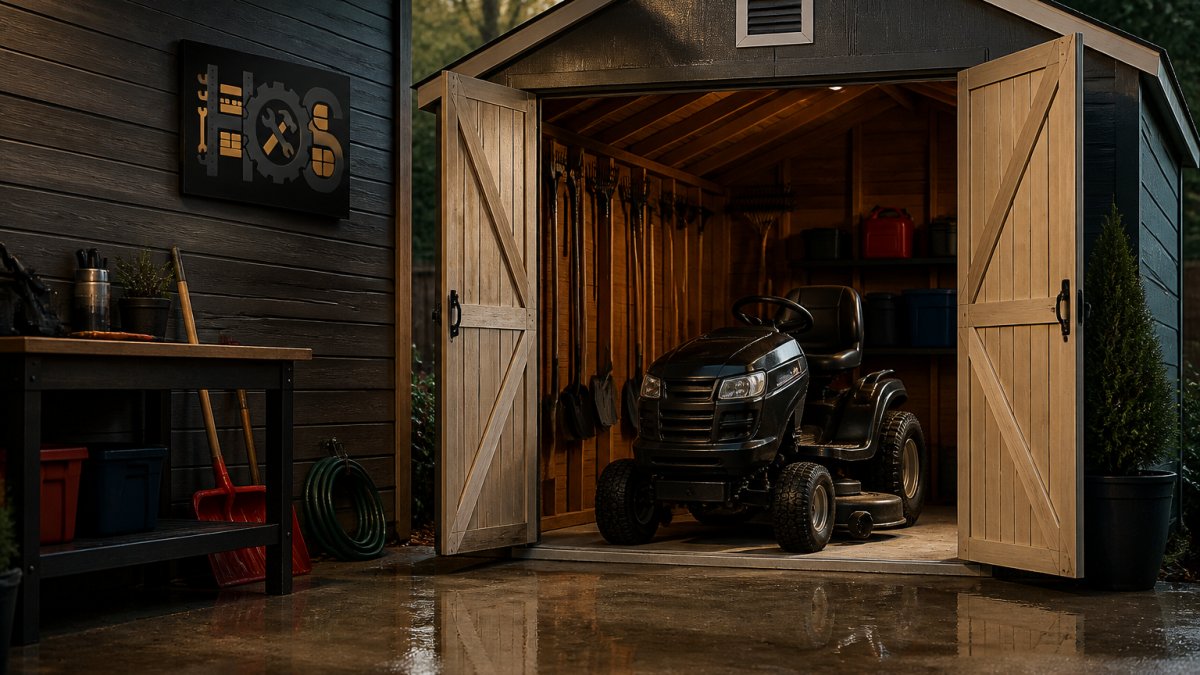
What Size Shed Do You Need for a Riding Lawn Mower?
Table of Contents
- Start With Your Mower's Measurements, Not the Shed Listing
- Shed Size for a Zero-Turn Mower: Wider Decks, Wider Footprint
- Riding Mower Shed Door Width and Ramp Clearance
- The Smallest Shed for a Riding Mower That Still Works
- Building a Shed for Riding Mower and Tools Together
- Shed Sizes That Fit: 6x8, 8x10, and 10x20 Compared
- Site Prep, Foundation, and Ventilation Before You Buy
- Frequently Asked Questions
Last Updated: October 20, 2026
Start With Your Mower's Measurements, Not the Shed Listing
Most people shop for a shed for a riding mower by guessing. They picture their mower, picture a shed, and hope the two match. That is how garages end up with a mower parked at an angle, a door that won't close, or a deck that scrapes the frame every time you pull in.
At Home Outpost Supply, we would rather you measure first and shop second. It takes ten minutes and saves a return, a rebuild, or a season of parking outside.
The Three Numbers That Decide Everything
You need three measurements, and you need them in this order:
- Overall length, from the front bumper to the rear of the back tires, with the deck attached.
- Overall width, the widest point, which is usually the deck or the rear tires, not the body.
- Deck width, the cutting deck measurement itself, because it often sticks out past the wheels.
Write these down. Add a few inches to each for the discharge chute, which can swing out on some decks.
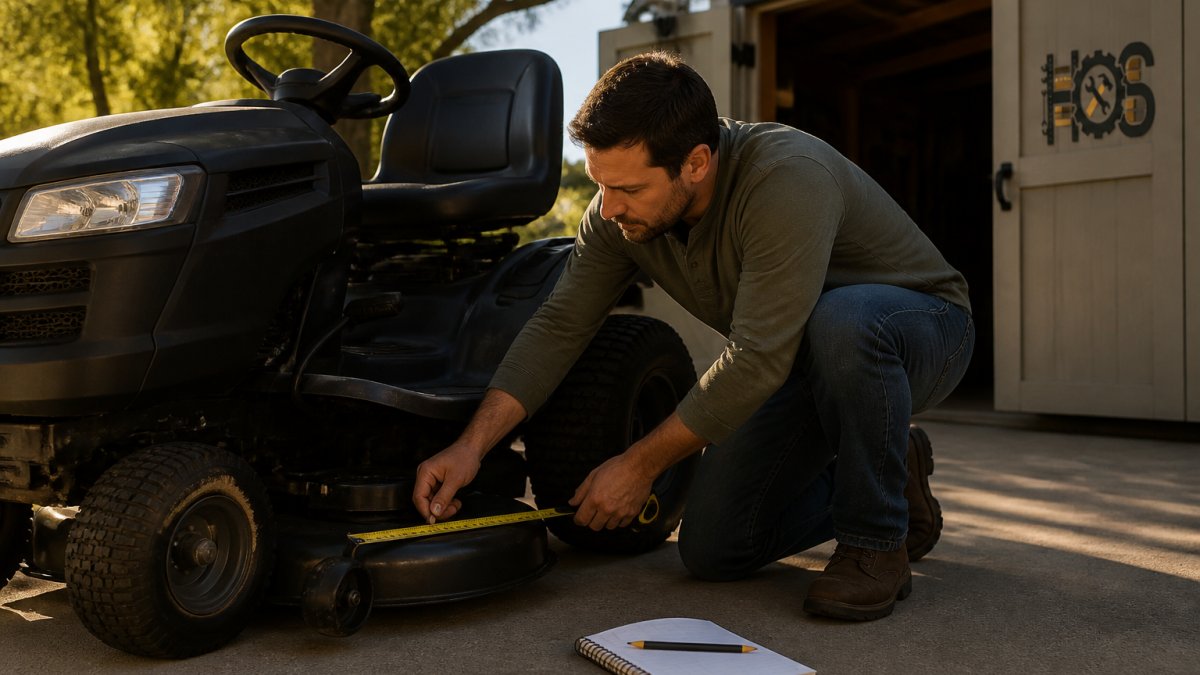
A Worked Example: Sizing a 48-Inch Deck Mower
Say your mower has a 48-inch deck. The deck is the widest part, so your overall width is about 50 inches once you count the chute.
Your overall length might run 70 to 75 inches with the deck on. Now add maneuvering room.
That puts your minimum interior footprint around 6 feet wide and 8 feet deep. A 6x8 shed is the floor, not the goal.
Shed Size for a Zero-Turn Mower: Wider Decks, Wider Footprint
Zero-turn mowers are wider and often longer than a standard lawn tractor. A 54-inch or 60-inch deck pushes your overall width past 5 feet once the chute is counted.
The shed size for zero-turn mower owners usually starts at 8x10, not 6x8.
Here is a rough guide by deck size:
| Deck Size | Overall Width (approx.) | Minimum Shed | Comfortable Shed |
|---|---|---|---|
| 42-inch | 44-46 inches | 6x8 | 8x10 |
| 48-inch | 50-52 inches | 6x8 | 8x10 |
| 54-inch | 56-58 inches | 8x10 | 8x12 |
| 60-inch | 62-64 inches | 8x10 | 10x12 |
A zero-turn also needs turning room at the door. These machines pivot sharply, and a tight entry forces you to back in and out repeatedly.
Riding Mower Shed Door Width and Ramp Clearance
Door width is where most shed plans fall apart. A shed can be big enough inside and still be unusable because the door opening is too narrow, or because the ramp is too steep to climb safely.
The number that matters is the clear opening, the actual unobstructed width and height you roll through once the door frame, jambs, hinges, and any center post are accounted for.
Door Opening Sizing
A practical rule is to make the clear door opening at least 12 inches wider than your mower's overall width, including the discharge chute in its widest position.
| Mower Overall Width (with chute) | Minimum Clear Door Opening | Comfortable Clear Opening |
|---|---|---|
| 44-46 inches | 58 inches | 60-72 inches |
| 50-52 inches | 62 inches | 72 inches |
| 56-58 inches | 70 inches | 72-84 inches |
| 62-64 inches | 76 inches | 84-96 inches |
A 6-foot (72-inch) clear opening is the practical standard for most riding mowers up to about 60 inches overall width.
Door height matters too. Most riding mowers stand 45 to 50 inches tall at the steering wheel or ROPS bar.
Ramp Width and Slope
Ramp clearance matters as much as door width. Check these before you buy:
- Ramp width should match or exceed the clear door opening. A ramp narrower than the door creates a funnel that catches the deck.
- Threshold height, the lip at the door, should stay under 2 inches, or you need a ramp. Many metal shed kits ship with a raised threshold that a riding mower deck will scrape.
- Ramp slope, a gentle rise is safer than a steep one, especially when backing out. A common guideline is no steeper than 1 inch of rise per 12 inches of run (about 8 percent), and gentler for zero-turn mowers whose rear tires can lose traction on a wet ramp.
The Smallest Shed for a Riding Mower That Still Works
The smallest shed for a riding mower that still works is a 6x8 with a 6-foot door.
Anything smaller and you are storing a mower, not protecting one. You need room to check the oil, clear grass from the deck, and reach the battery.
10x20 Metal Garage Shed with Double Doors →
Push mowers and robotic mowers need far less space. A small shed or a lean-to handles those fine.
Building a Shed for Riding Mower and Tools Together
A shed for riding mower and tools together needs more than mower space. Tools, gas cans, and trimmer line all compete for the same floor.
Plan for these zones:
- Mower bay, the full footprint plus clearance on all sides.
- Tool wall, 18 to 24 inches of depth for shelving or pegboard.
- Fuel and fluids, a ventilated spot away from the mower, never in a sealed corner.
- Seasonal gear, rakes, hoses, and bags stored overhead or along the back wall.
An 8x10 gives you a mower bay plus a narrow tool wall.
If you are storing a mower, tools, and a generator or other equipment, look at larger structures like our 10x20 metal garage shed.


Shed Sizes That Fit: 6x8, 8x10, and 10x20 Compared
Shed dimensions such as 6x8, 8x10, and 10x20 cover most riding mower owners. The right one depends on your mower and what else goes inside.
| Shed Size | Floor Space | Best For | Door Fit |
|---|---|---|---|
| 6x8 feet | 48 sq ft | Compact mower, deck under 48 inches | 6-foot door |
| 8x10 feet | 80 sq ft | Most riding mowers plus tools | 6-foot door |
| 10x20 feet | 200 sq ft | Mower, tools, and extra equipment | Double doors |
A 6x8 is tight but workable. An 8x10 is the sweet spot for most homeowners. A 10x20 is a garage replacement, not just a mower shed.
For a middle option, our 8x16 resin storage shed offers a longer footprint for a mower plus shelving, with carpeted flooring that keeps items off a bare surface.
Site Prep, Foundation, and Ventilation Before You Buy
A shed is only as good as what sits under it, and for a riding mower the site plan has to solve problems a garden shed never faces: a machine that rolls in and out under its own power, fuel and fluids on site, and enough room to perform basic maintenance without dragging the mower into the driveway.
Work through this checklist before delivery:
- Level the ground or pour a slab; a solid wood foundation also works. A riding mower concentrates weight on four small tire contact patches, so a floor that flexes under foot will flex more under the machine.
- Leave room for assembly and door swing on all sides, plus a clear approach lane in front of the door at least as long as the mower.
- Check local rules on shed size and setbacks before you build.
- Plan ventilation so moisture does not trap inside.
Maneuvering and Maintenance Clearance
A shed that merely fits a parked mower is not the same as one you can use. Plan for three distinct zones:
- Entry and turning zone, the area just inside the door where you straighten the machine. For a zero-turn mower, allow at least 24 inches beyond the mower's length so you can pivot without clipping a wall.
- Walk-around zone, 18 to 24 inches on at least one long side and behind the mower, enough to reach the engine, battery, and deck spindles.
- Maintenance zone, room to open the hood, remove a bagger, or slide a ramp under the deck for blade changes. If you plan to sharpen blades or change oil inside the shed, add another 24 inches of clear floor on the service side.
Attachments, Fuel, and Seasonal Equipment
Attachments are the most common reason a shed that fit the mower stops fitting the mower. Account for these before you pick a size:
- Baggers and grass catchers add 18 to 30 inches to the rear of many mowers and often need to stay mounted.
- Snow blades and plows add length at the front and need floor space in front of the mower.
- Trailers and carts need their own footprint or a wall-hung storage spot.
- Fuel containers should sit on a stable surface in a ventilated area, never in a sealed corner next to a heat source. Keep a working fire extinguisher rated for flammable liquids within reach.
A common pattern is to size the shed for the mower plus the largest attachment you plan to keep mounted, then add the tool wall. That is why an 8x10 that looks generous on paper can feel tight once a bagger and a shelving unit are inside.
Foundation, Drainage, and Anchoring
- Drainage, slope the site so water runs away from the door, not into it. A shed that ponds at the threshold rusts the door frame and rots the floor edge.
- Anchoring, metal and resin sheds should be anchored to a slab or ground anchors per the manufacturer's instructions; wind uplift is a real failure mode for lightweight structures.
- Ventilation, a sealed shed traps moisture, and moisture rusts decks and ruins batteries. Look for wall vents, like the [four vents on our 13x20 metal shed](https://homeoutpostsupply.com/products/13x20-metal-shed-with-double-front-doors-side-entry-door), which help air move and reduce trapped damp.
Check with your local building department on permit rules, since these vary by area. The U.S. Small Business Administration's local assistance guide is a starting point for finding your local office, though shed rules are usually handled at the municipal level.

Frequently Asked Questions
What size shed fits a riding lawn mower and basic yard tools?
An 8x10 shed is the practical minimum for most riding mowers plus hand tools. It gives you roughly 80 square feet, enough to park a mower with a 42- to 48-inch deck and still hang rakes, shovels, and a trimmer along one wall. If you also store bags of fertilizer, a wheelbarrow, or a second push mower, step up to a 10x12 or larger so you are not shuffling equipment every time you mow.
What shed door width do I need for a riding mower?
Plan for a door opening at least 12 inches wider than your mower's overall width, which usually means a 5- to 6-foot opening. Measure the widest point, which is typically the deck or the rear tires, then add clearance on both sides for steering error. Double doors that open to roughly 72 inches, like those on many metal garage sheds, make daily entry far easier than squeezing through a single 36-inch door.
Can a riding mower fit in a 10-by-10 shed?
Yes, a 10x10 shed holds most riding mowers with room to walk around one side. The catch is door placement: a 10-foot wall leaves limited space for a wide opening once framing is added, so confirm the actual door width before buying. A 10x10 works well for a mower plus shelving, but it gets tight if you add a cart, spreader, or second machine.
How much clearance should I leave around a riding mower in a shed?
Leave at least 24 inches in front of and behind the mower and 18 to 24 inches along the side you use to climb on and off. Add extra depth if you need to reach the discharge chute or remove the deck for cleaning. These gaps also let air move around the machine, which helps control moisture and keeps the shed interior drier between mowing sessions.



Leave a comment
This site is protected by hCaptcha and the hCaptcha Privacy Policy and Terms of Service apply.