


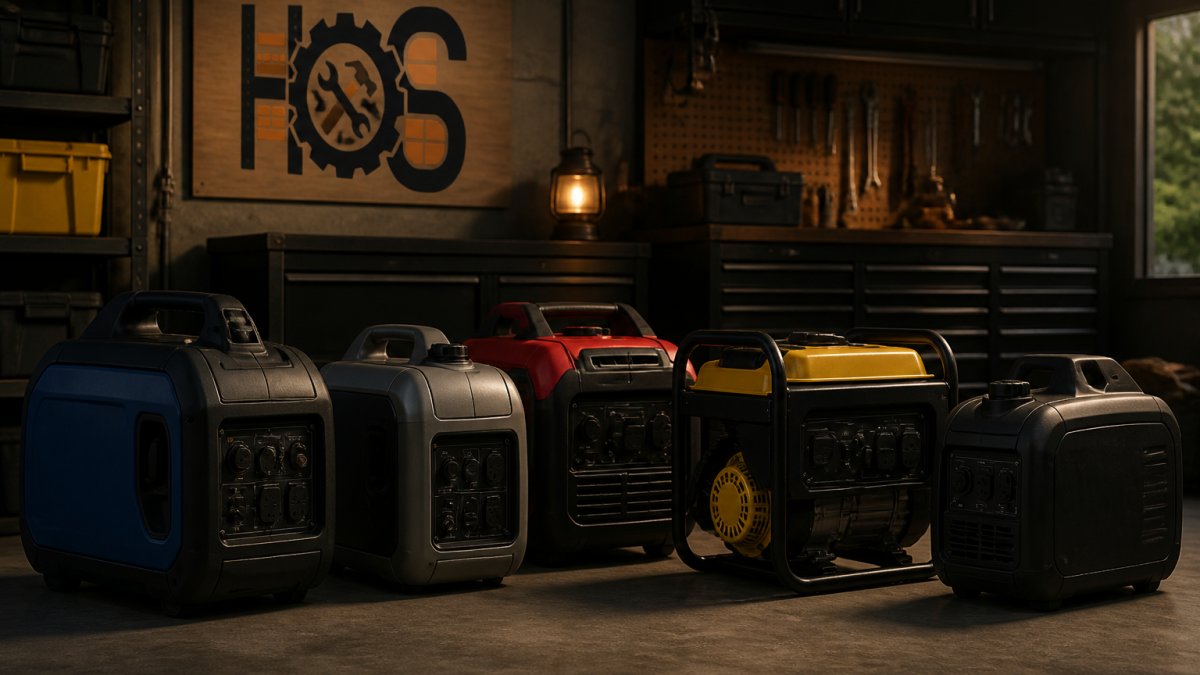
6 Quietest Portable Generators for Home Use
Table of Contents
- Why the Quietest Portable Generators for Home Use Are Usually Battery-Powered
- Quick Comparison: 6 Quietest Portable Generators for Home Use
- Portable Generator Decibel Ratings: How to Compare Noise Claims Fairly
- Portable Generator Size for a House: Matching Watts to What You Need Running
- The Generator 80% Rule and Why It Protects Your Equipment
- Quiet Generator Safety and Placement: Neighbors, Carbon Monoxide, and Transfer Switches
- Which Quiet Generator Fits Your Home? A Decision Framework
- Conclusion
- Frequently Asked Questions
Last Updated: October 21, 2026
Why the Quietest Portable Generators for Home Use Are Usually Battery-Powered
The quietest portable generators for home use are battery-based power stations, not gasoline units. A combustion engine has to make noise to make power. A battery does not. That single fact reshapes the entire buying decision.
At Home Outpost Supply, we field the same question every storm season: how do I keep the fridge and phones running without a generator that sounds like a lawnmower idling in the driveway? The honest answer is that if noise is your top concern, you should be shopping for a battery power station, not a fuel-powered generator.

Below, we break down six models we carry, explain how decibel ratings really work, and show you how to size one for your home. Most guides skip the sizing math. We won't.
Quick Comparison: 6 Quietest Portable Generators for Home Use
Here is the short version, ranked by capacity and use case rather than by noise alone, since battery units produce no engine noise at all.
| Model | Output | Capacity | Price | Best For |
|---|---|---|---|---|
| 720Wh Portable Power Station | 600W | 720Wh | $1,854.48 | Phones, lights, laptops |
| RECON 2000 Rugged | 2,400W | 2,016Wh | $1,999.99 | Jobsite and garage backup |
| L3600 Home Backup System | 3,600W | 3,072Wh | $1,849.99 | Essential circuits with transfer switch |
| L3600 Expandable Power Station | 3,600W | 3,072Wh | $1,999.99 | RV and expandable home use |
| Powerhouse V2 7200W | 7,200W | 4,800Wh | $4,099.99 | Larger homes with transfer switch |
| MyGrid 10K Whole Home | 10,000W | 10,496Wh | $6,999.99 | Whole-home backup |
The 720Wh unit weighs about 16.8 lbs, so one person can carry it. The MyGrid 10K is a permanent installation, not something you wheel out for a camping trip.

Portable Generator Decibel Ratings: How to Compare Noise Claims Fairly
A portable generator decibel rating only means something when you know three things: the distance from the unit, the load it was carrying, and whether the number is an average or a peak. Most manufacturers quote a single dB figure at a set distance under a light load. That is not how you will run it during an outage, and it is not how you should compare two units.
Here is the apples-to-apples method we use when a customer asks us to compare a gasoline inverter against a battery power station.
Step 1: Normalize the distance. Sound drops roughly 6 dB each time you double the distance from the source. If a unit is rated at 52 dB at 23 feet, the same unit is roughly 58 dB at about 11.5 feet and roughly 64 dB at about 6 feet. Before you compare two numbers, convert both to the same distance.
Step 2: Normalize the load. A gasoline inverter generator gets louder as you add load. Idle noise and full-load noise are different numbers, and some manufacturers publish only the quieter one. Ask for the dB at 25%, 50%, and 100% of rated output. If only one figure is available, assume it is the light-load number and discount it accordingly.
Step 3: Know whether it is average or peak. An average (Leq) rating smooths out spikes; a peak (Lmax) rating captures the loudest moment. Two units with the same average can sound very different if one has a sharp exhaust bark at startup.
Step 4: Translate dB to what you actually hear. A 10 dB increase sounds about twice as loud to the human ear. A 3 dB increase is noticeable but modest. The gap between a quiet inverter and a standard open-frame generator is bigger than the raw numbers suggest, which is why a 58 dB inverter and a 68 dB open-frame unit are not "10 apart" in lived experience, one is roughly twice as loud.
Where battery power stations fit. Battery units sidestep most of this debate. With no engine, the only sound is a cooling fan, and many units run fanless at low draw.
If you want a fair comparison, ask what the noise level is under a realistic household load, not at idle, and convert every claim to the same distance before you decide.
Portable Generator Size for a House: Matching Watts to What You Need Running
Sizing a portable generator for a house starts with running watts, not the total wattage on the box. Add up what you actually need running at the same time, then account for startup surge on anything with a motor. Most guides skip this math. We won't.
Here is a practical worksheet you can fill in before you shop. The wattages below are typical ranges, not exact figures, check the label on your own appliance, because a modern refrigerator and an older one can differ by hundreds of watts.
| Load | Typical running watts | Startup surge? |
|---|---|---|
| Refrigerator (standard) | 150-400 | Yes, compressor surge |
| Furnace fan (gas furnace) | 300-800 | Yes, motor start |
| Space heater | 750-1,500 | No |
| LED lights and phone charging | 50-150 | No |
| Sump pump (1/3 hp) | 800-1,000 | Yes, high surge |
| Medical device (check label) | Varies | Varies |
| Microwave | 600-1,200 | No |
| Laptop and router | 50-150 | No |
How to use it. List only the items you need running at the same time. Add their running watts. Then add the single largest startup surge once, not every surge at once, because appliances rarely start simultaneously. That total is your real target.
A worked example. A homeowner wants the fridge (say 300W running, 900W surge), the furnace fan (say 500W running, 1,000W surge), lights and charging (100W), and a sump pump (900W running, 1,800W surge). Running total: 1,800W. Largest single surge: 1,800W (the sump pump). Real target: about 3,600W. That is exactly the conversation the 3,600W L3600 is built for, fridge, lights, heat, and a pump, without overspending on a whole-home unit.
Essential circuits first. A common pattern is to plan around a small number of circuits rather than the whole panel: kitchen fridge, furnace, a few lighting circuits, and a sump pump. That keeps the generator smaller, cheaper, and easier to place. The 10,000W MyGrid 10K is built for whole-home coverage, but most outages do not require it.
720Wh Portable Power Station – 600W Pure Sine Wave with 100W USB-C →
Surge vs. running. Motor-driven loads, fridges, furnaces, pumps, compressors, draw a surge on startup that can be two to three times their running watts for a few seconds. Inverter generators and battery power stations handle surge differently: a battery unit's inverter may allow a short surge above its continuous rating, but sustained overload will shut it down. That is why the 80% rule in the next section matters.
If you fill in the worksheet above with your own appliance labels, you will know your target wattage before you compare a single model, and you will avoid both the undersized unit that trips on fridge startup and the oversized unit you never needed.
The Generator 80% Rule and Why It Protects Your Equipment
The generator 80% rule says you should keep continuous load at or below about 80% of a unit's rated output. It leaves headroom for surges and keeps the inverter from running at its limit for hours.
On a 3,600W unit, that means planning around 2,880W of continuous draw. On the 2,400W RECON 2000, plan around 1,920W. This protects the inverter, reduces heat, and extends the life of the battery.
The rule matters more for battery units than for fuel generators. A gasoline engine can run near its rating for a while. An inverter pushed to 100% for hours runs hot and drains faster. Give it room.
Quiet Generator Safety and Placement: Neighbors, Carbon Monoxide, and Transfer Switches
Battery power stations produce no carbon monoxide, which removes the biggest safety risk of fuel generators. You still need to think about placement, wiring, and your neighbors.
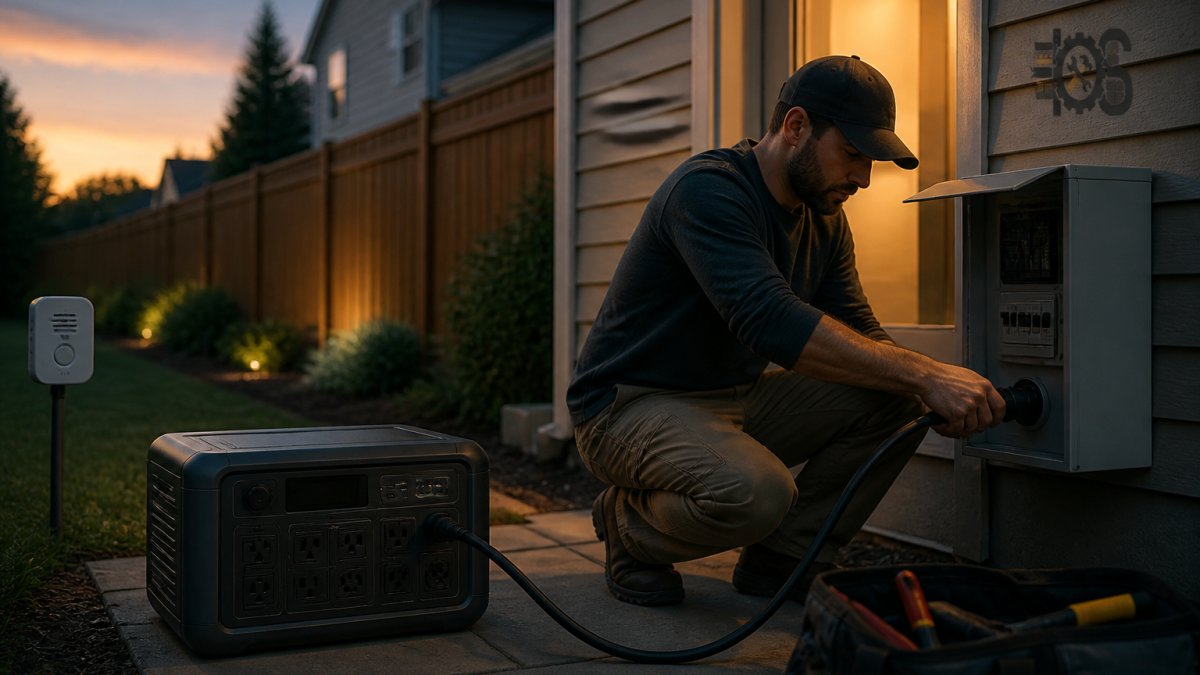
Placement basics:
- Set the unit on a level, dry surface, away from standing water
- Keep it out of direct sun in summer to avoid heat buildup
- Leave clearance around vents so the fan can move air
- Store it where it stays dry and above freezing
For home connection, a transfer switch is the safe route. The L3600 Home Backup System ships with a 6-circuit transfer switch, and the Powerhouse V2 includes a manual transfer switch. Both let you power selected circuits without backfeeding a panel. Professional installation by a qualified electrician is recommended, and the switch does not increase the unit's output.

On noise and neighbors: a battery unit running a fridge fan is quieter than a conversation. That alone solves most complaints.
Which Quiet Generator Fits Your Home? A Decision Framework
Use this framework to pick without overbuying.
- Small apartment or emergency kit: the 720Wh Portable Power Station covers phones, lights, and a laptop.
- Garage, jobsite, or storm prep with tools: the RECON 2000 Rugged adds wheels, a telescoping handle, and 2,400W.
- Essential circuits wired into your panel: the L3600 Home Backup System includes the transfer switch.
- RV and expandable home use: the L3600 Expandable Power Station accepts Power Pods and solar.
- Larger home, bigger loads: the Powerhouse V2 7200W with its included transfer switch.
- Whole-home coverage: the MyGrid 10K Whole Home, expandable up to 73,742Wh.
Conclusion
The real challenge is not finding a quiet generator. It is matching capacity to your home without overspending or undersizing. Battery power stations solve the noise problem entirely, and the sizing math above keeps you from guessing.
At Home Outpost Supply, we carry the full range, from the compact 720Wh unit to the MyGrid 10K Whole Home system. Every order is tracked and insured, and our team is available before and after purchase to help you size the right unit. Get started with Home Outpost Supply and build backup power you can actually live with.
Frequently Asked Questions
What is the 80% rule for generators?
The generator 80% rule means you should plan to run your load at no more than about 80% of a generator's rated continuous output. A unit rated at 3,600W running watts is happiest carrying roughly 2,880W of steady load. The remaining headroom absorbs startup surges from appliances like refrigerators and lets the unit run cooler and last longer. Size your essential circuits first, then pick a generator whose 80% figure still covers them.
How quiet is a portable generator, measured in decibels?
Fuel-powered portable generators typically land in the 60-70 dBA range at close distance, and inverter models tend to sit at the lower end of that band. Battery-powered stations like the Nature's Generator L3600 produce no engine noise at all, only faint fan and inverter hum. Because portable generator decibel ratings are often measured at different distances and loads, compare figures only when the distance, load, and measurement standard match.
What size portable generator do I need to run my entire house?
Whole-home coverage usually starts around 10,000 running watts, which is why battery systems such as the MyGrid 10K are built to that figure. Most homeowners are better served by essential-circuit planning: a refrigerator, furnace blower, lights, router, and phone charging often total under 3,000 running watts. Add starting watts for anything with a motor, then apply the generator 80% rule to confirm the unit has headroom.
How far should a portable generator be from a house?
The CDC and U.S. Consumer Product Safety Commission advise running fuel-powered generators outdoors, well away from windows, doors, and vents, and never in a garage or enclosed space, because of carbon monoxide risk. Battery-powered stations avoid that hazard entirely since they produce no exhaust. For any fuel generator, follow the manufacturer's clearance guidance and install carbon monoxide alarms inside the home as a backup safeguard.
Can a quiet portable generator power a refrigerator and other essentials?
Yes. A refrigerator draws roughly 150-200 running watts but can need two to three times that at startup, so a unit with 2,000W or more of continuous output handles it with room to spare. The RECON 2000 at 2,400W and the L3600 at 3,600W both cover a fridge plus lights, internet, and device charging. Check each appliance's startup wattage against the station's rated output before an outage, not during one.


Leave a comment
This site is protected by hCaptcha and the hCaptcha Privacy Policy and Terms of Service apply.