


Outdoor Living Space Cost vs Value Analysis for 2026
Table of Contents
- Outdoor Living Space Cost vs Value: The 2026 Numbers
- Average Cost of Backyard Patio Installation and Other Projects
- Deck vs Patio Cost Comparison: Which Recoups More at Resale
- Outdoor Kitchen ROI 2026: What High-End Features Actually Return
- The Over-Improvement Trap: When Spending More Returns Less
- Climate, Taxes, and Insurance: The ROI Factors Most Guides Skip
- DIY vs Professional Installation: Where the Money Actually Goes
- Conclusion
- Frequently Asked Questions
Last Updated: October 1, 2026
Outdoor Living Space Cost vs Value: The 2026 Numbers
An outdoor living space cost vs value analysis starts with one hard truth: most homeowners assume a backyard project pays for itself at resale. It rarely does in full, but it does make your home easier to sell, and that difference is where the real money hides.
Average Cost of Backyard Patio Installation and Other Projects
The average cost of backyard patio installation varies by material, size, and region, but the pattern holds: the more permanent and specialized the feature, the lower the share you recover.
| Project | Typical Cost Range | Recoupment at Resale | Best For |
|---|---|---|---|
| Patio (pavers) | $3,000-$10,000 | Moderate to high | Everyday use, broad appeal |
| Wood or composite deck | $4,000-$15,000 | Moderate to high | Sloped lots, quick install |
| Outdoor kitchen | $5,000-$60,000+ | Low to moderate | Frequent entertainers |
| In-ground pool | $35,000-$100,000+ | Low | Hot climates, long tenure |
| Fire pit or fire feature | $300-$3,000 | Moderate | Extending evening use |
What Drives Project Cost Up or Down
Four factors move the number most:

- Materials. Concrete and pressure-treated wood sit at the low end. Patio pavers, composite decking, and natural stone push higher. Material choice also sets your long-term maintenance bill.
- Size and complexity. Square footage matters, but so does access. A backyard a crew can reach with equipment costs less than one requiring hand-digging.
- Site conditions. Slopes, poor drainage, and existing structures add labor. Grading and drainage work is invisible at the end and expensive in the middle.
- Region. Labor rates and permit requirements swing project cost significantly by market.
The cheapest bid often skips drainage and base preparation, the two things that decide whether your patio still looks level in five years.
Deck vs Patio Cost Comparison: Which Recoups More at Resale
For most homes, a patio recoups slightly more than a deck because it appeals to a wider pool of buyers and needs less structural maintenance. A deck can win on a sloped lot where a patio would require major grading. But the deciding factor is usually installed cost per square foot, not the headline project price.
Installed Cost Per Square Foot
Contractors typically quote decks and patios by the square foot once the design is set. Common national ranges:
| Surface | Typical Installed Cost / Sq Ft | Typical Lifespan | Recurring Maintenance |
|---|---|---|---|
| Stamped concrete patio | $8-$18 | 25-30 years | Reseal every 3-5 years |
| Paver patio | $15-$30 | 25-50 years | Re-sand joints every 2-3 years |
| Pressure-treated wood deck | $15-$25 | 10-15 years | Stain or seal every 2-3 years |
| Composite deck | $25-$45 | 25-30 years | Periodic wash; no staining |
| Natural stone patio | $25-$50+ | 50+ years | Minimal |
The Maintenance Math Buyers Actually Run
A pressure-treated deck that needs staining every two to three years at $400-$900 per cycle carries roughly $2,000-$4,000 in maintenance over a 10-year hold. Composite decking eliminates that line item but costs more upfront. A paver patio sits between the two: joint sand and occasional re-leveling, but no structural inspection and no rot risk.
When a Deck Wins Anyway
A deck beats a patio in three situations:
- Sloped lots. A patio on a steep grade requires retaining walls and engineered fill. A deck cantilevers over the slope with far less earthwork.
- Second-story access. A deck off a second-floor door has no patio equivalent without a major structural build.
- Short tenure. If you plan to sell within five years, wood decking's lower upfront cost can beat a paver patio on pure dollars-in, dollars-out.
When a Patio Wins
- Flat or gently graded lots. No earthwork premium, no framing, no rot.
- Hot, humid, or termite-prone regions. Patios do not feed insects or swell with moisture.
- Long tenure. Over 15-plus years, the paver or stone patio's lower maintenance bill usually closes the upfront gap and then some.
What Buyers Actually Pay For
Appraisers credit a deck or patio at the value the local market assigns to comparable features, not full cost. Two patterns hold:
- A well-maintained deck or patio in a neighborhood where most homes have one adds little marginal value, it is expected, not a differentiator.
- The same feature in a neighborhood where most homes lack one adds more, but only up to the ceiling set by the highest recent comparable sale.
That ceiling is the real constraint.
Outdoor Kitchen ROI 2026: What High-End Features Actually Return
Outdoor kitchen ROI in 2026 is the weakest link in most backyard budgets. These features deliver strong lifestyle value and modest resale value, which is fine if you plan to stay and use them. A built-in grill, refrigerator, and stone counter appeal intensely to a small group of buyers and mean nothing to the rest, narrowing your buyer pool instead of widening it.
Real Project Costs From the Home Outpost Supply Catalog
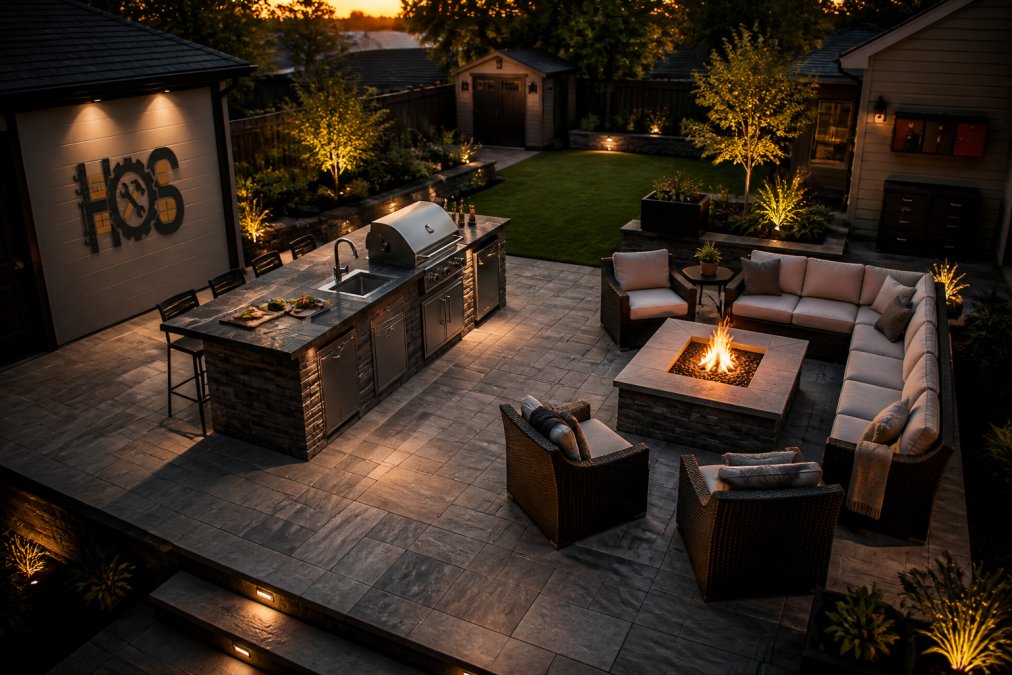
The Home Outpost Supply catalog shows what complete outdoor kitchen setups actually cost.
- Amber Deluxe 4-Piece Outdoor Kitchen & Sectional Lounge Set with FSC™ Teak at $11,646.00 combines a stainless steel sink kitchen with a corner sectional, armchair, and coffee table.
- KoKoMo 12' x 12' Outdoor Kitchen with Pergola, 4-Burner Grill & Refrigerator at $23,795.00 adds a defined covered cooking zone.
- KoKoMo Baja Outdoor Kitchen with 12' x 12' Patio Cover, Grill & Refrigerator at $29,995.00 pairs bar seating with overhead cover.
- KoKoMo 20' x 20' Outdoor Kitchen Pavilion with Grill, 70" TV & Kegerator at $53,225.00 creates a full entertainment destination.
- KoKoMo Bermuda Outdoor Kitchen BBQ Island with TV, Fire Pit & Bar at $59,950.00 brings cooking, entertainment, and a fire feature together.
The Over-Improvement Trap: When Spending More Returns Less
The over-improvement trap is the point where your backyard becomes nicer than the homes around it, and buyers stop paying for the gap. If every home on the street has a basic patio, adding one is a differentiator; add a $60,000 pavilion to a street of starter homes and you have built something the market cannot price.

Three signals you are crossing the line:
Amber Deluxe 4-Piece Outdoor Kitchen & →
- Your project cost exceeds a meaningful share of your home's overall value.
- Neighboring homes lack comparable features and sell fine without them.
- Your appraiser cannot find neighborhood comps to support the addition.
Climate, Taxes, and Insurance: The ROI Factors Most Guides Skip
Most cost-vs-value guides stop at the national recoupment table, an average across every climate, tax jurisdiction, and insurance market, which means it is wrong for your specific property. Three factors move your real number more than the national average does.
Climate Wear: The Same Feature, Two Different Lifespans
The material that lasts 30 years in one region can fail in 10 in another:
- Freeze-thaw regions. Water penetrates concrete and paver joints, freezes, expands, and cracks the surface from the inside. Proper base depth, drainage, and air-entrained concrete matter more here than material choice. Wood decks also cycle through expansion and contraction that loosens fasteners.
- Hot, arid regions. UV degrades composite decking, vinyl, and wood stain faster than moisture does. Shade structures and pergolas pay back more here because they extend usable hours, not just protect materials.
- Humid and coastal regions. Salt air corrodes stainless steel and aluminum faster than inland exposure. Untreated wood invites rot and termites. Powder-coated aluminum and marine-grade stainless hold up; standard hardware does not.
- Short-season markets. An in-ground pool in a market with a four-month swim season is a cost center, not an amenity. The same pool in a year-round warm market is a feature buyers actively search for.
Insurance Implications: The Premium You Did Not Budget For
Permanent outdoor structures can change your homeowner's insurance in ways most project budgets ignore:
- Pools. Most insurers treat an in-ground pool as an attractive nuisance and require a fence, a locked gate, or a safety cover. Premiums often rise, and some carriers require a separate liability endorsement.
- Trampolines and play structures. Frequently excluded or surcharged.
- Fire features and outdoor kitchens. Built-in gas lines and permanent fire pits can raise liability exposure. Portable fire pits usually do not.
- Pergolas, pavilions, and covered structures. These are typically added to dwelling coverage as other structures, raising your insured value and premium.
Tax Treatment: Assessment vs. Basis
Two different tax questions get conflated, and they have different answers:
- Property tax assessment. Capital improvements can raise your assessed value, which raises your annual property tax bill. Whether and how much depends on your state and locality, some reassess on a fixed cycle, some on sale, and some not at all for certain improvements. Check with your county assessor's office before you build.
- Income tax basis. The IRS guidance on capital improvements explains how improvements are treated for tax purposes. Permanent improvements generally add to your home's cost basis, which reduces taxable gain when you sell. Portable furniture and freestanding grills typically do not qualify.
Running the Real Numbers
A feature that raises your insurance premium, raises your property assessment, and adds little resale value is a triple loss. Before you commit to a permanent structure:
- Ask your insurer what the feature does to your premium and whether it requires an endorsement.
- Ask your county assessor whether the improvement triggers reassessment and on what schedule.
- Ask a local real estate agent what comparable homes with the feature actually sold for versus comparable homes without it.
DIY vs Professional Installation: Where the Money Actually Goes
DIY saves on labor and costs you on risk. For patios and decks, professional installation protects the two things DIY most often gets wrong: base preparation and drainage.
Where DIY genuinely pays off:
- Furniture and outdoor kitchen assembly. Sets like the Amber Deluxe arrive as coordinated pieces you position yourself.
- Finishing touches. Lighting, planters, and fire features are manageable weekend projects.
- Painting and sealing. Ongoing maintenance is well within reach for most homeowners.
Where professionals earn their fee:

- Excavation and grading. Getting the slope wrong sends water toward your foundation.
- Structural work. Deck framing and retaining walls fail expensively when undersized.
- Electrical and gas. Permitted work belongs with licensed trades, and the U.S. Consumer Product Safety Commission publishes safety guidance worth reviewing before any outdoor installation.
Conclusion
The hardest part of an outdoor living space cost vs value analysis is separating what you want from what the market will pay for. Patios and decks generally return a solid share of their cost; pools and premium kitchens return less, which is fine if you plan to enjoy them for years.
Frequently Asked Questions
How much value does an outdoor living space add to a home?
It depends on the project. A mid-range wood deck typically recoups around 65-70% of its cost at resale, while a patio or outdoor kitchen can return 50-80% depending on your market. The remaining value shows up as lifestyle enhancement: more usable square footage, better curb appeal, and a feature buyers actively seek. In saturated markets, a well-built outdoor living area helps a home sell faster even when the dollar-for-dollar return is modest.
What adds more resale value, a deck or a patio?
In most U.S. markets, decks edge out patios on pure recoupment, often returning 65-70% versus 50-60% for a basic patio. That gap narrows when the patio includes hardscaping, a fire feature, or an outdoor kitchen. Climate matters too: wood decks need more maintenance in wet regions, while patios hold up better in hot, dry areas. Buyers weigh maintenance requirements heavily, so a low-upkeep patio can win on appeal even with a lower headline recoupment rate.
Do outdoor kitchens provide a high return on investment?
Outdoor kitchens land in the 50-70% recoupment range on average, lower than decks or patios on a strict cost-to-value basis. The exception is in neighborhoods where comparable homes already have them. If every house on your street has a built-in grill island, adding one brings your property up to par rather than above it. If you are the first, the money is better spent on a patio or deck first, then the kitchen as a second phase.
How do I avoid over-improving my backyard?
Cap your total outdoor spend at roughly 10-15% of your home's appraised value, and check neighborhood comps before you commit. If nearby homes top out at a basic patio, a $50,000 pavilion will not appraise for what you paid. Build in phases: start with the patio or deck, live with it for a season, then add features. This lets you stop before the project outpaces what your local real estate market will support.
Are outdoor living spaces a luxury or a necessity in 2026?
They have shifted toward necessity in most suburban markets. Buyers now treat a usable outdoor area as expected rather than a bonus, especially in warmer states. That does not mean every home needs a full outdoor kitchen. A functional patio with shade and seating covers the baseline. Anything beyond that is a differentiator, and differentiators only pay off when they match what buyers in your price bracket are already asking for.


Leave a comment
This site is protected by hCaptcha and the hCaptcha Privacy Policy and Terms of Service apply.