


How to Maximize Garage Wall Storage
Table of Contents
- Assess Your Garage Wall Space and Load-Bearing Capacity
- Best Garage Wall Storage Systems for Your Needs
- DIY Garage Wall Organization Ideas for Tool and Equipment Storage
- Garage Organization Tips for Small Spaces
- Step-by-Step Installation Guide for Wall-Mounted Storage
- Accessibility, Safety, and Climate Considerations
- Conclusion
Last Updated: August 25, 2026
Assess Your Garage Wall Space and Load-Bearing Capacity
Before hanging a single shelf or bracket, you need to understand what your walls can actually support. This is where most DIY garage projects fail. Homeowners grab whatever storage system looks good, mount it, and discover months later that the drywall can't handle the weight. Understanding your garage wall storage setup starts with structural reality, not aesthetics.
Your garage walls are typically constructed one of two ways: drywall over wood studs, or concrete block. The difference matters enormously when you're planning how to maximize garage wall storage. Drywall alone can hold roughly 5-10 pounds per square foot before failing (fema.gov). Add a stud behind that drywall, and you're looking at 25-50 pounds per linear foot. Concrete block performs differently still, depending on what you're anchoring into.
Locate Studs and Determine Weight Limits
The foundation of any garage wall storage system is finding your studs. A stud finder takes the guesswork out of this step. Mark each stud location with a pencil line running vertically from floor to ceiling. Standard framing places studs 16 inches apart, though older garages sometimes use 24-inch spacing.
Once you've located your studs, you know where your heavy-duty mounting points are. Anchoring directly into a stud gives you the most weight capacity. A single 3/8-inch lag bolt into a stud can hold 100+ pounds (awc.org). If you're mounting between studs on drywall alone, you'll need specialized anchors designed for drywall. Toggle bolts and expansion anchors can handle 20-50 pounds each, depending on the anchor type and drywall thickness.
The weight capacity of your storage system matters more than you think. A loaded pegboard or cabinet system can weigh 200-400 pounds when fully stocked with tools and equipment. That weight needs to be distributed across multiple anchor points, ideally into studs. Spreading the load across several studs prevents any single mounting point from bearing too much stress.
Measure and Map Your Wall Layout
Grab a measuring tape and map out the usable wall space in your garage. Note the height of your garage door opening, the locations of windows, electrical outlets, and any existing fixtures. This map becomes your blueprint for positioning storage systems.
Measure from floor to ceiling, wall to wall. Account for clearance around doors and any vehicles that park in the garage. A common mistake is installing storage too close to the garage door path, where it interferes with opening and closing. Leave at least 18 inches of clearance from the sides of the door frame.
Mark the ceiling height as well. Overhead storage works best when it's positioned to avoid interfering with the garage door mechanism. If your ceiling is 8 feet, position upper shelving at 7 feet or lower to avoid creating hazards. For lower ceilings, prioritize wall-mounted systems that don't extend as far into the space.
Best Garage Wall Storage Systems for Your Needs
The market offers several proven approaches to garage wall storage. Each has different strengths, cost profiles, and installation complexity. Your choice depends on what you're storing, how much weight you need to support, and your budget.
Wall-Mounted Shelving and Modular Systems
Wall-mounted shelving offers flexibility and relatively straightforward installation. Metal shelving systems come in various depths and widths, typically ranging from 12 to 24 inches deep. The real advantage is modularity, you can add, remove, or reconfigure shelves as your storage needs change.
Heavy-duty steel shelving rated for 300-500 pounds per shelf gives you solid weight capacity (peer-reviewed research). Each shelf should be anchored at multiple points into studs or heavy-duty wall anchors. A typical configuration uses four anchor points per shelf, one at each corner of the shelf bracket.
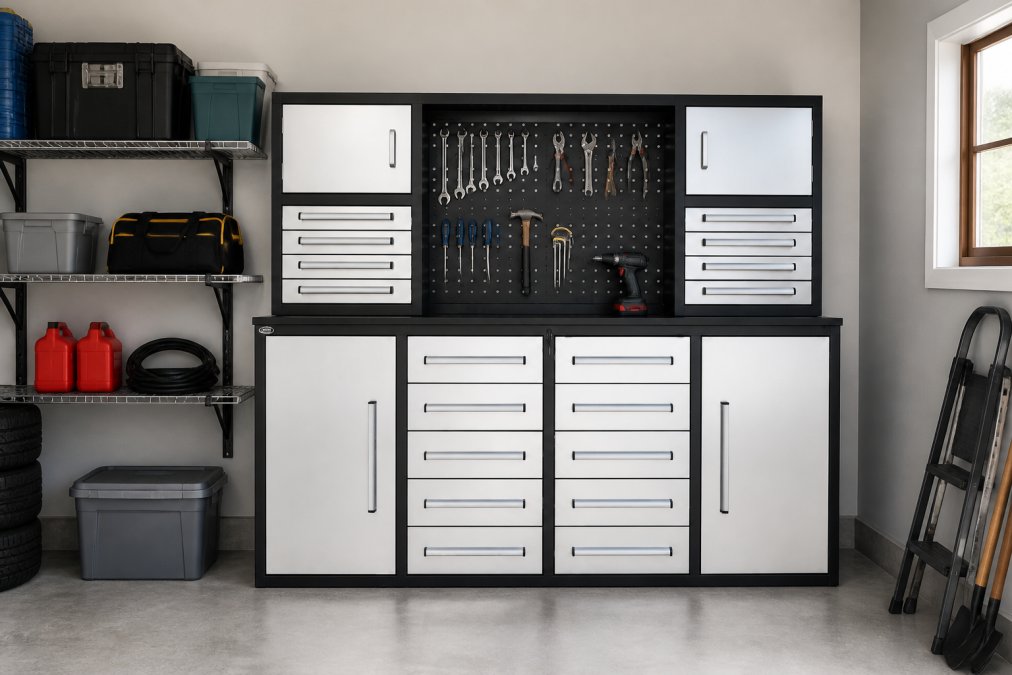
For homeowners who want a more integrated look, modular cabinet systems offer a finished appearance. These systems often include a mix of open shelving, closed cabinets, and drawers. The Home Outpost Supply Astro Series cabinet sets, for example, combine durable metallic gray finishes with soft-closing drawers and water-resistant construction. The Astro Series Set A spans 128 inches and reaches 79 inches high, providing substantial storage capacity while maintaining a professional appearance. These systems distribute weight more evenly than individual shelves because the weight is shared across a wider base.

The trade-off with modular systems is cost and installation time. A quality modular cabinet set runs significantly more than basic shelving, but the durability and organization benefits justify the investment for serious garage organization.
Pegboard and Slat Wall Organization
Pegboard remains a classic choice for tool storage and organization. It's affordable, easy to install, and infinitely customizable. Pegboard comes in 1/4-inch thickness, typically in 4x8-foot sheets. You can cut it to fit your wall space or install multiple sheets side by side.
The key to pegboard success is proper backing. Never mount pegboard directly to drywall. Install 1x2 or 1x4 lumber horizontally across your studs first, creating a spacer layer. This gap allows pegboard hooks to grip properly and prevents the pegboard from bowing under weight. Anchor the backing boards directly into studs with 3-inch wood screws, then mount the pegboard over the backing.
Slat wall systems function similarly but offer a more modern aesthetic. Slat walls use vertical wood or metal slats spaced 4-6 inches apart. Accessories slide into these slats, creating a clean, minimalist look. Slat walls work best for lighter items, decorative storage, small tools, and lightweight equipment.
Both pegboard and slat walls excel at visibility. You can see every tool at a glance, which reduces time spent searching for items. This organizational clarity is why many DIY enthusiasts prefer these systems for frequently used tools.
Heavy-Duty Cabinet Storage
For valuable tools, hazardous materials, or items you want protected from dust, heavy-duty cabinet storage is the answer. Metal garage cabinets rated for commercial use provide security and durability. These cabinets typically feature welded steel construction, lockable doors, and adjustable shelves.
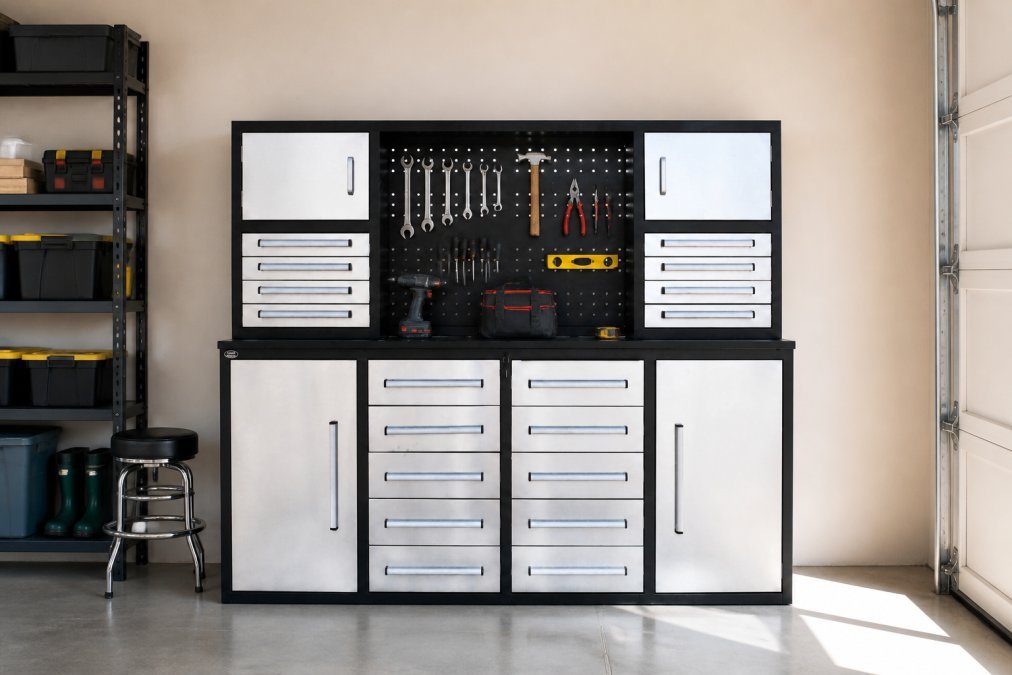
The Home Outpost Supply 7 ft Garage Workbench Cabinet combines storage with a functional work surface. This unit includes 18 drawers, 4 cabinets, and an integrated pegboard, creating an all-in-one workstation. The different drawer sizes support organized tool storage, with larger drawers for power tools and smaller ones for fasteners and small parts. At 7 feet wide, it anchors one wall while providing comprehensive storage and work surface.
Heavy-duty cabinets require solid wall anchoring because of their weight. A fully loaded cabinet can exceed 500 pounds. Anchor points should be spaced no more than 16 inches apart, with each anchor point fastened directly into a stud. Some installers use lag bolts through the cabinet frame directly into studs for maximum security.
DIY Garage Wall Organization Ideas for Tool and Equipment Storage
Creating an organized garage wall doesn't require hiring professionals or spending thousands of dollars. Strategic DIY approaches can transform a cluttered wall into a functional storage system.
Install Plywood Backing for Durability
Plywood backing provides a stable foundation for any wall-mounted storage system. A 3/4-inch plywood sheet mounted across your studs creates a solid mounting surface for shelves, pegboard, hooks, and brackets. This approach works particularly well if your garage has older drywall or uneven wall surfaces.
Start by locating your studs. Cut plywood sheets to fit your wall space, then secure them with 3-inch wood screws driven through the plywood directly into the studs. Space screws 16 inches apart horizontally and vertically. The plywood should be flush against the studs with no gaps.
Once plywood backing is installed, you can mount anything to it. Pegboard, shelving brackets, hooks, and cabinets all anchor securely into plywood. This backing layer also protects your drywall from repeated drilling and anchor installation. If you ever want to reconfigure your storage system, the plywood backing remains ready for new holes and anchors.
Plywood backing adds cost and labor compared to direct wall mounting, but the durability and flexibility justify the investment. You're essentially creating a permanent mounting surface that will last decades.
Create Zone-Based Organization
Divide your garage wall into functional zones based on how you use your space. This approach transforms garage wall storage from random placement into a logical system.
Create a tool zone near your workbench. Mount pegboard or slat walls at comfortable working height, typically 36-60 inches from the floor. Position frequently used hand tools within arm's reach. Group similar tools together, all screwdrivers in one area, wrenches in another, measuring tools in a third area.
Establish a seasonal storage zone higher on the wall, above eye level. Holiday decorations, out-of-season equipment, and infrequently used items belong here. Use closed cabinets or covered shelves to keep dust off these items. Label everything clearly so you know what's stored where without having to pull things down.
Create a safety zone for hazardous materials. Paints, solvents, and chemicals need secure storage away from children and pets. Heavy-duty cabinets with locking doors work best for this purpose. Mount these cabinets at a consistent height where they're accessible to adults but not tempting to curious children.
Garage Organization Tips for Small Spaces
Small garages require different strategies than large ones. Every inch matters, and wasted space becomes painfully obvious.
Vertical Storage to Maximize Floor Space
In a small garage, vertical storage is your best friend. Every square foot of wall space is valuable real estate. Floor space should be reserved for vehicles, workbenches, and movement. Everything else should go on walls.
Install shelving as high as safely possible. If your ceiling is 8 feet, shelving can reach 7 feet. Use the space between 6 feet and 8 feet for items you rarely access. Reserve the 3-6 foot range for frequently used items. This arrangement keeps your most-used tools at comfortable working height while maximizing storage capacity.
Wall-mounted cabinets work particularly well in small spaces. Unlike freestanding cabinets that consume floor space, wall-mounted units use only wall area. A single 48-inch-wide cabinet mounted 12 inches above the floor provides substantial storage without reducing your usable garage floor.
Vertical pegboard systems maximize tool storage in minimal space. A 4x8-foot pegboard sheet can hold 50+ tools without consuming any floor space. Combined with a small workbench, this creates a complete tool storage and work area using only wall space.
Overhead Racks and Seasonal Storage
Overhead racks use the space between your vehicle roof and the garage ceiling. This space often goes unused in small garages. Ceiling-mounted racks can hold seasonal items, rarely used equipment, or lightweight storage containers.
Overhead racks require proper installation into ceiling joists. Locate ceiling joists using your stud finder, then anchor the rack system directly into the joists. Weight capacity depends on the joist spacing and rack design, typically 50-200 pounds per rack. Never overload overhead storage, a fallen box of heavy items creates a safety hazard.
Seasonal storage on overhead racks keeps your wall and floor space clear for current needs. Holiday decorations, summer sports equipment, and winter tools can rotate through overhead storage as seasons change. Clear plastic containers work best for overhead storage because you can see contents without pulling them down.
Step-by-Step Installation Guide for Wall-Mounted Storage
Installing garage wall storage requires planning and proper technique. Following these steps ensures your system stays secure and safe.
What You'll Need Before Starting
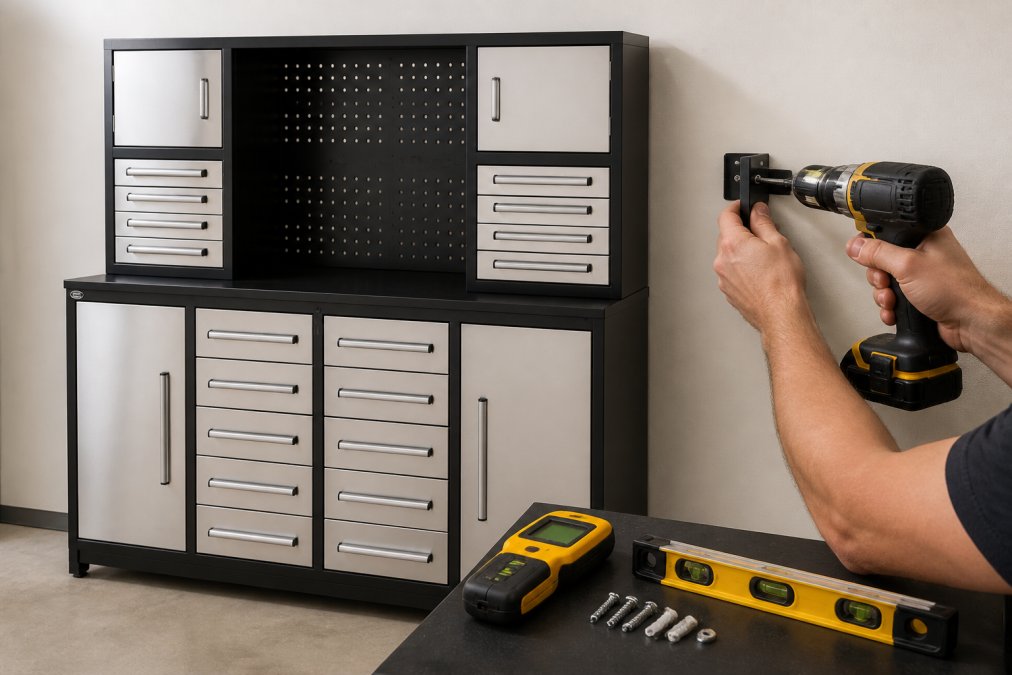
Gather your tools before beginning installation. A stud finder, drill with bits, level, measuring tape, and pencil are essential. You'll also need fasteners appropriate for your wall type, lag bolts for studs, toggle bolts or expansion anchors for drywall.
The specific fasteners depend on your storage system weight and wall construction. For wall-mounted shelves, use 3/8-inch lag bolts into studs or heavy-duty expansion anchors in drywall. For pegboard or slat wall backing, use 3-inch wood screws into studs. For cabinet mounting, use the fasteners specified by the manufacturer.
Wear safety glasses when drilling to protect your eyes from dust and debris. Have a dust mask available if you're drilling multiple holes into drywall. Work during daylight or with adequate lighting so you can see what you're doing.
Installation Steps
Begin by finding and marking all stud locations on your wall. Use your stud finder to locate each stud, then mark the center with a pencil line. If you're installing shelving, mark the height where you want each shelf. Use a level to ensure your marks are perfectly horizontal.
Drill pilot holes at each mounting location. Pilot holes prevent the fastener from splitting wood and ensure the fastener goes in straight. For lag bolts, use a drill bit slightly smaller than the bolt diameter. For expansion anchors, use the drill bit size specified on the anchor package.
Install your fasteners according to the system type. For lag bolts into studs, drive the bolt through the bracket or mounting plate directly into the pilot hole. Use a wrench to tighten the bolt until it's snug, but don't over-tighten, you can strip the threads. For expansion anchors in drywall, insert the anchor into the drilled hole, then drive the screw through the bracket into the anchor.
Mount your storage system components according to the manufacturer's instructions. If installing shelves, place the first shelf on the brackets and check for level. Add additional shelves, checking level after each installation. For pegboard, ensure the backing layer is properly installed before mounting the pegboard itself.
Common Mistakes to Avoid
The biggest mistake is mounting storage without finding studs. Drywall alone cannot support heavy loads. Always locate studs and anchor into them whenever possible. When you must anchor into drywall between studs, use appropriate heavy-duty anchors and limit the weight on that anchor point.
Another common error is underestimating the weight of a fully loaded storage system. A shelf that looks light when empty can weigh 300+ pounds when filled with tools and equipment. Calculate the total weight, then distribute it across multiple anchor points. A single overloaded anchor point will fail eventually.
Improper spacing of anchor points causes premature failure. Follow the manufacturer's recommendations for spacing, typically 16-24 inches apart depending on the system. Spacing anchors too far apart creates stress points where the mounting hardware can bend or break.
Forgetting to use a level results in crooked shelves and storage systems that look unprofessional. Take time to check level both horizontally and vertically during installation. A crooked shelf not only looks bad but can also cause items to slide off.
Accessibility, Safety, and Climate Considerations
Organizing your garage wall storage requires thinking beyond just fitting items onto shelves. Accessibility, safety, and climate control all influence how you should arrange your system.
Accessibility means storing frequently used items at comfortable working height. Items you reach for daily should be between 30 and 60 inches from the floor. Less frequently accessed items can go higher. This arrangement reduces strain and saves time during your work.
Safety requires keeping hazardous materials secure and properly labeled. Paints, solvents, pesticides, and other chemicals need locked storage away from children and pets. Store heavy items on lower shelves where they won't fall on anyone. Keep sharp tools organized so you can find them without searching through boxes.
Climate considerations matter in many regions. Humidity, temperature fluctuations, and moisture can damage tools and equipment. If your garage experiences significant temperature swings or humidity, consider climate-controlled storage for sensitive items. Sealed cabinets protect tools from dust and moisture better than open shelving.
Ventilation around stored items prevents moisture accumulation. Avoid blocking air circulation with tightly packed storage. Leave space between items and the wall to allow air to flow. This simple step prevents rust and mold growth on tools and equipment.
Organizing your garage wall storage transforms a chaotic space into a functional workspace. Home Outpost Supply offers durable garage storage systems designed for real-world use. The Astro Series cabinet sets provide heavy-duty construction with soft-closing drawers and water-resistant materials, while the 7 ft Garage Workbench Cabinet combines storage with a functional work surface. Start with a solid assessment of your wall's load-bearing capacity, choose the right storage system for your needs, and follow proper installation techniques. With the right approach, you'll reclaim your garage and create a space that actually works for you.

Frequently Asked Questions
How do I know if my garage walls can support heavy-duty storage systems?
Use a stud finder to locate wall studs, which provide the strongest anchor points and can typically support 50+ pounds per fastener. For drywall between studs, use toggle bolts or expansion anchors rated for your system's weight capacity. Always check the manufacturer's weight specifications and never exceed them. When in doubt, install plywood backing to distribute weight more evenly across the wall.
What's the best garage wall storage system for small spaces?
Vertical wall-mounted shelving and pegboard systems maximize floor space while keeping tools and equipment accessible. Slat walls offer flexibility to adjust hook and shelf placement as your needs change. For small garages, focus on going up rather than out, overhead racks and tall modular cabinets like the Astro Series (available at Home Outpost Supply) can store seasonal items without consuming valuable floor space.
Can I install garage wall storage myself, or do I need professional help?
Most homeowners can install wall-mounted storage with basic tools and a stud finder. Start by locating studs, use appropriate fasteners for your wall type, and follow the manufacturer's installation guide. Heavy-duty systems like workbench cabinets may require two people for safe installation. If you're uncomfortable with drilling or working at height, professional installation is worth the investment to ensure safety and proper weight distribution.
What materials should I use for DIY garage wall organization to ensure durability?
Plywood backing (3/4-inch thickness) creates a durable base for pegboards and slat walls, distributing weight more evenly than drywall alone. Use galvanized or stainless steel fasteners and brackets to resist rust and corrosion. For shelving, choose heavy-duty steel or solid wood construction rated for your expected load. Consider moisture-resistant finishes if your garage experiences temperature swings or humidity changes.
This article was written using GrandRanker


Leave a comment
This site is protected by hCaptcha and the hCaptcha Privacy Policy and Terms of Service apply.