


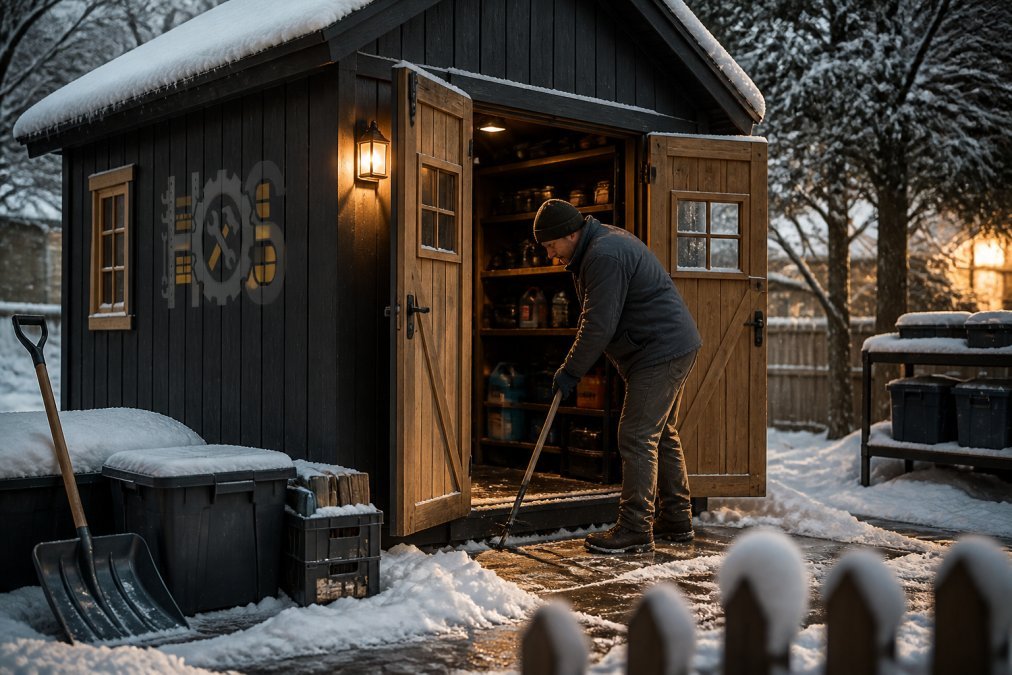
How to Maintain a Backyard Shed in Winter
Table of Contents
- Pre-Winter Shed Inspection Checklist
- Preventing Shed Roof Collapse from Snow
- Best Shed Moisture Control Methods
- Weatherproofing Doors, Windows, and Exterior Surfaces
- Winterizing Electrical Systems and Smart Shed Monitoring
- Protecting Tools, Equipment, and Interior Storage
- Shed Winterization Checklist for Long-Term Preservation
- Frequently Asked Questions
Last Updated: September 21, 2026
Pre-Winter Shed Inspection Checklist
Learning how to maintain a backyard shed in winter starts with one honest walk-around before the first freeze.
Cold weather finds every weak point. Water gets in, freezes, expands, and pushes things apart. So inspect in fall, while the ground is still soft and your hands still work without gloves.
Work through this list in one afternoon:
- Check the roof for cracked shingles, lifted edges, and worn flashing
- Look at the foundation for gaps, settling, and soft wood
- Push on wall studs and corner posts for movement
- Test the door and window frames for rot or swelling
- Clear gutters and check that water drains away from the base
Write down what you find. A short repair list beats a surprise in January.
Checking the Roof, Foundation, and Structural Integrity
Structural integrity means the shed still holds its shape under weight and weather. Start at the top and work down.
On the roof, look for missing fasteners, curled shingles, and rusted roof flashing. Around the base, check for wood rot where the frame meets the ground. Probe soft spots with a screwdriver.
A common mistake is ignoring small foundation gaps. Water pools there, freezes, and widens the gap each cycle.
If the shed base is a wooden floor, check for sagging. A floor that bounces underfoot will only get worse with snow load on the roof.
Fix what you can now. Anything structural should be handled before winter, not during it.
Preventing Shed Roof Collapse from Snow
The fastest way to prevent a roof collapse is to remove snow before it builds past a safe depth. Most backyard sheds handle light, dry snow well. Wet, heavy snow is the real threat, and the difference is measurable.
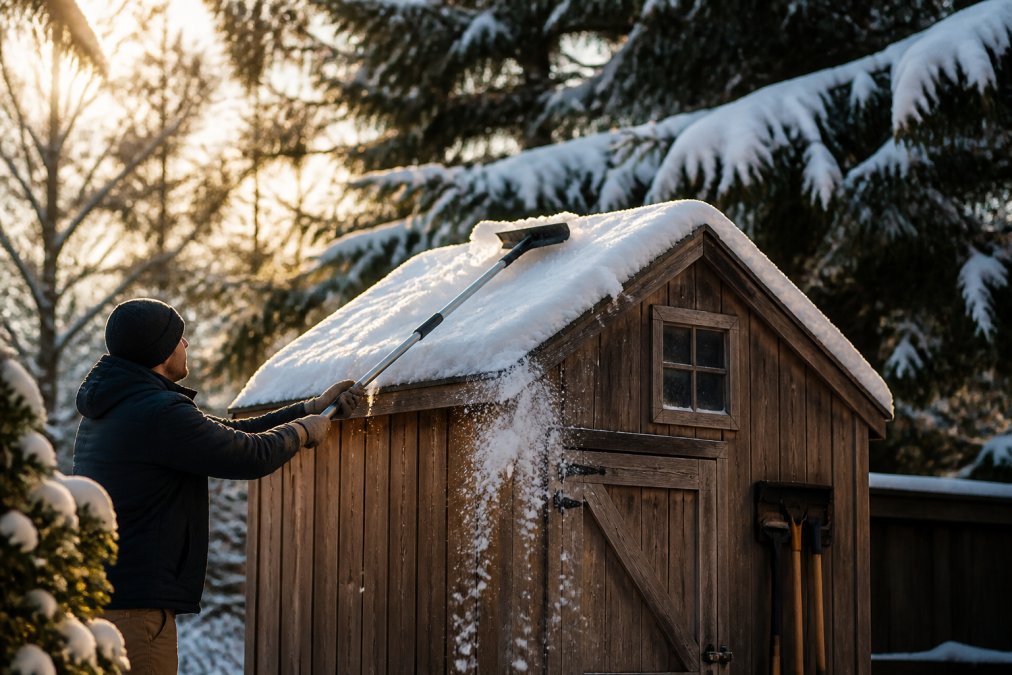
Never climb onto a snowy shed roof. Use a roof rake from the ground, and stay clear of any overhead power lines. Work in small passes so you don't shock the structure with one heavy pull.
Snow Load Limits and Safe Removal Tools
Snow load is the weight of snow sitting on your roof. It builds quietly and can double after a wet storm.
Weight is the part most homeowners underestimate.
A few practical rules:
- Clear snow after every heavy snowfall, not once a month
- Use a long-handled roof rake with a plastic blade
- Never use a metal shovel or an ice chopper on the roof
- Keep a path clear so you can reach all sides safely
- Watch the ceiling inside for new cracks or sagging
Matching Your Approach to Your Climate
Snow behaves differently depending on where you live, and the same routine does not fit every region. This is the part most generic guides skip.
Best Shed Moisture Control Methods
The best moisture control method is a mix of airflow and a sealed exterior. Trapped damp air causes condensation, mildew, and eventually mold prevention problems you can't undo.
Here's what actually works:
- Add vents near the top and bottom of opposing walls for cross-flow
- Install a moisture barrier under a wooden floor
- Seal exterior gaps where rain blows in
- Keep stored items off the floor on shelves or pallets
- Open the door on dry, sunny days to air it out
Ventilation, Condensation, and Moisture Barriers
Ventilation moves humid air out before it settles. A simple ridge vent plus two low wall vents creates a chimney effect that pulls damp air up and out.
Weatherproofing Doors, Windows, and Exterior Surfaces
Weatherproofing is where most sheds lose the battle. Doors and windows are the biggest gaps, so start there.
Then treat the outside:
- Apply an exterior grade sealant to bare or weathered wood
- Touch up exterior finish on painted surfaces
- Oil hinge maintenance points so doors don't freeze shut
- Check the threshold for a tight seal against the ground
Winterizing Electrical Systems and Smart Shed Monitoring
If your shed has power, winterizing the electrical system matters as much as the roof. Cold, damp air plus old wiring is a bad mix, and a shed is one of the few outbuildings where a small electrical fault has nowhere to vent.
A few steps to take:
- Seal gaps around conduit and cable entries
- Use outdoor-rated fixtures and covers
- Test any GFCI outlets
- Unplug tools you won't use until spring
- Add a smart shed monitoring sensor for temperature and humidity
Space Heater and Cord Safety
A space heater is the most common way a shed electrical system gets overloaded. Most sheds are fed by a single 15- or 20-amp branch circuit, and a typical portable space heater draws 12 to 15 amps on its own. Plug that into the same circuit as a light and a battery charger and you are at or past the breaker's limit.
A few safety protocols worth following:
- Never run a space heater on an extension cord. Use the receptacle directly, and only if the circuit can carry the load.
- Keep heaters at least 3 feet from anything combustible, including cardboard, rags, and sawdust.
- Choose a heater with a tip-over shutoff and an overheat cutoff, and never leave it running unattended.
- If the shed has no permanent heat, consider whether you actually need it. A heater that runs only when you're inside is safer than one left on to keep the space warm.
- Check the cord and plug for warmth. A warm cord means the circuit is overloaded.
How Smart Shed Monitoring Actually Works
A smart shed monitor is a small battery- or USB-powered sensor that reports temperature, humidity, and sometimes door status to your phone over Wi-Fi or a low-power wireless protocol. The value is not the reading itself, it is the alert when a reading crosses a threshold you set.
What to look for:
- Temperature alerts below freezing, so you know pipes, paint, or adhesives are at risk
- Humidity alerts above roughly 60 percent relative humidity, the range where mold and rust take hold
- Door or motion alerts, useful if the shed holds tools or emergency supplies
- Battery life long enough to survive a full winter without a swap
Protecting Tools, Equipment, and Interior Storage
Tools fail in winter for two reasons: rust and cold. Rust prevention is mostly about keeping metal dry and coated.
- Locking drawers for small hand tools
- Wall cabinets for bulky items
- Shelving with a gap from the wall for airflow
- Labeled bins for seasonal gear
Shed Winterization Checklist for Long-Term Preservation
Use this checklist to close out the season. It covers seasonal maintenance, preventative care, and winter weather protection in one pass.
| Task | When | Why It Matters |
|---|---|---|
| Clear roof snow | After each storm | Prevents roof collapse |
| Inspect caulk and seals | Fall and mid-winter | Stops water intrusion |
| Check vents | Fall | Reduces condensation |
| Oil hinges and locks | Fall | Prevents freeze-ups |
| Test electrical outlets | Fall | Catches corrosion early |
| Move tools off floor | Fall | Blocks rust and damp |
| Seal pest gaps | Fall | Stops rodent damage |
| Add moisture absorber | Fall | Protects stored goods |
Frequently Asked Questions
How do I stop the bottom of my shed from rotting in winter?
Water pooling at the base is the main cause of shed rot. Clear gutters and extend downspouts so runoff drains away from the shed base. Check that the shed sits on a raised foundation or gravel pad, not directly on soil. Apply an exterior grade sealant to the bottom trim boards and inspect for cracks where moisture can enter. If you see soft or discolored wood, replace those boards before winter to prevent wood rot from spreading.
Should I shovel snow off my shed roof?
Yes, if accumulation approaches the roof's snow load limit. Use a roof rake from the ground rather than climbing on an icy roof. Remove snow in layers after each storm instead of waiting for a deep buildup. Never chip at ice with a metal tool, as it can damage shingles and roof flashing.
What should I not store in an outdoor shed during winter?
Avoid storing electronics, paper goods, fabric, and anything prone to mildew or mold in an unheated shed. Paint, caulk, and adhesives can freeze and become unusable. Propane tanks and gasoline should be stored in a well-ventilated area away from ignition sources. If you must store tools, coat metal surfaces with a rust prevention oil and keep them in sealed containers to reduce moisture exposure.
How do I protect shed locks from freezing?
Apply a graphite-based lubricant to the lock mechanism before the first freeze. Avoid oil-based lubricants, which can thicken in cold weather and attract dirt. Install a lock cover or rubber cap to keep moisture out of the keyhole. If the lock freezes, use a lock de-icer rather than forcing the key, which can break it. A small piece of tape over the keyhole also helps keep ice out during storms.
Winter will test every weak point in your shed, but the fixes are simple and cheap if you handle them early. Home Outpost Supply helps homeowners get this right with durable storage and shed solutions, backed by insured shipping and a support team that answers questions before and after your order. Start with a heavy-duty workbench or a wall-mounted cabinet set, and give your tools a dry, locked home before the first hard freeze. Add to cart and get your shed ready this weekend.



Leave a comment
This site is protected by hCaptcha and the hCaptcha Privacy Policy and Terms of Service apply.