


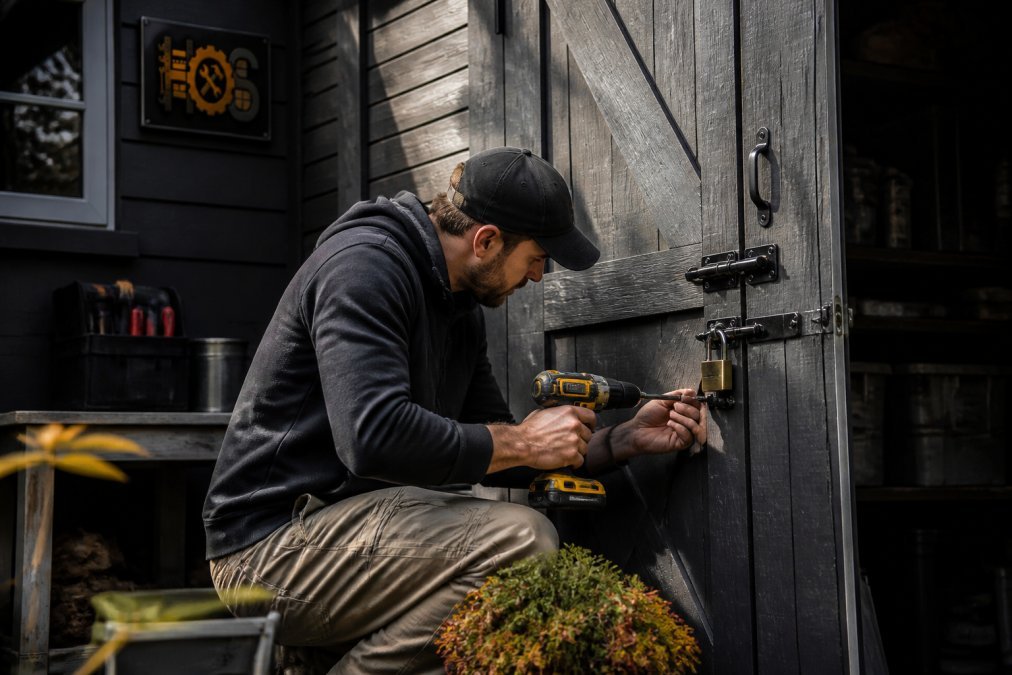
How to Secure a Backyard Shed Door: 7 Steps
Table of Contents
- Start With the Door Frame: The Weak Point Thieves Target
- How to Install a Hasp and Staple So It Actually Holds
- Best Shed Door Locks for Metal, Wood, and Plastic Sheds
- Reinforce Hinges, Latches, and Jambs in One Afternoon
- Smart Security and Lighting That Deter Break-Ins Before They Start
- Shed Security Tips That Also Keep Your Insurance Valid
- Conclusion: Secure the Door, Then Secure the Shed
- Frequently Asked Questions
Last Updated: September 17, 2026
Start With the Door Frame: The Weak Point Thieves Target
Learning how to secure a backyard shed door starts with one hard truth: the lock is rarely the problem. The frame is. A determined thief will skip your padlock entirely and pry the door frame until the latch gives way.
So before you buy anything, test your frame. Push the closed door firmly with your shoulder. If it flexes, a pry bar will beat it in seconds.
Here is what a weak frame looks like:
- Thin trim with no solid backing
- A strike plate held by short screws
- Gaps wider than a credit card between door and jamb
- Soft or rotted wood around the latch
Most shed doors fail at the jamb, not the lock. Fix that first, and every upgrade after it works better.
U.S. Department of Justice home burglary statistics
How to Install a Hasp and Staple So It Actually Holds
A hasp and staple only works when it is bolted through the door, not screwed into it. That single detail separates a hasp that holds from one that pops off in under a minute.
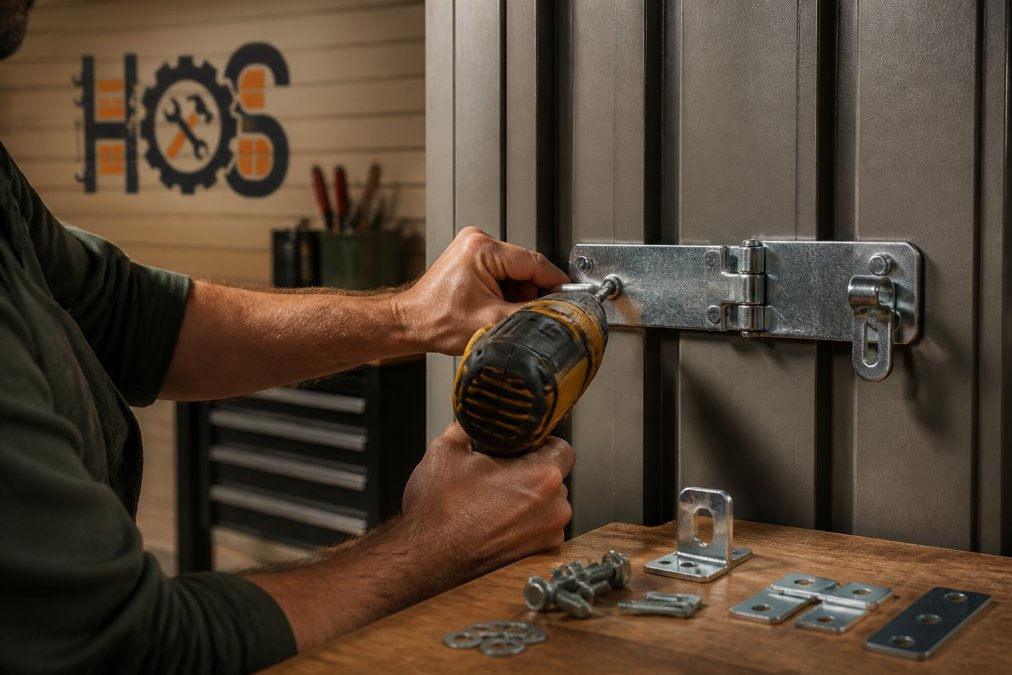
- Pick a hardened steel hasp with a covered staple
- Mark your holes so the hasp sits flush on the door face
- Drill through the door, not just into it
- Feed carriage bolts from the outside
- Tighten washers and lock nuts on the inside
Best Shed Door Locks for Metal, Wood, and Plastic Sheds
The best shed door locks depend on your door material. Metal sheds need bolt-through hardware. Wood sheds can take heavy lag bolts. Plastic sheds need backing plates so the hardware does not pull through.

| Shed Type | Best Lock Type | Why It Works | Watch Out For |
|---|---|---|---|
| Metal | Bolt-through hasp with disc padlock | Drill-resistant, no exposed shackle | Thin panels need backing plates |
| Wood | Heavy-duty hasp with carriage bolts | Bites into solid framing | Rotted wood around screws |
| Plastic | Hasp with wide backing plate | Spreads load across the panel | Hardware pulls through soft walls |
Padlock anatomy: what actually resists an attack
A padlock's security comes down to three measurements, and most shoppers never check them:
- Shackle diameter. Look for a shackle at least 3/8 inch thick. Anything under 1/4 inch is vulnerable to a standard bolt cutter.
- Shackle exposure. A short shackle leaves less metal for a cutter or pry bar to grab. A long shackle is the single easiest feature to defeat.
- Body style. A disc-style (hidden-shackle) lock shields the shackle inside a hardened case, so a cutter cannot reach it. A standard laminated or brass padlock leaves the shackle fully exposed.
Match the lock to the door material
Metal sheds. Thin steel panels flex and tear under load, so the lock must transfer force through the panel, not into it. Use a bolt-through hasp with carriage bolts and a backing plate on the inside. A disc padlock on the outside completes the assembly. Without a backing plate, a pry bar will simply peel the panel.
Add a second layer on double doors
A locking bar or security chain adds a second layer on double doors. Two locks mean two separate attacks, and most thieves will not spend the time on both. On a double-door shed, secure the inactive leaf with heavy barrel bolts at the top and bottom, then lock the active leaf with your primary hasp.
A note on smart locks for sheds
Battery-powered smart locks and keypad deadbolts are increasingly common on sheds, but they trade mechanical strength for convenience. A smart lock with a plastic interior housing will not survive a pry bar the way a hardened steel hasp will. If you want the logging and remote-access features, pair the smart lock with a mechanical hasp as the primary barrier rather than relying on the smart lock alone.
ANSI/BHMA hardware standards for locks
Reinforce Hinges, Latches, and Jambs in One Afternoon
Hinge reinforcement takes about an afternoon and costs very little. Most homeowners skip it, which is exactly why thieves target it.
13'x20' Metal Shed with Double Front →
- Replace hinge screws with 3-inch screws that reach the framing
- Add a security plate at the latch and strike
- Fill frame gaps with a solid wood or metal strip
- Fit a heavy-duty deadbolt or locking bar on the inside
Smart Security and Lighting That Deter Break-Ins Before They Start
Most break-ins are decided before anyone touches your door. Light and visibility stop them earlier than any lock.
Smart options add more:
- A camera with motion alerts sent to your phone
- A smart lock that logs every opening
- A door sensor that triggers a light or alarm
FBI burglary and property crime data
Shed Security Tips That Also Keep Your Insurance Valid
Your insurance policy may require certain protections, and skipping them can void a claim. Check your policy before you assume you are covered.
- A working lock on every exterior door
- Secure storage for high-value items
- Proof of purchase for anything you claim
What insurers actually look for
Homeowners policies typically treat a shed under the "other structures" portion of Coverage B, which is usually set at a percentage of your dwelling coverage. That limit is often lower than owners expect, and it applies to the structure itself, not just the contents.
- Forced-entry requirement. Many policies only cover theft from an outbuilding if there is visible evidence of forced entry. A shed left unlocked may be excluded entirely.
- Reasonable security. Insurers expect a functioning lock on every exterior door. What counts as "functioning" varies, but a hasp with a padlock that can be popped off in seconds may not satisfy an adjuster after a loss.
Lock standards and how they map to policies
There is no single federal lock standard that insurers require, but some policies and endorsements reference recognized testing programs. The two you are most likely to encounter are:
- ANSI/BHMA grades. Hardware is graded 1, 2, or 3, with Grade 1 being the highest cycle and strength rating. A Grade 1 hasp and padlock combination is far more likely to satisfy an insurer than unrated hardware.
- ASTM and UL listings. Some padlocks carry UL listings for physical security. These are not insurance requirements by default, but they are the kind of documentation an adjuster will accept as proof of adequate protection.
Documentation that protects your claim
Keep a record that survives a loss:
- Photograph the interior of the shed with items in place, and update the photos annually.
- Keep receipts or order confirmations for high-value tools and equipment.
- Note serial numbers for power tools and anything with a unique identifier.
- Save the packaging or spec sheet for your lock hardware so you can show it met the required grade.
When to ask about a scheduled endorsement
Standard personal property coverage has sub-limits for certain categories, and high-value tools or equipment can exceed them. If you store expensive items, ask about a scheduled personal property endorsement. It covers specific items beyond your standard limits, usually with no deductible and broader perils.
Conclusion: Secure the Door, Then Secure the Shed
A reinforced frame, a bolt-through hasp, and a good light stop most break-ins cold. Start with the frame, then work outward to the lock, the hinges, and the lighting.
Frequently Asked Questions
What type of lock is best for securing a shed door?
A hardened steel padlock with a shielded shackle paired with a bolt-through hasp and staple is the strongest common setup. Look for a padlock rated for outdoor use with a boron alloy shackle at least 3/8 inch thick. Combination locks work but leave no key to lose; keyed padlocks resist picking better. Avoid cheap brass padlocks, which bolt cutters slice through in seconds. If your shed has a lockable door handle, add the padlock and hasp as a second layer so a forced handle does not grant entry.
How can I reinforce shed door hinges to prevent break-ins?
Replace standard screws with 3-inch structural screws or carriage bolts that reach into the door frame, not just the trim. Add hinge-side security pins or a hinge bolt so the door cannot be lifted off even if the hinge pins are removed. For metal sheds, back every hinge bolt with a washer and nut on the inside. Hinge reinforcement takes about 30 minutes with a drill and costs under $20 in hardware, and it closes the second-most common entry point after the latch.
Are padlocks effective for outdoor sheds?
Yes, when the padlock is matched to the hasp. A hardened steel padlock with a closed shackle on a bolt-through hasp resists bolt cutters and pry bars well. The failure point is usually the hasp or the screws holding it, not the padlock itself. Use anti-tamper screws or carriage bolts so the hasp cannot be unscrewed from outside. Pair the padlock with door frame reinforcement and you have a locking system that stops casual thieves and slows determined ones.
How do I keep a shed door from swinging open in the wind?
Install a heavy-duty barrel bolt or gate latch on the inside of the door so it holds the door closed even when unlocked. Add a door closer or a chain with a spring so the door cannot slam. For double doors, a cane bolt or drop rod anchored into the ground keeps the inactive leaf from swinging. If the door is metal and lightweight, a magnetic catch plus a latch mechanism handles most wind. None of these replace your padlock; they just stop damage between uses.


Leave a comment
This site is protected by hCaptcha and the hCaptcha Privacy Policy and Terms of Service apply.