


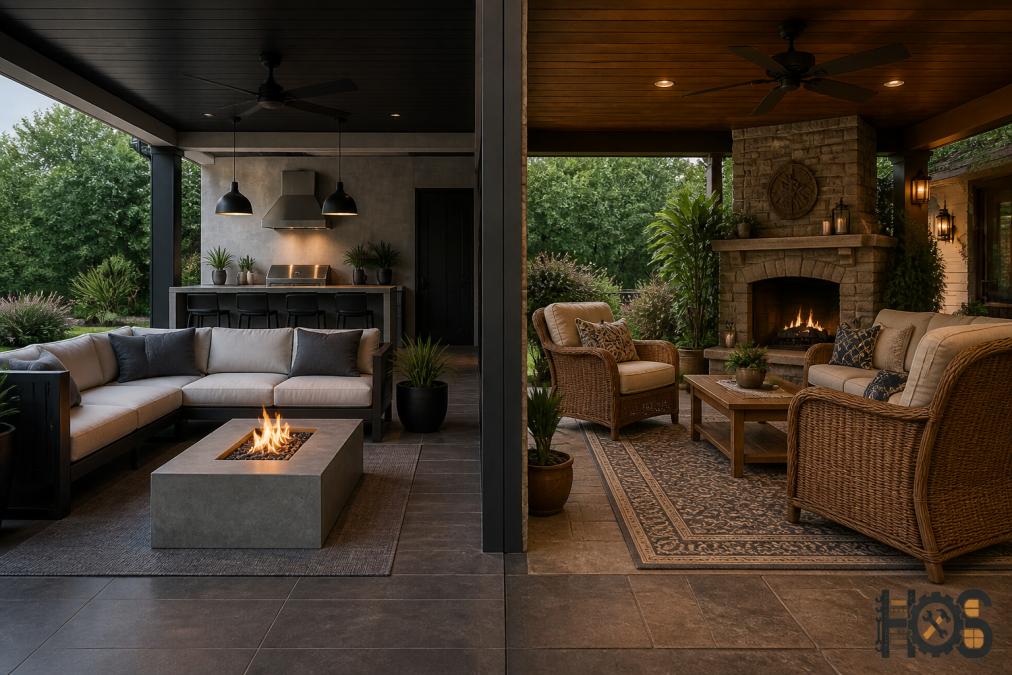
Modern Outdoor Living Room Designs 2026 vs Traditional
Table of Contents
- Modern vs Traditional Outdoor Living Rooms: The 2026 Comparison
- Durable Outdoor Furniture Materials: Teak, Metal, and High-Performance Fabric
- Modern Patio Layout Ideas for Entertaining and Everyday Use
- Backyard Entertaining Essentials 2026: What Actually Earns Its Space
- Costs and Maintenance: Modern vs Traditional Over Five Years
- Climate and Architecture: Which Style Fits Your Home
- Retrofitting a Traditional Home With Modern Outdoor Elements
- Frequently Asked Questions
Last Updated: September 16, 2026
Modern vs Traditional Outdoor Living Rooms: The 2026 Comparison
The choice between modern outdoor living room designs 2026 vs traditional comes down to one question: how much maintenance do you want? Modern outdoor rooms favor low-maintenance materials, modular systems, and clean lines. Traditional rooms lean on solid teak, turned legs, and layered textiles that reward regular care. At Home Outpost Supply, the answer usually follows the architecture of the house, not the trend cycle.
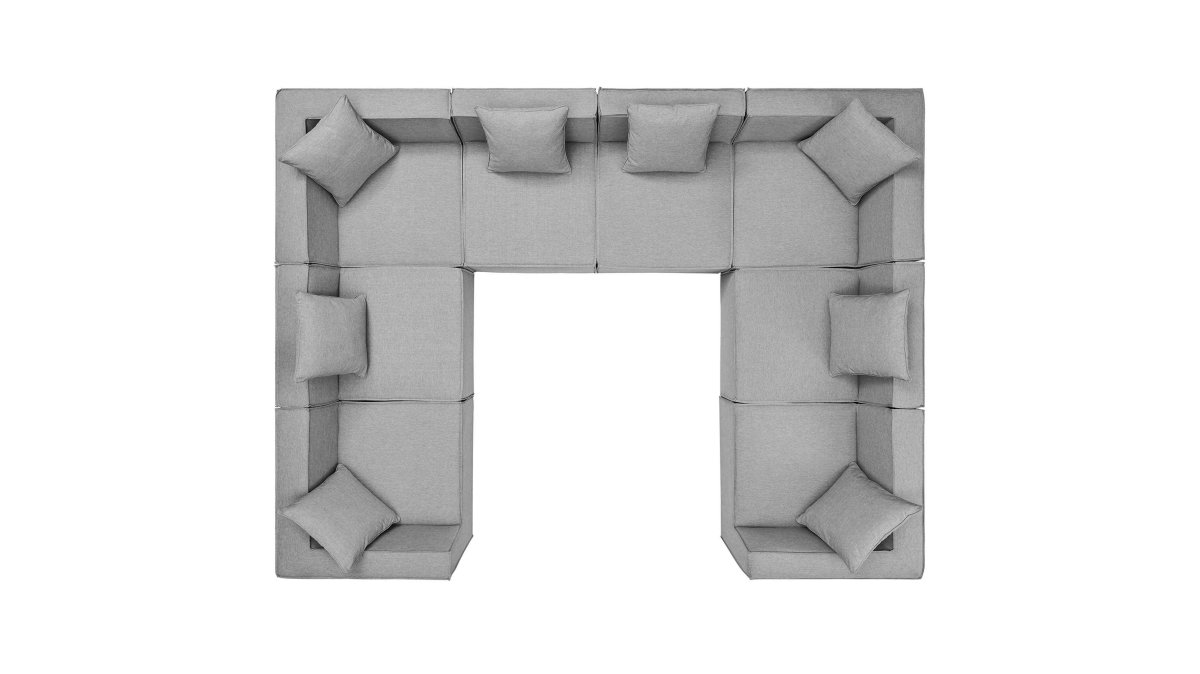
Start with the structure you already own.

What Defines Modern Outdoor Design in 2026
Modern outdoor design is defined by clean lines, modular systems, and a restrained material palette: low-profile seating, geometric patterns in cushions and rugs, and hardscaping that extends the interior floor out through a sliding door. The goal is functional flow, one continuous space with a roof edge in it.
What Defines Traditional Outdoor Design
Traditional outdoor design is defined by symmetry, ornate detailing, and materials that age visibly: turned table legs, slatted teak dining chairs, wrought-iron scrollwork, and cushions in bolder colors and patterns. It's warmer and more layered, and it asks more from you in return.
Durable Outdoor Furniture Materials: Teak, Metal, and High-Performance Fabric
Teak, powder-coated aluminum, and high-performance fabric carry most outdoor furniture through a full season without drama. Teak wins on longevity because the wood resists rot naturally. Aluminum wins on weight and rust resistance. High-performance fabric wins on fade and mildew resistance, provided covers come off for cleaning.
| Material | Weather Resistance | Maintenance | Best For |
|---|---|---|---|
| Teak | High, resists rot naturally | Annual cleaning and oiling | Traditional and transitional sets |
| Powder-coated aluminum | High, resists rust | Wipe-down only | Modern modular systems |
| High-performance fabric | High, resists fading and mildew | Removable covers, machine wash | Cushions on any frame |
| Cedar shingle accents | Moderate, needs sealing | Re-seal every few years | Overhead structures, privacy screens |
Modern Patio Layout Ideas for Entertaining and Everyday Use
Modern patio layout ideas start with spatial planning, not furniture shopping. Map the traffic path from the door to the grill to the seating, then place furniture around that path instead of across it. Most modern layouts break into three zones, lounge, dining, and cooking, divided by hardscaping.

Backyard Entertaining Essentials 2026: What Actually Earns Its Space
Backyard entertaining essentials for 2026 are the pieces you'd replace immediately if they broke: seating, shade, lighting, and a cooking surface. Everything else is optional.
- Ergonomic outdoor seating with back support, not just a bench
- Shade coverage over the primary seating zone
- Ambient lighting on a dimmer, not a single overhead fixture
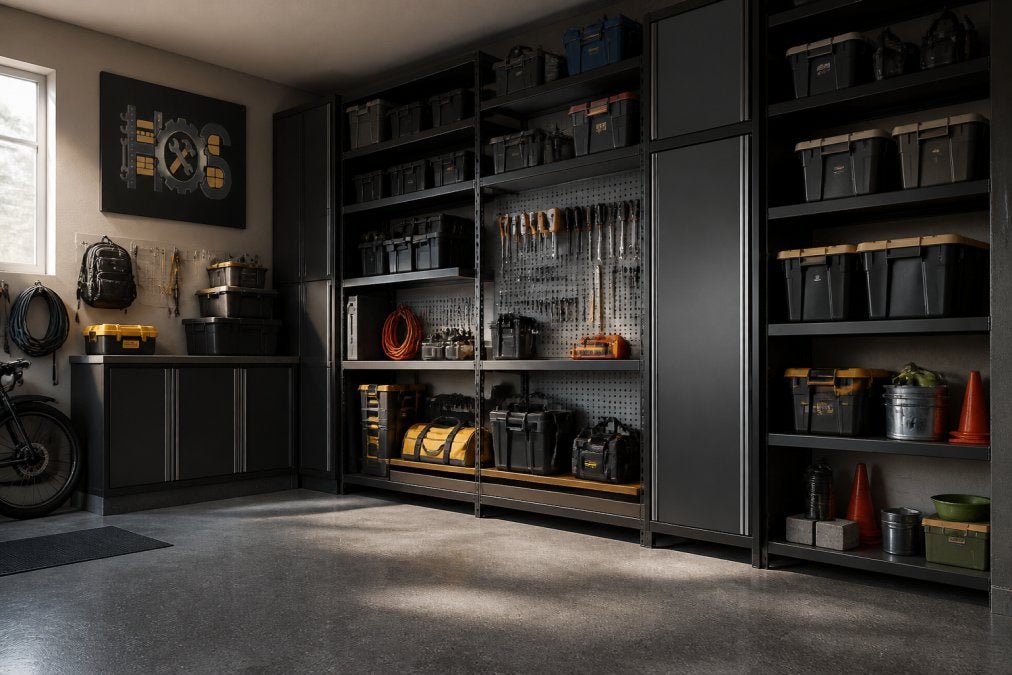
- Weather-resistant storage within arm's reach of the cooking area
- A hardscaped surface that drains and doesn't turn to mud
Costs and Maintenance: Modern vs Traditional Over Five Years
| Cost Category | Modern (modular, powder-coated, performance fabric) | Traditional (teak, wrought iron, layered textiles) |
|---|---|---|
| Upfront purchase | Higher per seat; modular pieces sold individually | Lower per seat; sets often bundled |
| Annual cleaning labor | Wipe-down and machine-wash covers; minutes per piece | Oiling, re-sealing, refinishing; hours per season |
| Consumables | Replacement cushion covers every few seasons | Teak oil, sealant, touch-up paint, new cushions |
| Repair model | Swap one module; matched parts usually still in production | Sand and refinish solid wood indefinitely; ornate metalwork needs a specialist |
| End of life | Molded or bonded components are hard to refinish | Solid teak can be sanded back to bare wood repeatedly |
| Resale | Weak; styles cycle and modular systems date | Strong; solid wood holds value |
To run the comparison for your own yard: list every piece you plan to buy, assign a realistic annual maintenance time, and multiply by five. Then ask whether the traditional set's lower sticker price still looks lower once you've priced your weekends into it. For most households the answer flips depending on how much of the space is covered and how harsh the season is.
Climate and Architecture: Which Style Fits Your Home
Climate and architecture decide this more than personal taste does, and almost no style guide addresses either directly. Modern and traditional materials fail differently under different conditions. Match the material to the climate first, then let the architecture set the visual vocabulary.
Patio Elegance Outdoor Sectional Set →
How each climate punishes the wrong choice:
- Humid and coastal. Salt air and persistent moisture attack metal hardware and ferrous fasteners first. Powder-coated aluminum resists rust; wrought iron and painted steel joints are where traditional sets start to fail. Teak handles humidity well because the wood resists rot naturally, but it will grow a silver-grey patina unless oiled. High-performance fabric with removable covers is the difference between a mildew problem you can wash out and one you can't.
- Arid and high-UV. Dry heat and intense sun fade fabric faster than moisture ever does. UV-resistant upholstery and removable covers matter more here than frame material, a powder-coated frame will outlast three sets of cheap cushions. Teak dries and can check or crack without occasional oiling, so the traditional maintenance cycle actually shortens in dry climates rather than lengthening.
- Storm-prone and freeze-thaw. Furniture you can secure or store quickly beats furniture that is heavy and permanent. Modular pieces break down and move indoors; a single heavy dining table does not. Freeze-thaw cycles also work on hardscaping and on any wood that holds moisture, so sealed surfaces and covered storage earn their cost.
- Four-season and mixed. The honest answer is transitional design. Keep the frame simple, add warmth through textiles and wood, and choose pieces that can be covered or moved rather than permanently installed.
- Is your climate humid, arid, storm-prone, or mixed?
- Is your home's architecture flat-roofed and horizontal, or gabled and symmetrical?
- How many hours per season are you willing to spend on upkeep?
- Do you need to reconfigure the space for different uses, or is one fixed layout enough?
Retrofitting a Traditional Home With Modern Outdoor Elements
Retrofitting a traditional home works best when you change one layer at a time. Start with the furniture, live with it for a season, then decide whether the hardscaping needs to follow. Ripping out a brick patio before you know how you use the space is the expensive way to learn.
The highest-impact swaps, in order:
- Replace heavy fixed seating with a modular sectional that can be reconfigured.
- Add ambient lighting on low-voltage lines instead of overhead fixtures.
- Introduce one modern material, such as powder-coated aluminum or a concrete side table, as an accent.
- Keep the existing teak or brick as the traditional anchor so the space still matches the house.
- Add timber framing or a pergola to bridge the two vocabularies.
Frequently Asked Questions
What are the defining characteristics of modern outdoor living spaces in 2026?
Modern outdoor rooms lean on low-profile modular seating, clean lines, and a muted palette of grey, charcoal, and warm neutrals. Materials do the work: powder-coated metal frames, high-performance fabrics that resist fading and mildew, and hardscaping that reads as an extension of the interior floor. The space is treated as an outdoor living room rather than a patio, with ambient lighting, layered textiles, and a clear functional flow between cooking, dining, and lounging zones.
How does traditional outdoor furniture differ from modern 2026 trends?
Traditional outdoor furniture favors teak, cedar, and wrought iron with visible joinery, turned legs, and patterned cushions. It reads warmer and more ornate, and it ages into a patina rather than staying factory-fresh. Modern 2026 pieces favor modular systems, straight or gently curved frames, and solid or subtly textured upholstery. Traditional teak sets like the Marina 10-Piece still hold up in any climate, so the choice is often aesthetic rather than a durability gap.
Is it better to mix modern and traditional styles in a backyard design?
Mixing works when one style leads and the other accents. A traditional brick patio with a modern modular sectional looks intentional; the reverse, a sleek concrete deck with heavy ornate iron, usually fights itself. Pick your architecture and hardscaping as the anchor, then let furniture follow. Transitional design, where clean-lined seating sits on classic stone or timber decking, is the safest blend and the easiest to update later.
How do I choose between a modern or traditional aesthetic for my patio?
Start with three questions: how much upkeep do you want, what does your home's exterior already look like, and how do you use the space. Modern setups suit busy households that want wipe-clean surfaces and low-maintenance materials. Traditional suits homeowners who enjoy oiling teak and layering textiles. If your home is brick or shingle, transitional pieces bridge both. Climate matters too: high-performance fabric and powder-coated metal hold up in humid or coastal areas with less fuss.
What materials are trending for outdoor living rooms in 2026?
High-performance solution-dyed fabrics, powder-coated aluminum, and FSC-certified teak top the list, alongside volcanic stone and refractory surfaces for cooking zones. Cedar shingle and timber framing are showing up as architectural accents. The through-line is weather resistance with a natural look. Materials that resist fading, mold, and mildew without heavy chemical treatment are winning, and buyers are checking whether cushion covers are removable before they commit to a set.


Leave a comment
This site is protected by hCaptcha and the hCaptcha Privacy Policy and Terms of Service apply.