


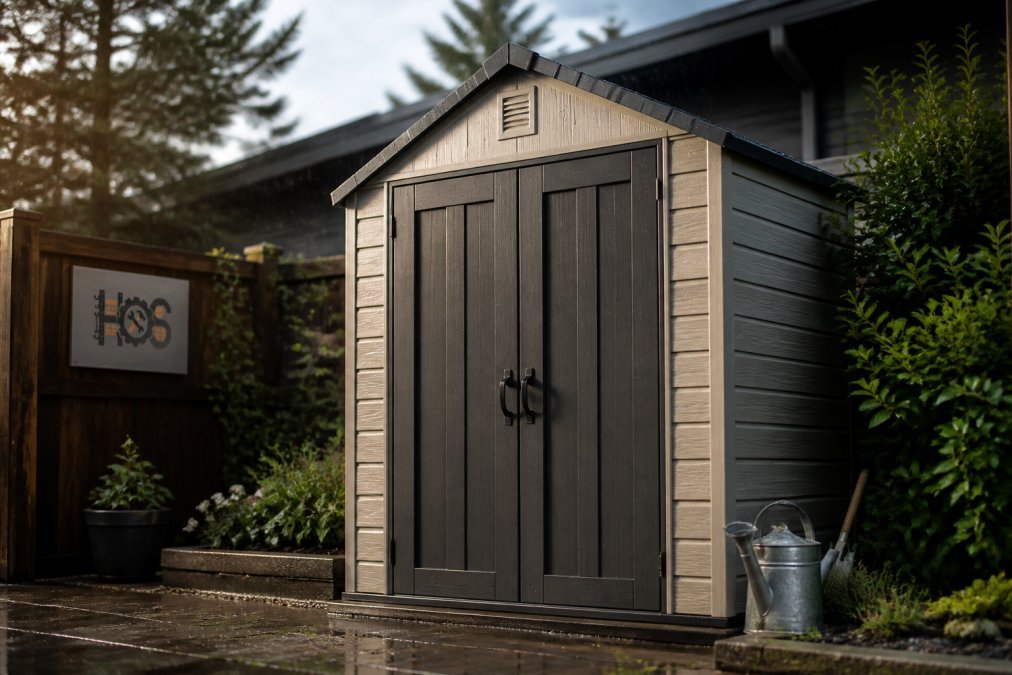
Plastic Sheds Weather Resistant Review: 2026 Guide
Table of Contents
- How We Reviewed Plastic Sheds for Weather Resistance
- Plastic Shed Weather Resistance: What Actually Matters
- How to Anchor a Plastic Shed to the Ground
- Plastic Shed vs Wood Shed Durability
- Top Weather-Resistant Plastic Sheds Reviewed
- Foundation, Permits, and Hidden Ownership Costs
- Climate-Specific Performance and Long-Term Care
- Frequently Asked Questions
Last Updated: September 15, 2026
How We Reviewed Plastic Sheds for Weather Resistance
Plastic sheds are weather resistant when their resin panels, roof pitch, and anchoring system work together to shed water, resist wind uplift, and block UV damage. This review evaluates real construction details rather than marketing claims, because the difference between a shed that lasts fifteen years and one that warps in three comes down to specifics you can inspect before buying.
We scored each unit on structural integrity, moisture management, and hardware quality. Resin beats wood on upkeep and most metal on rust resistance, but only when the foundation and anchoring are done correctly.
Plastic Shed Weather Resistance: What Actually Matters
Weather resistance in a plastic shed comes down to three systems: panel material, roof geometry, and ventilation. Miss one and the others degrade faster.
Resin is a molded plastic composite with UV stabilizers that slow the sun's breakdown of the material. Unlike wood, it does not absorb water or need repainting, and unlike steel, it will not rust at the first scratch.
Roof pitch decides how fast water leaves the surface, a shallow roof holds standing water, and standing water finds every seam. Without airflow, condensation forms inside panels and drips onto stored items.
Resin vs. Pressure-Treated Lumber vs. Metal
Each material trades one weakness for another. Resin resists rot and insects but can crack in extreme cold. Pressure-treated lumber is strong and repairable but needs periodic sealing and can warp as it dries. Metal panels are lightweight and fire-resistant but dent easily and rust at fasteners.
| Material | Weather Strength | Maintenance | Main Weakness |
|---|---|---|---|
| Resin | UV and moisture resistant | Low, occasional rinse | Can crack in deep cold |
| Pressure-treated lumber | Strong, repairable | Annual sealing | Warps, attracts insects |
| Metal | Fire and wind resistant | Low, watch fasteners | Rust at scratches and seams |
Wind Ratings, Roof Pitch, and Ventilation
Wind rating tells you the maximum sustained wind a shed is engineered to survive when properly anchored, the spec most buyers overlook. A shed rated for high winds still fails on bare ground with no anchoring kit.
Roof pitch and ventilation work as a pair. A steeper roof sheds water and debris faster, while ridge and gable vents let humid air escape before it condenses. Look for a visibly sloped roof and confirm the manufacturer includes vented openings.
How to Anchor a Plastic Shed to the Ground
Anchoring a plastic shed to the ground requires a level, load-bearing foundation and hardware rated for your wind zone. The foundation carries the weight; the anchoring kit holds the shed to it. Skip either step and the structure shifts, racks, and leaks at the seams.
What separates a shed that survives a storm from one that becomes debris is not the panel material, it is the anchor type matched to the base you built. Four common configurations:
| Base Type | Anchor | Best For | Failure Mode |
|---|---|---|---|
| Concrete pad | Wedge or sleeve anchors | High-wind zones, permanent installs | Over-torquing cracks the slab edge |
| Compacted gravel | Ground augers or helical anchors | Most residential yards | Gravel not compacted deep enough; anchor pulls loose |
| Timber frame on grade | Lag screws through the floor channel | Sloped or uneven sites | Frame rots at ground contact |
| Bare soil | Not recommended | Temporary only | Shed lifts in the first sustained wind event |
Match the anchor to the base, not the shed. A manufacturer's kit is sized for the shed's floor channels, but the anchor body must suit the substrate. A wedge anchor will not hold in gravel, and a ground auger will not bite into a slab.
Reading the Wind Rating Correctly
A wind rating tells you the maximum sustained wind a shed is engineered to survive when properly anchored to a rated foundation, it is not a property of the panels alone. A shed with a modest rating can outperform its spec if bolted to a concrete pad in a sheltered yard.

Two practical checks before you buy:
- Confirm the rating is expressed as a sustained wind speed, not a vague "wind resistant" claim.
- Confirm the manufacturer sells an anchoring kit that matches your intended base. If they only offer one kit, ask what base it assumes.
Step-by-Step Anchoring
- Level and compact the foundation base, concrete pad, gravel bed, or timber frame. Compact in lifts, not one pass.
- Set the shed on the base and confirm it sits flat with no rocking at the corners. A rocking shed will never anchor straight.
- Mark anchor points through the pre-drilled floor joists or floor channels.
- Drill and set the anchors using hardware matched to your base type.
- Tighten in a diagonal pattern so the frame seats evenly, corner to opposite corner, then the remaining pair.
- Check the door hardware for alignment. A door that binds after tightening means the frame is out of square.
Frost Depth and Seasonal Movement
In regions with freezing winters, the ground heaves and settles with the frost cycle.
When to Call a Professional
Plastic Shed vs Wood Shed Durability
Top Weather-Resistant Plastic Sheds Reviewed
XWT012 6x8 ft Plastic Storage Shed
8x16 ft Resin Outdoor Storage Shed with Carpet
8x14 ft Resin Outdoor Storage Shed with Carpet
| Model | Size | Price | Best For |
|---|---|---|---|
| XWT012 | 6x8 ft | $1,998.14 | Small yards, garage overflow |
| 8x14 Resin | 8x14 ft | $2,057.95 | Bikes and riding mowers |
| 8x16 Resin | 8x16 ft | $2,266.95 | Full consolidation, walk-in access |
Foundation, Permits, and Hidden Ownership Costs
Foundation Options and What Each One Costs You
| Foundation | Typical DIY Material Cost | Lifespan | Best For |
|---|---|---|---|
| Compacted gravel bed | Lowest of the three | 10-15 years with re-leveling | Most residential yards, good drainage |
| Timber frame on grade | Moderate | 8-12 years before rot risk | Sloped or uneven sites |
| Poured concrete pad | Highest | 30+ years | High-wind zones, heavy loads, permanent installs |
Permitting: How to Find Out What Applies to You
The practical sequence:
The Full Cost Stack
Budget for these lines before you order:
A Note on Resale and Compliance
Climate-Specific Performance and Long-Term Care
Frequently Asked Questions
Are plastic sheds weather resistant in extreme temperatures?
High-quality resin plastic sheds handle temperature swings better than most wood models. They do not rot, warp, or need repainting when temperatures drop below freezing or climb above 100°F. Cheaper plastic can become brittle in sustained cold, so look for resin panels with UV stabilizers. The 8x16 ft resin shed from Home Outpost Supply uses weatherproof resin built for year-round outdoor use.
How do plastic sheds hold up against high winds?
Wind performance depends on anchoring, not just panel thickness. A plastic shed that is not secured can shift in gusts above 40 mph. Use a manufacturer anchoring kit rated for your area, and set the shed on a level foundation base. Models with a steeper roof pitch and reinforced floor joists resist uplift better. Always check the wind rating before buying.
Do plastic sheds leak during heavy rain?
Leaks usually come from poor assembly, not the material itself. Resin panels overlap and lock together, so water sheds off when seams are seated correctly. Check that the roof pitch directs runoff away from the door, and seal any gaps around door hardware. A moisture barrier under the floor keeps ground water from wicking up. Proper anchoring also prevents panels from shifting and opening gaps over time.
How long does a high-quality plastic shed last?
A resin shed with UV-stabilized panels can offer long-term durability with minimal care. The main enemies are prolonged direct sun, which fades color, and standing water around the foundation. Rinsing the exterior once a year and keeping gutters or drainage clear extends lifespan. Wood sheds often require more frequent maintenance like staining, while plastic can be a lower-maintenance option.
Do I need a permit to install a plastic shed in my backyard?
Permit rules vary by city and county. Many areas allow sheds under 100 or 120 square feet without a permit, but you still need to meet setback and zoning compliance rules. A 6x8 ft shed at 48 square feet often qualifies as exempt, while larger 8x16 ft models may require a building permit. Call your local planning office before you buy.
The real challenge with plastic sheds is not choosing a material, it is getting the foundation, anchoring, and site prep right so the weather resistance you paid for actually holds up. Home Outpost Supply curates durable resin sheds with tracked and insured shipping, secure payment processing, and a support team that helps before and after purchase. Browse the collection, measure your backyard footprint, and get started with Home Outpost Supply to turn a cluttered garage into usable space.


Leave a comment
This site is protected by hCaptcha and the hCaptcha Privacy Policy and Terms of Service apply.