


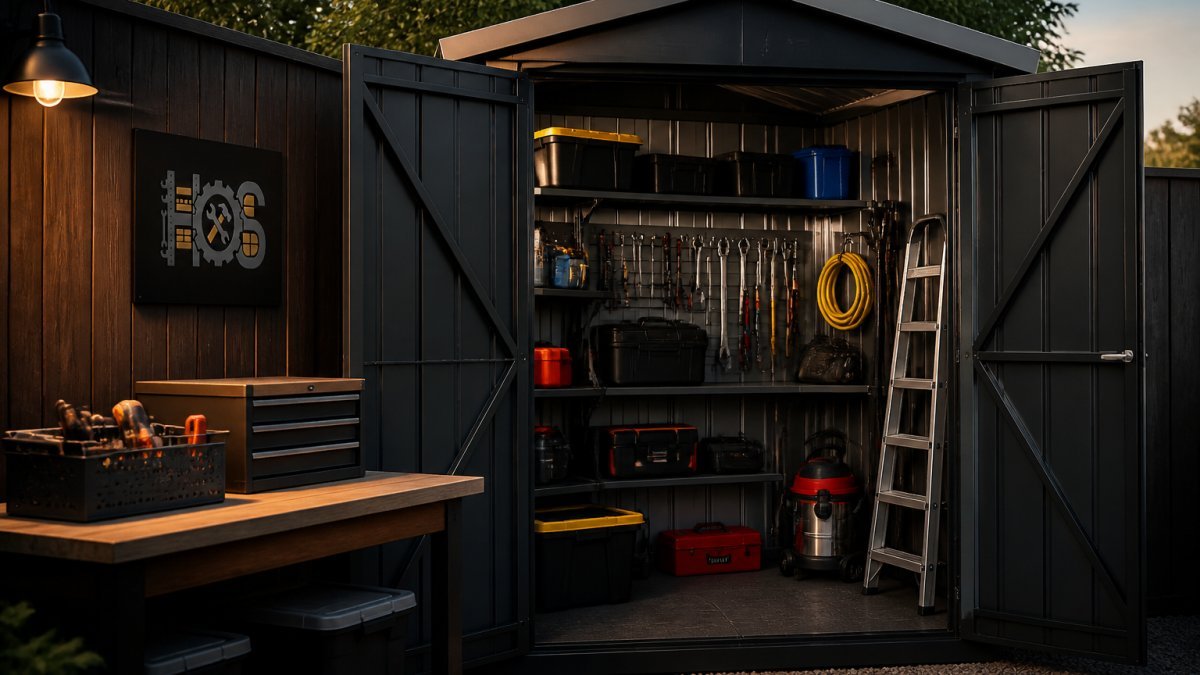
Benefits of a Secure Tool Shed: 7 Reasons to Buy
Table of Contents
- Why a Secure Tool Shed Beats a Cluttered Garage
- Metal Shed Security Features That Actually Stop Theft
- Weather Protection, Moisture Resistance, and Durability
- Metal Shed vs. Plastic Shed: Which Keeps Tools Safer?
- Shed Organization Ideas for Tools That Save Time
- What Not to Store in a Metal Shed
- Cost, Insurance, and Return on Investment
- Choosing the Right Secure Tool Shed for Your Home
- Frequently Asked Questions
Last Updated: October 4, 2026
Why a Secure Tool Shed Beats a Cluttered Garage
A secure tool shed solves a problem most homeowners underestimate: expensive equipment creeping into every corner of the garage until there is no room left for the car.
Every square foot of garage given to a lawn mower is unavailable for parking, hobbies, or a workshop.
What separates a shed that works from one that disappoints comes down to construction and security, not size. The U.S.
What Counts as Secure Storage
Secure storage is a lockable, weather-tight structure with reinforced entry points, anchored construction, and no easy access through weak panels or an unsecured roof. A shed meets that bar when the door locks, the walls resist prying, and the building is fixed to a foundation so it cannot be lifted or tipped.
Three elements decide whether storage is genuinely secure:
- A locking door or doors with lock holes for compatible padlocks
- Reinforced entry points, including hinges that cannot be unbolted from outside
- Anchoring to a concrete slab, solid wood, or equivalent foundation
A shed missing any of these is a storage building, not a secure one. The distinction matters most for homeowners storing tools, bikes, and valuables that would be costly to replace.
Metal Shed Security Features That Actually Stop Theft
Metal sheds stop theft when door hardware, lock points, and anchoring work as one system. Galvanized steel panels resist cutting and prying far better than thin plastic, and built-in lock holes let you add a padlock without drilling. But a single padlock is not a security plan: each layer buys time a thief does not want to spend in a lit, visible, noisy spot.
Layer 1: The Lock
Match the lock to the threat. A basic keyed padlock stops an opportunist but fails to bolt cutters. A shrouded padlock, a hockey-puck or disc lock, exposes almost no shackle to cut, and a hardened steel shackle with a boron alloy core adds another step.
On sliding or double doors, a cane bolt or drop rod at the bottom and a heavy-duty hasp at the top prevent the corners from being spread apart.
Layer 2: The Door and Hinges
The lock is only as good as what surrounds it. A padlock on a flimsy frame pops open with a pry bar in seconds, so look for doors with pre-formed lock holes and a frame that closes flush.
Reinforce the strike plate and hasp with longer screws that reach into the framing, not just the panel. A hasp held by two short screws pulls out with one hard yank; one through-bolted with carriage bolts or backed by a steel plate does not.
Layer 3: The Anchoring
Anchor points matter as much as the lock. A shed rated for a 50 mph wind load, like the larger metal models we carry, is built to stay put, and that rigidity makes it harder to force open. Foundation requirements are not optional: concrete slabs, solid wood, or an equivalent surface keep the structure fixed. Anchor the frame with expansion bolts or ground anchors, and anchor high-value contents, a locking cabinet, tool chest, or bike rack, to the floor or wall so the whole item cannot be carried off.
Layer 4: Visibility, Lighting, and Alarms
A thief prefers cover. Trim shrubs and stack nothing against the walls that would hide someone working the door, and face the door toward the house or a neighbor's line of sight when the site allows. Add motion-activated lighting, a battery or solar LED fixture over the door is enough, plus a door-contact alarm or shed-specific motion sensor with a local siren.
Layer 5: What You Store and How
Do not leave a $600 chainsaw in the front of the shed where it is the first thing visible when the door opens.
For a centralized, lockable home for hand tools and workshop equipment, the Homak HXL Pro Series 60" 10-Drawer Tool Storage Cabinet pairs an integrated locking mechanism with 38,580 cubic inches of capacity and ball-bearing drawer slides. It can be anchored inside the shed for a second layer of protection.

Weather Protection, Moisture Resistance, and Durability
Weather protection comes down to three things: a roof that sheds water, walls that resist moisture, and ventilation that stops condensation from trapping damp air inside. Galvanized steel with a sloped roof handles all three when assembled correctly.

Rust is the long-term enemy of metal storage.
Durability also means holding shape through wind and snow. Models rated for a 50 mph wind load and a 20 lbs./ft² snow load, installed on the required foundation, are built for years of outdoor use rather than a single season.
Metal Shed vs. Plastic Shed: Which Keeps Tools Safer?
Metal sheds generally win on security; plastic sheds win on maintenance-free living. Metal resists cutting, prying, and impact better. Plastic never rusts, never needs painting, and shrugs off dents, but a determined intruder can cut through it faster.
| Feature | Metal Shed | Plastic / Resin Shed |
|---|---|---|
| Theft resistance | High: steel resists cutting and prying | Moderate: lighter panels cut more easily |
| Rust and corrosion | Managed with galvanized coating | Not a concern |
| Maintenance | Occasional inspection of coating | Wipe down, no painting |
| Weather durability | Strong with sloped roof and vents | Strong, resists dents |
| Best for | Tools, bikes, valuables | Lawn gear, seasonal items |
Neither material is automatically right. If protecting expensive tools from theft is the priority, metal is stronger. If you want low-maintenance storage for lawn equipment, resin does the job without a paintbrush.
Shed Organization Ideas for Tools That Save Time
Organization determines whether the shed saves you time or just relocates clutter. The goal is a place for every tool, arranged by how often you reach for it, so you stop digging through bins every time you need a wrench.
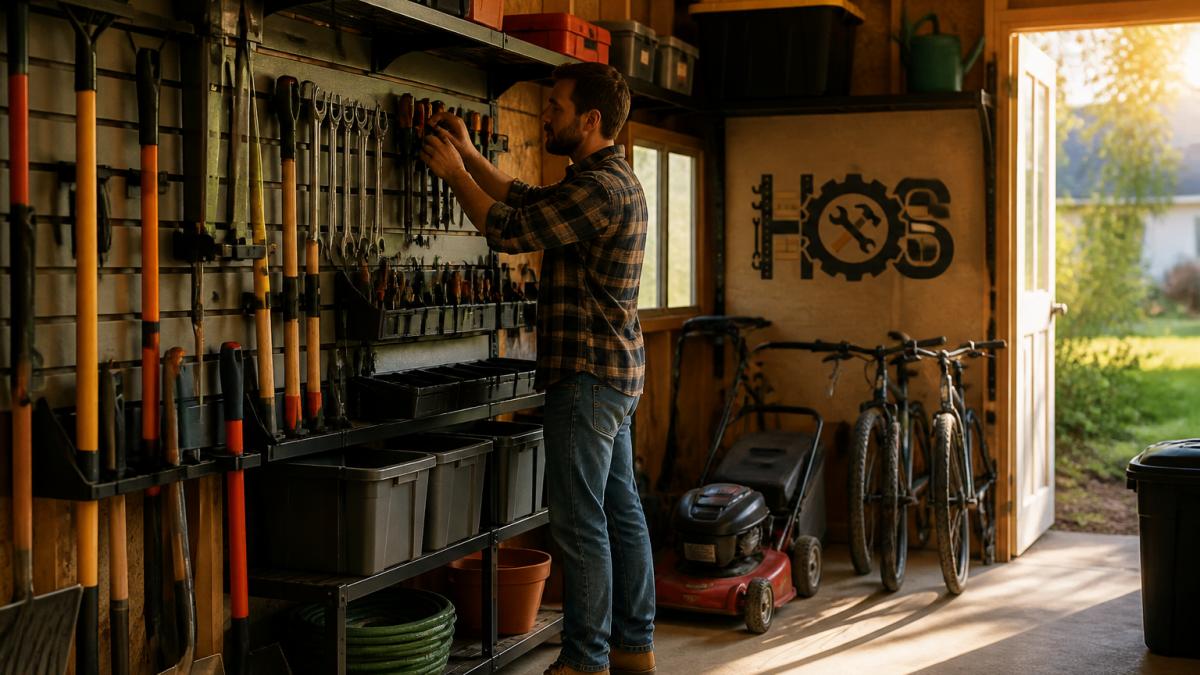
Start with zones: long-handled tools like rakes and shovels on wall hooks in one corner, power tools on a waist-height shelf, and small parts, fasteners, and hand tools in labeled bins or a locking cabinet.
A few rules that hold up in practice:
Homak HXL Pro Series 60" 10-Drawer Tool Storage Cabinet – Black →
- Store the most-used tools at waist height
- Keep long-handled equipment vertical to save floor space
- Group items by task, not by size
For the tools that stay in the garage, a 7ft Heavy Duty Workbench with 10 Drawers & 2 Cabinets gives you locking drawers, a 1,654 lb. desktop capacity, and a surface to work on, so the shed holds the overflow and the garage holds the work.
What Not to Store in a Metal Shed
A metal shed is the wrong home for anything that reacts badly to heat swings or moisture. Metal conducts temperature, so the interior runs hot in summer and cold in winter, and condensation is a real risk in humid climates even with vents.
Keep these out of a metal shed:
- Propane tanks and flammable fuel. Store these in a well-ventilated area away from the house, never in an enclosed metal structure.
- Paint, solvents, and chemicals. Temperature swings and fumes make enclosed storage risky.
- Electronics and anything moisture-sensitive. Condensation can quietly ruin them.
For hazardous materials, check local rules on proper storage before you commit anything to the shed. When in doubt, leave it out.
Cost, Insurance, and Return on Investment
A secure tool shed pays for itself by protecting equipment you would otherwise replace and making your garage usable again. But the math only works if you count the full cost, structure, site prep, and security upgrades, and know what your insurance covers.
What a Secure Shed Really Costs
The sticker price is the starting point, not the total. Budget for three buckets:
- The structure. A compact steel shed runs a few hundred to around a thousand dollars; a mid-size resin or steel unit runs roughly one to three thousand; a large metal building can run several thousand. The table below shows representative prices from our current lineup.
- Site prep and foundation. A level gravel pad, a concrete slab, or a pressure-treated wood platform is required for anchoring and drainage. A concrete slab is the most expensive option and the most secure; a gravel pad with a wood floor is the cheapest. Expect site prep to add a meaningful percentage to the project, and more if the ground is uneven or the site needs clearing.
- Security upgrades. A shrouded padlock is inexpensive. A reinforced hasp, security hinges, a cane bolt, and longer through-bolts are modest add-ons. Motion lighting, a door alarm, and a camera are the larger line items. Most homeowners can layer meaningful security for a small fraction of the shed's price.
| Shed Type | Approx. Price | Best For |
|---|---|---|
| Steel 7 x 4 ft | $982.40 | Small yards, long-handled tools |
| Plastic 6 x 8 ft | $1,998.14 | Lawn gear, seasonal items |
| Resin 8 x 12 ft | $3,090.10 | Bikes, tools, outdoor furniture |
| Metal 10 x 20 ft | $1,399.00 | Large equipment, workshop space |
The compact Outdoor Steel 7 x 4-ft Storage Shed with Sloped Roof is our pick for tight spaces, with 154 cubic feet of storage and a narrow footprint that fits alongside a house or fence.
The Return on Investment
Run the numbers on what you store. Add up the replacement cost of the mower, trimmer, chainsaw, bikes, generator, and hand tools.
There is a second return that is harder to price but real: the garage becomes usable again. Reclaiming that space for parking, a workshop, or storage you actually need is the reason many homeowners buy a shed in the first place.
Insurance and Liability
Most homeowners policies include some coverage for detached structures, often called other structures coverage, and personal property coverage may extend to items stored in a shed. But limits, deductibles, and exclusions vary widely, and a policy covering the building may not cover the contents at full value or may exclude categories like business equipment or high-value tools.
A few practical steps:
- Confirm coverage before you need it. Call your insurer and ask specifically whether the shed structure and its contents are covered, what the limits are, and whether theft is included.
- Ask about scheduling. High-value items like a generator, a welder, or expensive power tools may need to be scheduled or listed separately to be fully covered.
- Document everything. Photograph the shed inside and out, keep receipts for major tools, and store a copy of that record somewhere other than the shed. After a loss, documentation is what turns a claim into a payout.
This is general guidance, not insurance advice. Coverage rules vary by state and by policy, so confirm the specifics with your insurer or agent.
The Bottom Line
A secure tool shed is a capital purchase with an ongoing return: protected equipment, a reclaimed garage, and fewer replacement costs. Price the structure, site prep, and security upgrades together, confirm your insurance, and document what you store. The homeowners who get the most value treat the shed as a small security system, not just a box in the yard.
Choosing the Right Secure Tool Shed for Your Home
Choosing the right shed means matching three things: what you are storing, how much space you have, and how much security you need. Get those in order and the decision becomes straightforward.
Use this checklist before you buy:
- Measure your available space and allow room for door swing and access
- List what you are storing and check it against interior dimensions and door openings
- Confirm the security features: lock holes, reinforced doors, anchoring
For a larger property with big equipment to shelter, the 13'x20' Plus Upgraded Metal Shed offers 238.8 square feet of floor space with lockable doors and four vents. For a finished, lockable backyard structure that handles bikes, tools, and furniture, the Patiowell 8' x 12' Resin Storage Shed includes an integrated floor, two windows, and a lockable door.

Every order from Home Outpost Supply is tracked and insured, and our team is available before and after purchase to help you plan the right fit.
Frequently Asked Questions
What are the benefits of a secure tool shed?
A secure tool shed protects expensive tools and equipment from theft, weather damage, and rust. It also frees up garage space, keeps garden equipment organized, and reduces clutter around your yard. Models with lockable doors and galvanized steel construction, like the 10x20 Metal Garage Shed at Home Outpost Supply, add a lockable layer of protection while giving you roughly 183.9 square feet of floor space for mowers, bikes, and workshop gear.
How can I make a tool shed more secure?
Start with a shed that has lock holes on its doors, then add a quality padlock or deadbolt. Anchor the shed to a concrete slab or solid wood foundation so it cannot be lifted or pried open. Keep windows covered, install motion-sensor lighting nearby, and avoid storing tools in plain view through open doors. The Patiowell 8' x 12' Resin Shed includes a lockable door and two windows you can position based on wall-panel layout.
What should you not store in a metal shed?
Avoid storing propane tanks, gasoline, paint thinners, and other flammable or volatile chemicals in a metal shed, especially in summer heat. Metal structures can trap heat, and without adequate ventilation these items become a fire risk. Also skip anything that rusts easily if moisture builds up, such as unprotected bare-steel tools. Choose a shed with vents, like the 13'x20' Metal Shed with four wall vents, to keep airflow moving and reduce trapped moisture.
Are metal sheds secure enough to protect valuable tools?
Yes, when they are properly anchored and locked. Galvanized steel construction resists cutting and prying far better than plastic panels, and models with lock holes on both front and side doors let you add compatible locks. The 13'x20' Plus Upgraded Metal Shed rates for a 50 mph wind load and includes lock holes on its doors. Pair a steel shed with a concrete or solid wood foundation for the strongest theft prevention.
The challenge is not finding a shed. It is finding one that actually keeps your tools safe, dry, and organized for years instead of seasons. At Home Outpost Supply, we focus on durable structures built for real security, backed by tracked and insured shipping and a support team that helps you get the fit right. Get started with Home Outpost Supply and turn that cluttered garage back into space you can use.


Leave a comment
This site is protected by hCaptcha and the hCaptcha Privacy Policy and Terms of Service apply.