


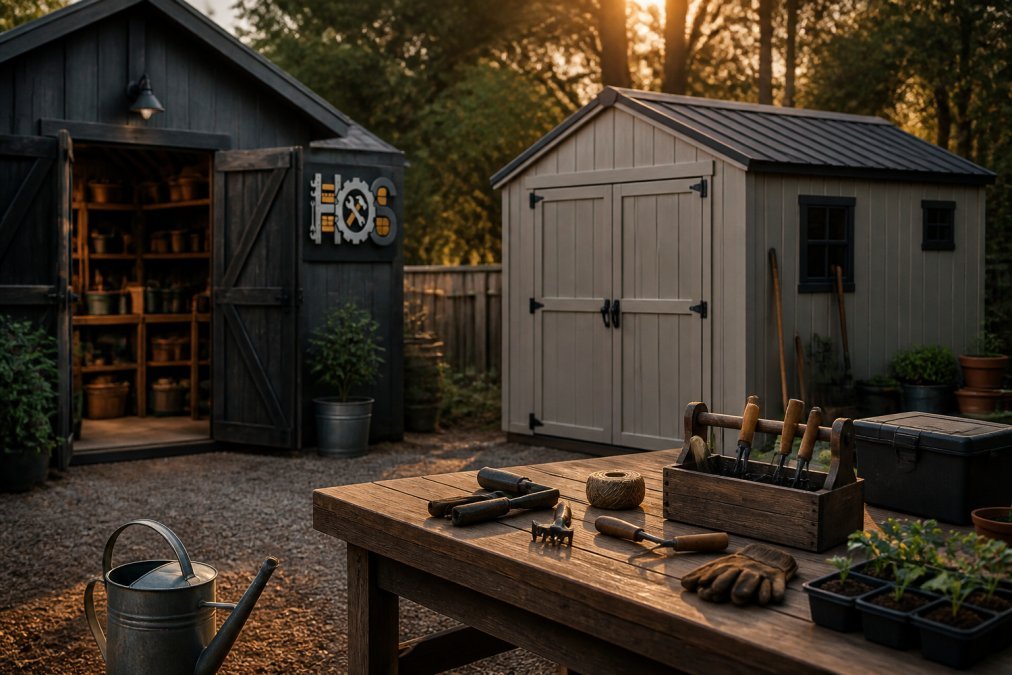
Storage and Shed Guide: Pick the Right Outdoor Unit
Table of Contents
- Storage Shed Materials and Sizes: What Actually Holds Up
- How to Prepare a Foundation for a Shed
- Storage Shed Permit Requirements You Need to Check First
- Shed Organization Ideas That Stop the Clutter Cycle
- Affordable, Heavy-Duty, and Prefab Storage Shed Options
- Maintenance and Longevity: Making a Shed Last 15+ Years
- Frequently Asked Questions
Last Updated: September 19, 2026
Storage Shed Materials and Sizes: What Actually Holds Up
Choosing the right storage and shed setup starts with two decisions: what it's made of and how much floor space you need. Get those wrong, and you'll either fight rust and rot for a decade or pay for square footage you never fill.
Resin sheds resist dents, rust, and fading better than most buyers expect. Wood offers the best customization but demands annual sealing. Metal delivers the most storage capacity per dollar, while vinyl splits the difference on looks and upkeep.
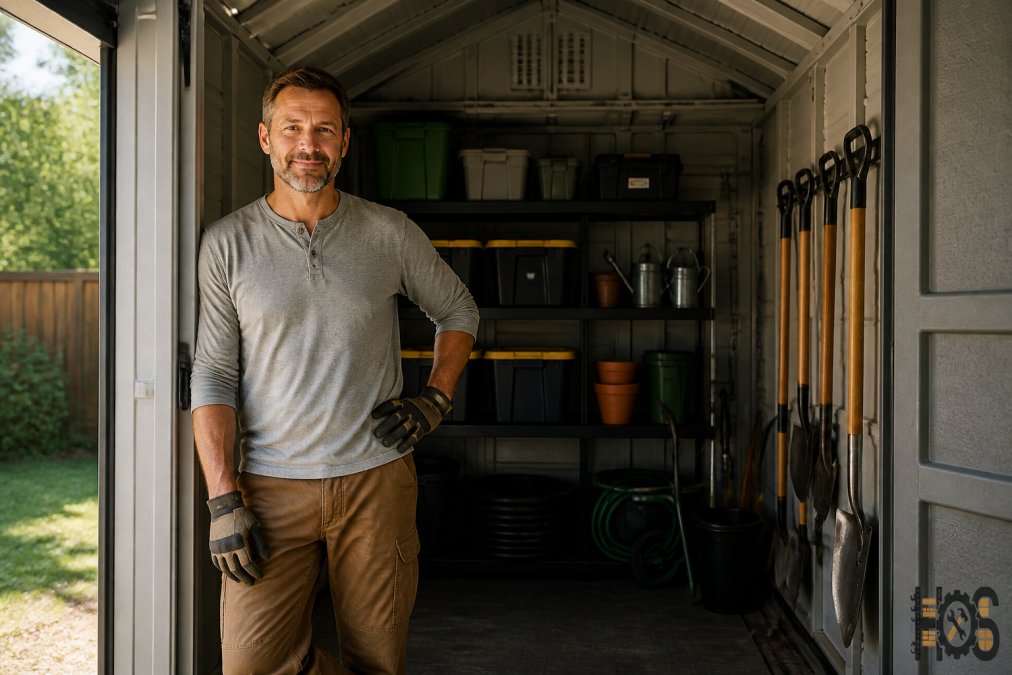
Resin, Metal, Wood, and Vinyl Compared
Resin is a molded plastic composite built for weather resistance. It won't rot, dent, or need repainting, and it handles UV exposure well. The trade-off: it flexes under heavy snow loads and can't be modified easily.
Metal sheds use galvanized steel with corrosion-resistant coatings. The 13'x20' Metal Shed from our catalog pairs double front doors with a side entry door and four vents, ensuring a fresh and moisture-free environment. Metal gives you the most square footage per dollar, but it dents and gets loud in hail.

Wood looks best and accepts shelving, insulation, and wiring without complaint. It also needs the most work: sealing every one to two years, checking for rot, and keeping pests out.
Vinyl (PVC) mimics wood's appearance with far less upkeep. It costs more upfront and cracks in extreme cold.
| Material | Upkeep | Best For | Watch Out For |
|---|---|---|---|
| Resin | Low | Wet climates, low maintenance | Flexes under heavy snow |
| Metal | Low | Maximum capacity per dollar | Dents, loud in hail |
| Wood | High | Custom builds, insulation | Rot, pests, annual sealing |
| Vinyl | Low | Curb appeal | Cracking in deep cold |
Matching Square Footage to What You Store
A 6'x8' shed holds roughly 48 square feet, enough for a push mower, wheelbarrow, and garden tools. Bikes, seasonal decorations, and patio furniture push you toward 8'x10' or larger. If you're storing a riding mower or want a workshop corner, plan on at least 10'x12'.
The rule of thumb: measure everything you plan to store, add 30% for walking room, then round up. Most people underestimate by one size.
How to Prepare a Foundation for a Shed
How to prepare a foundation for a shed comes down to three options: a gravel pad, a concrete slab, or a pressure-treated timber frame. Gravel suits resin and plastic units; concrete suits heavy metal and wood structures that won't move.
Whichever you pick, the ground must be level within a small tolerance. A shed that sits uneven will twist, and doors stop latching within a season.
- Clear and level the site, removing grass and soft topsoil
- Compact the base with a tamper or plate compactor
- Add 4-6 inches of crushed gravel for drainage
- Frame the perimeter with pressure-treated timber if using gravel
- Verify level in both directions before assembly
Skip the floor kit and your shed sits directly on soil, which invites moisture and rot. Most manufacturers void warranties when the unit isn't anchored to a proper base.
Storage Shed Permit Requirements You Need to Check First
Storage shed permit requirements vary by state, county, and city, and they hinge on a handful of measurable factors: footprint in square feet, overall height, whether the structure sits on a permanent foundation, and whether it has electricity or plumbing run to it. Most jurisdictions exempt small sheds below a set square footage, but that threshold is set locally and changes from one municipality to the next. A shed that needs no paperwork in one county can require a full building permit in the next one over.

Two different approvals are usually in play, and they are not the same thing:
- A zoning permit confirms the shed is an allowed use on your lot and that it respects setback distances from property lines, easements, and any utility right-of-way. Setbacks are commonly measured from the property line to the nearest wall or eave, so roof overhang counts.
- A building permit confirms the structure itself meets the adopted building code for wind, snow, and seismic loads. This is more often triggered by size, height, or a permanent foundation.
A practical research sequence before you order anything:
- Pull your property's plat or survey to find the actual property lines and any recorded easements.
- Search your city or county website for the shed or accessory-structure handout, which usually lists the size and height thresholds in plain language.
- Check your subdivision's recorded covenants or HOA architectural guidelines separately, since private rules can be stricter than the public code.
- Confirm whether the shed will be assessed as an improvement to the property, which can affect property taxes.
- If the shed will have power, water, or a permanent slab, ask specifically whether that changes the permit category.
Ask the planning or building department these questions directly: Is a permit required at my size and height? What are the setback requirements from each property line? Is a site plan or plot plan drawing required with the application? Are there inspection milestones during construction? What is the current application fee and review timeline?
Two rules of thumb worth remembering. First, a shed mounted on skids or a gravel pad and kept under the local size threshold is the most common path to avoiding a permit. Second, anything wired for power, plumbed, or poured onto a concrete slab tends to be treated as a permanent structure regardless of size. Skipping this step can mean fines, a stop-work order, or forced removal at your expense, and it can complicate a future property sale when a buyer's inspector flags an unpermitted structure.
U.S.
Shed Organization Ideas That Stop the Clutter Cycle
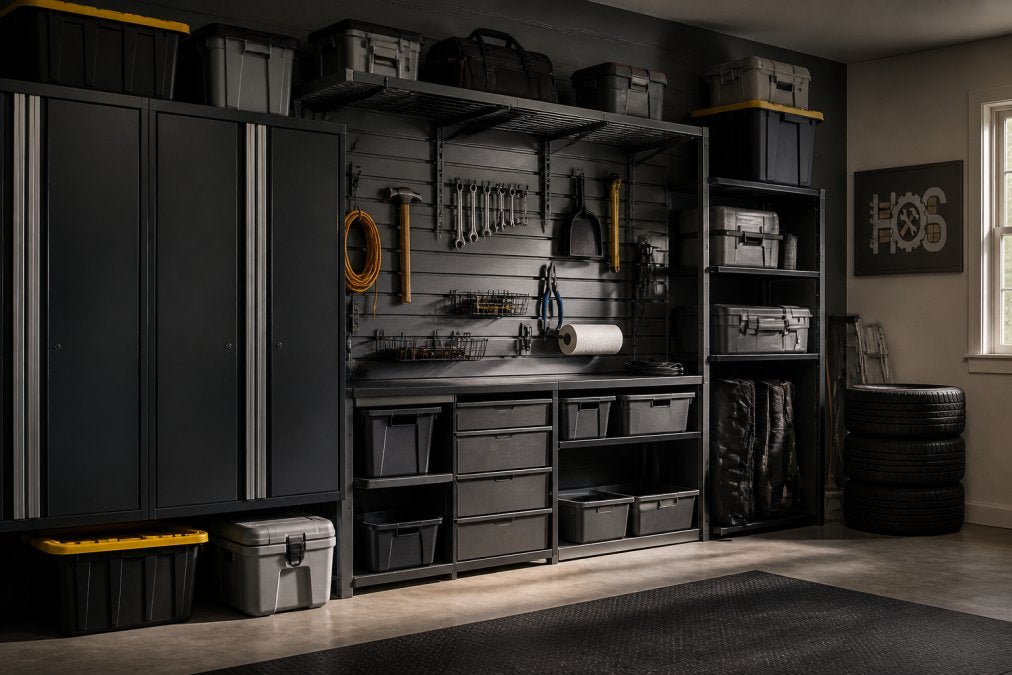
Shed organization ideas work only when they match how you actually use the space. The clutter cycle repeats because storage is treated as a dumping ground rather than a system. The fix is to design the interior in layers: floor, wall, and overhead, each with its own job.
- Vertical wall rails for long-handled tools
- Stackable clear totes for seasonal items
- A pegboard for hand tools and small hardware
- Lockable cabinet for anything valuable
- Overhead shelf for light, bulky items
- A dedicated bay for rolling equipment
Affordable, Heavy-Duty, and Prefab Storage Shed Options
Affordable, heavy-duty, and prefab storage shed options usually trade off against each other, but not always. Prefab kits ship flat, assemble with basic tools, and skip the contractor entirely.
Resin, Metal, and Plastic Picks Side by Side
| Shed | Size | Material | Price | Best For |
|---|---|---|---|---|
| 8x16Ft Resin Outdoor Storage Shed | 8' x 16' | Resin | $2,266.95 | All-weather, low upkeep |
| 13'x20' Metal Shed | 13' x 20' | Galvanized steel | $690.00 | Maximum capacity per dollar |
| 6'x8' Plastic Storage Shed | 6' x 8' | Plastic | $1,998.14 | Small yards, tool storage |
| Outdoor Storage Shed 20x13 FT | 20' x 13' | Galvanized steel | $2,218.95 | Vehicles, workshop use |
Every order from Home Outpost Supply is tracked and insured, and the metal sheds qualify for liftgate unloading at checkout if you'd rather not wrestle panels off a delivery truck.
Maintenance and Longevity: Making a Shed Last 15+ Years
Lockable doors, UV protection, and corrosion resistance do most of the long-term work. Everything else is inspection.
Frequently Asked Questions
Is it cheaper to buy a storage shed or build one yourself?
Buying a prefab storage shed usually costs less once you count materials, tools, and time. A resin or metal kit ships flat and assembles in a weekend. Building from scratch can run higher than the kit price because lumber, roofing, hardware, and permits add up fast. Prefab kits also arrive with cut panels and instructions, which removes most of the guesswork.
What items should never be stored in an outdoor shed?
Skip anything sensitive to heat, moisture, or temperature swings. Paint and solvents can freeze or become flammable. Propane tanks, gasoline, and other fuels need ventilated storage away from ignition sources. Electronics, paper photos, and musical instruments warp in humid air. If you must store them, seal them in airtight containers and add ventilation or a dehumidifier.
Do property taxes go up after installing a storage shed?
It depends on your state and county. Many jurisdictions only reassess value for permanent, foundation-anchored structures above a certain square footage. Small prefab sheds on skids often stay off the tax roll. Check your county assessor's rules and your storage shed permit requirements before you buy, since a permit can trigger an assessment.
How do I determine the right size shed for my backyard?
Measure what you plan to store, then add 30 percent for walking room and future items. A push mower, wheelbarrow, and garden tools fit comfortably in a 6x8 unit. Bikes, patio furniture, and seasonal decor need closer to 8x10 or larger. If you want a workshop corner or vehicle parking, plan on 13x20 or more.
The hard part isn't picking a shed; it's picking one that still looks and functions right a decade from now. Home Outpost Supply curates durable sheds and storage systems with tracked and insured shipping, secure payment processing, and a support team that stays with you before and after purchase. Browse the collection and add to cart with confidence that your outdoor space will finally work the way you need it to.


Leave a comment
This site is protected by hCaptcha and the hCaptcha Privacy Policy and Terms of Service apply.