

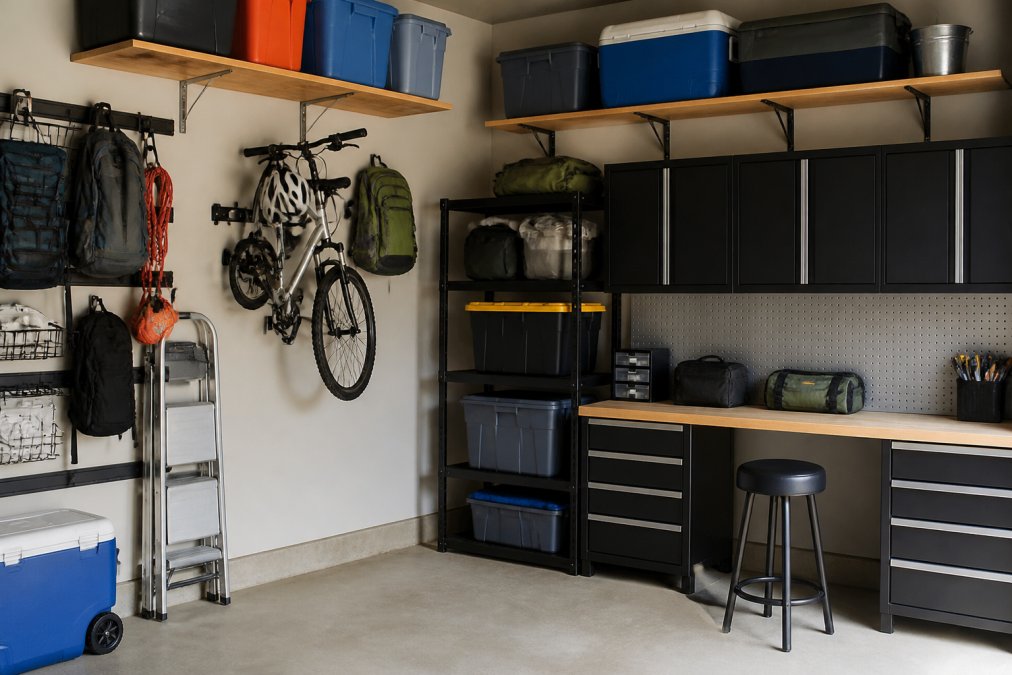
How to Organize a Small Garage: A Step-by-Step Guide
Table of Contents
- Step 1: Build Your Garage Decluttering Checklist Before You Touch a Single Shelf
- Step 2: Zone Your Small Garage by Function
- Step 3: Vertical Garage Storage Ideas That Reclaim Floor Space
- Step 4: Choose the Best Garage Shelving Units for a Small Space
- Step 5: Set Up a Labeling and Inventory System That Actually Sticks
- Step 6: Protect Your Organized Small Garage Long-Term
- Conclusion
Last Updated: August 15, 2026
Most homeowners underestimate how much usable space a small garage contains. The problem isn't square footage, 80% of that space sits above eye level, completely ignored, while the floor disappears under clutter. This guide from Home Outpost Supply walks you through a proven, step-by-step process to organize a small garage from scratch, covering everything from the initial purge to long-term maintenance systems that actually hold up. Below, you'll find the exact workflow that transforms a cluttered two-car or single-car garage into a functional, stress-free space, including the safety checks most guides skip entirely.
A small garage doesn't need more storage. It needs smarter storage, placed in the right order.
Step 1: Build Your Garage Decluttering Checklist Before You Touch a Single Shelf
Starting with storage products before you declutter is the single biggest mistake homeowners make. You end up organizing clutter, not eliminating it, and the garage fills back up within six months.
Block out a weekend morning, pull everything out onto the driveway, and don't put a single item back until you've made a decision on it.
Sort Into Four Categories: Keep, Donate, Sell, Trash
Use four clearly labeled zones on your driveway:
- Keep: Items you've used in the last 12 months or genuinely need for seasonal tasks
- Donate: Functional items you no longer use; local shelters, Habitat for Humanity ReStores, and community groups accept most tools and sporting goods
- Sell: Higher-value items worth listing on local marketplaces (give yourself a two-week deadline, then donate what doesn't sell)
- Trash: Broken, expired, or hazardous items; check your municipality's guidelines for disposing of paint, chemicals, and batteries through EPA's household hazardous waste disposal resources
If you can't assign something to a category in 30 seconds, it goes in the donate pile. Indecision is how garages re-clutter.
Measure Your Square Footage and Map the Layout
Before buying a single shelf or hook, measure your garage. Record the total floor area, ceiling height, and the exact location of doors, windows, electrical panels, and HVAC units. These fixed obstacles define your storage boundaries.
Sketch a simple layout on graph paper or use a free floor-plan tool. Mark which walls receive the most natural light and which are closest to the house entry. This map becomes your reference for every storage decision ahead.
Step 2: Zone Your Small Garage by Function
Zoning separates a garage that stays organized from one that devolves back into chaos within a season. A garage zone is a dedicated area assigned to a specific category of items, so everything has a logical home.
Common Zones That Work in Tight Spaces
For most small garages, four zones cover the majority of storage needs:
| Zone | What Goes Here | Best Wall/Area |
|---|---|---|
| Active Tools | Hand tools, power tools, workbench | Side wall near entry |
| Lawn & Garden | Mowers, rakes, shovels, fertilizer | Back wall or corner |
| Sports & Recreation | Bikes, balls, helmets, camping gear | Side wall with vertical hooks |
| Seasonal Storage | Holiday décor, winter gear, spare tires | Overhead ceiling racks |
Keep high-frequency zones closest to the garage entry. Seasonal storage belongs overhead or in the deepest corners.
Accessibility and Ergonomics: Who Uses What, and How Often
Store items used daily or weekly between knee and shoulder height. Anything above shoulder level should be lightweight and infrequently accessed. Heavy items belong on lower shelves with clear labels so you're never lifting blind overhead.
If the garage is shared with aging family members or anyone with mobility considerations, factor in wider pathways (at least 36 inches clear), pull-down storage solutions for overhead areas, and avoid placing frequently needed items behind other objects. According to the American Occupational Therapy Association's home modification resources, accessible storage design significantly reduces fall risk in home environments.
Step 3: Vertical Garage Storage Ideas That Reclaim Floor Space
The floor is the most expensive real estate in a small garage. Vertical garage storage ideas solve this by treating walls and ceilings as the primary storage surface.
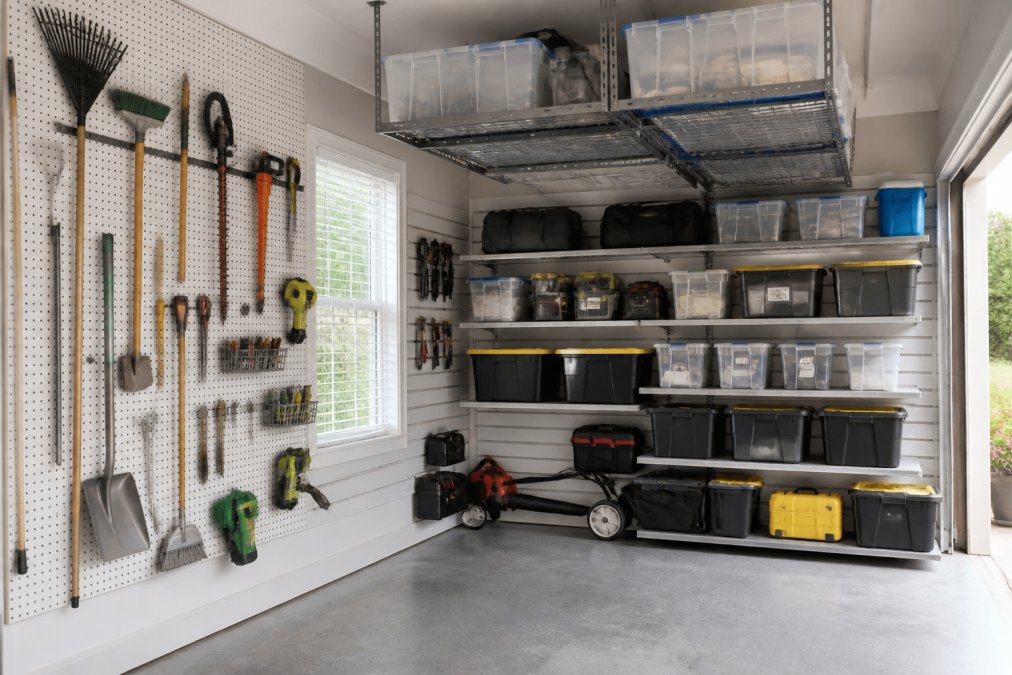
Wall-Mounted Systems: Pegboards, Slat Walls, and Track Systems
Pegboard is the most affordable and DIY-friendly option. A 4×8-foot sheet covers a significant tool wall and accepts many hooks and bins. Standard pegboard handles light to medium tools well but isn't ideal for heavy power tools.
Slat wall panels offer more flexibility. The horizontal channels accept interchangeable accessories, shelves, and baskets that you can reposition without drilling new holes. Slat wall systems handle heavier loads than pegboard and look cleaner.
Track systems are the most modular option. A single horizontal track can hold multiple accessories side by side. Many homeowners combine a track system with pegboard or slat wall below for a layered organization system.
Overhead Ceiling Storage for Seasonal Items
Garage ceiling storage is the most underused space in most homes. A standard single-car garage with an 8-foot ceiling has enough overhead clearance for ceiling-mounted platforms or hanging racks that hold hundreds of pounds of seasonal items, holiday bins, camping gear, and spare tires.
Ceiling storage platforms mount to ceiling joists and drop 12 to 24 inches from the ceiling. Use clear storage bins with labels so you can identify contents without pulling everything down.
Weight Capacity and Structural Safety: What You Must Check First
Every wall-mounted system, overhead rack, and heavy-duty shelf has a weight rating. Exceeding it creates a genuine safety hazard.
Before mounting anything, locate your studs. Wall anchors rated for drywall alone will not hold a slat wall system loaded with tools. Overhead ceiling racks must be secured to ceiling joists, not drywall. For a typical garage, joists are spaced 16 or 24 inches on center.
Check the manufacturer's stated weight capacity for every system you install, and stay below 80% of that rating to account for shifting loads over time. For overhead storage specifically, consult OSHA's guidelines on overhead storage safety in residential and commercial settings for structural loading principles.
Step 4: Choose the Best Garage Shelving Units for a Small Space
The best garage shelving units for a small space balance load capacity, footprint, and adjustability.
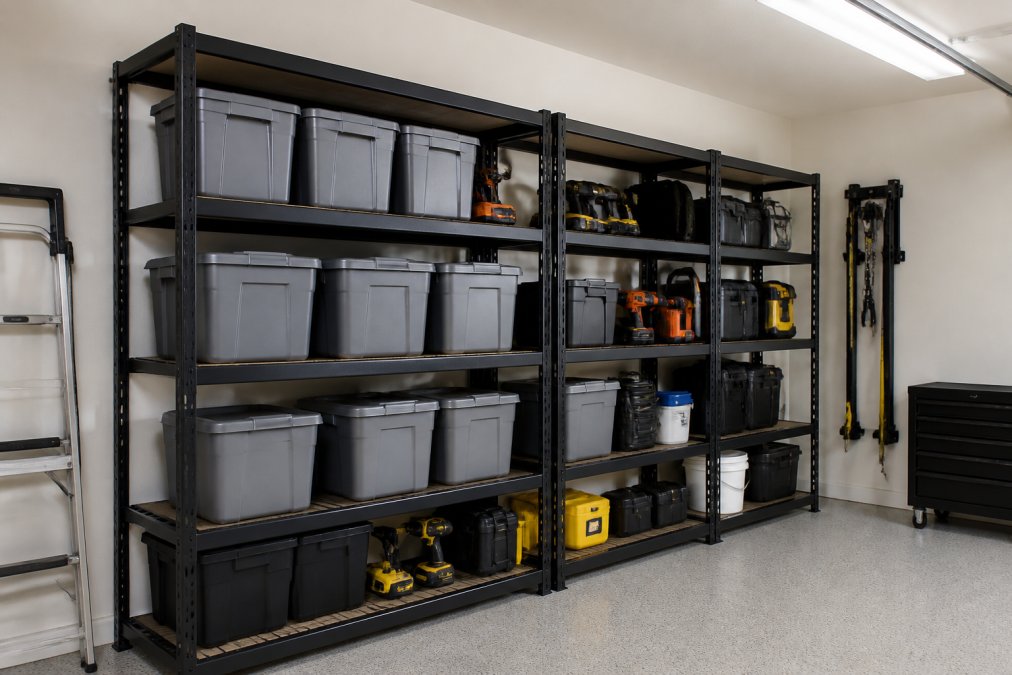
Heavy-Duty Freestanding Shelving vs. Wall-Mounted Units
Freestanding heavy-duty shelving is the workhorse of garage storage. Steel wire or solid steel shelving units with adjustable shelf heights handle bulk storage, toolboxes, and automotive supplies without requiring wall anchors. Always anchor freestanding units to prevent tip-over.
Wall-mounted shelving reclaims floor space entirely and looks cleaner, but maximum load per shelf is typically lower than a freestanding unit's total capacity. For a small garage, a combination of both often works best: freestanding units along the back wall, wall-mounted shelves on side walls.
Modular Storage Systems: Flexible and Space-Saving
Modular storage systems are worth the investment for small garages because they adapt as your needs change. Look for systems with adjustable shelf spacing (at minimum every 2 inches), consistent load ratings across all components, and accessories that integrate with your wall track or slat wall system.
A modular approach means you can start with the sections you need most and expand gradually, a practical advantage when working within a budget.
Home Outpost Supply carries a curated selection of durable modular garage storage systems designed specifically for smaller footprints, with insured shipping and dedicated support.
Step 5: Set Up a Labeling and Inventory System That Actually Sticks
A labeling system is the difference between an organized garage and one that looks organized for three weeks. Without labels, items migrate and zones collapse.
The most effective labeling approach combines a physical label on every bin and shelf with a simple inventory list.
For physical labels:
- Use a label maker for permanent, weather-resistant labels on bins and drawers
- For pegboard and slat wall sections, use a paint marker or printed card holders to label each zone
- Apply labels to the front face of bins, not the top
For inventory management:
- Keep a simple running list (notes app, spreadsheet, or laminated card) of what's in each overhead bin
- Update it every time you rotate seasonal items in or out
- Number your bins and match them to your inventory list
Step 6: Protect Your Organized Small Garage Long-Term
Staying organized requires controlling the environment and building a maintenance habit. Most garages fall back into chaos not because the system failed, but because no one maintained it.
Climate Control and Moisture Management
Moisture is the hidden enemy of garage organization. Tools rust, cardboard boxes collapse, and stored fabrics develop mildew from humidity that's easy to ignore until damage occurs.
For garages in humid climates or regions with significant temperature swings:
- A dehumidifier set to maintain relative humidity between 40% and 50% prevents most moisture damage
- Store items sensitive to temperature (paint, adhesives, certain batteries) inside the house
- Use sealed plastic storage bins instead of cardboard for long-term storage
- Check wall penetrations, door seals, and the garage floor for moisture intrusion annually
According to the Department of Energy's guidance on garage insulation and air sealing, an insulated and air-sealed garage maintains more stable temperatures year-round, extending the life of stored items.
Seasonal Rotation and Ongoing Maintenance
Schedule a rotation in spring (swap winter gear for lawn and garden equipment) and again in fall. Each rotation is the natural moment to reassess what you're keeping, discard anything broken, and update your inventory list.
A quarterly 15-minute walkthrough, checking that items are in their designated zones and labels are readable, prevents the slow drift that leads to a full declutter every two years.
Reclaiming a small garage is one of the highest-return home improvement projects a homeowner can tackle: more usable space, less daily frustration, and a safer environment for tools and family alike. Home Outpost Supply offers a curated selection of durable garage storage systems, from heavy-duty shelving and modular wall systems to overhead ceiling racks, all backed by insured shipping and dedicated support. Browse the full garage storage collection at Home Outpost Supply and add the system that fits your layout to your cart today.
Frequently Asked Questions
What are the first steps to organize a small garage?
Start by removing everything from the garage so you can see the full space. Sort items into four piles: keep, donate, sell, and trash. Measure the floor space and wall height, then sketch a rough layout before buying any storage products. Zoning the space by function, tools, sports gear, seasonal items, before adding shelving or wall systems prevents you from buying storage that doesn't fit how you actually use the garage.
How do I maximize vertical storage in a small garage?
Mount pegboards or slat wall panels from roughly 48 inches off the floor up to the ceiling to keep tools visible and off the floor. Add overhead ceiling racks above the car hood area for seasonal items like holiday bins and camping gear. Wall-mounted track systems with adjustable hooks and baskets let you reconfigure the layout as your storage needs change. Always check the weight capacity of your wall studs before mounting anything heavy.
What are the most common garage organization mistakes?
Buying shelving before decluttering is the biggest mistake, you end up storing things you don't need. Other frequent errors include ignoring vertical wall space, skipping a labeling system so items never return to the right spot, and placing heavy overhead storage on drywall anchors instead of structural ceiling joists. Failing to account for moisture and temperature swings can also warp wood shelves and damage stored items over time.
Will a garage storage system actually work in a very small one-car garage?
Yes, most modular wall-mounted and overhead storage systems are designed to scale down to single-car and even tandem garage layouts. The key is prioritizing vertical storage over floor footprint. A combination of wall-mounted shelving, a pegboard tool wall, and ceiling-mounted overhead racks can free up significant floor space even in a garage under 200 square feet. Measure your wall and ceiling dimensions carefully and choose systems sold in adjustable, modular configurations.
This article was written using GrandRanker



Leave a comment
This site is protected by hCaptcha and the hCaptcha Privacy Policy and Terms of Service apply.