

Article: I Didn’t Need More Tools. I Needed a Better Garage
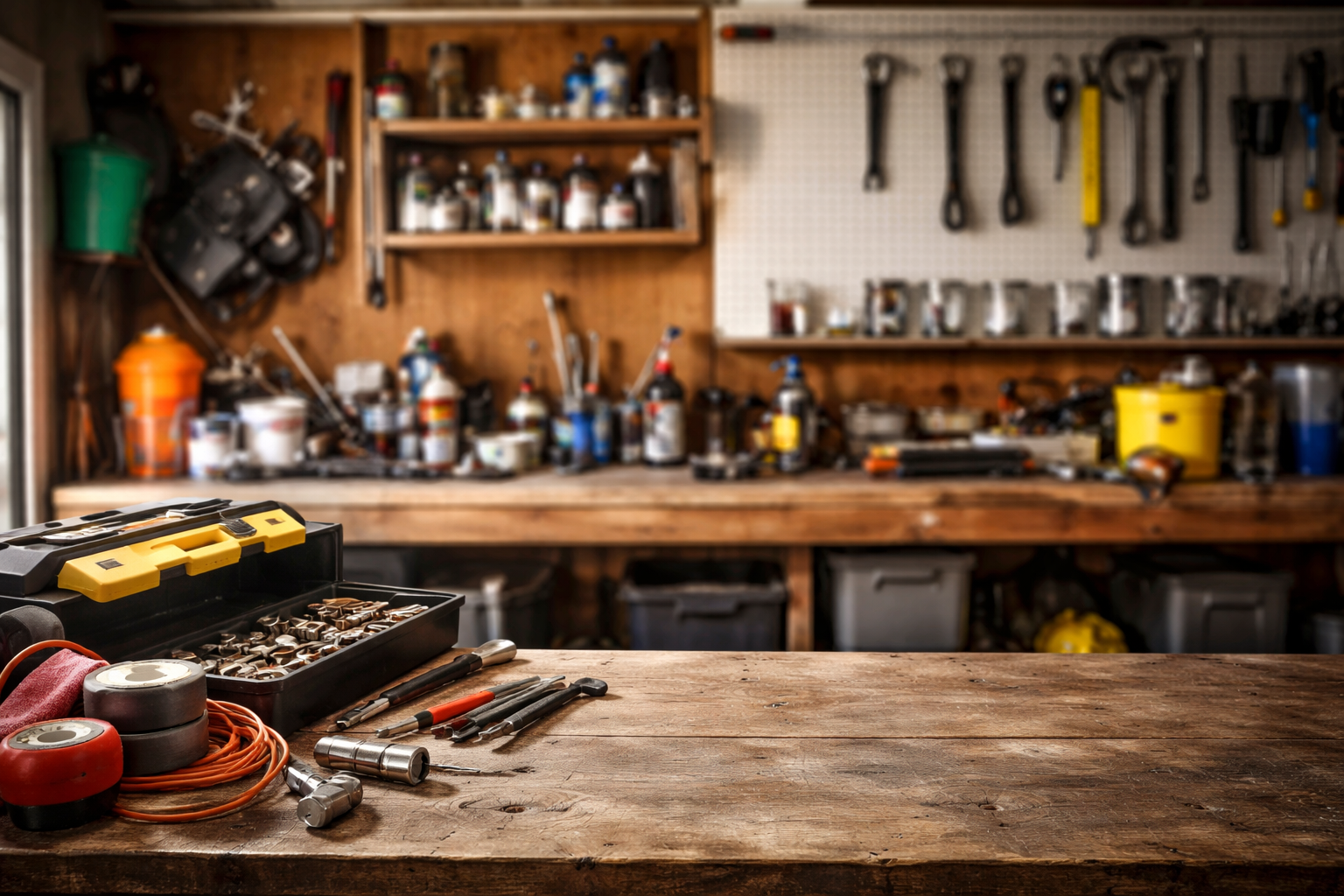
I Didn’t Need More Tools. I Needed a Better Garage
It started with a sound that every dad hates.
Not a loud crash. Not a warning light. Not smoke rolling out from under the hood.
Just a weird metallic scraping sound that shouldn’t have been there.
My daughter pulled into the driveway just after sunrise with that look on her face that said she was trying not to panic and trying even harder not to be late.
“Dad,” she said, stepping out of the car before the engine was even fully off, “my car is making a horrible noise.”
I was still holding my coffee. Still halfway into my morning. The dogs were pressed against the front window barking at absolutely nothing, because apparently that is their job now. The air had that cool morning bite to it. The whole day felt like it hadn’t even started yet.
Then she started the car again.
There it was.
A dragging, rattling, scraping sound from underneath the front end, like a thin piece of metal was hanging down and skimming the road.
Not good.
Not catastrophic, maybe. But not good.
She looked at me with wide eyes. “I have to leave for work in twenty minutes.”
Of course she did.
Because car problems never happen on a lazy Saturday afternoon when you have time, good light, and patience. They happen when everybody is already in motion, when the clock is moving faster than it should, when somebody is depending on you to know what to do.
I set my coffee down on the porch rail and told her, with the calm confidence dads are legally required to fake, “Pull it into the garage.”
She did.
The car eased in, making that scraping sound the whole way, like it was personally mocking me. I crouched down and took a quick look underneath. Sure enough, a section of the underpan or heat shield had come loose. It wasn’t hanging by much, but it was hanging enough. If I could get under there, take a few screws out, snug something back into place, maybe swap a missing fastener, I could probably buy her enough time to get safely to work and back.
Simple job. Ten minutes. Fifteen max.
That’s what I told myself.
I knew exactly what I needed.
My tool set.
The good one. The one with the ratchet and all the sockets and bits, including the 7 mm I was almost certain I needed to access the underpan. I could picture it in my head. Black case. Red latches. Slight crack on the corner from where it had fallen off the workbench last summer. I knew it was here. I knew I had seen it recently.
I walked over to the bench.
Not there.
No problem.
I moved a tape measure, a pair of gloves, a flashlight that may or may not work, three screwdrivers, a paint stir stick, a box of deck screws, and a random single shoe that nobody has claimed in at least six months.
No tool set.
That was annoying, but not yet alarming.
I checked under the bench. Behind the bench. On the shelf next to the bench. On top of the mini fridge that doesn’t work but somehow still earns floor space in the garage.
Nothing.
Behind me, my daughter asked, “Did you find it?”
“Almost,” I said.
That was not true.
I started opening cabinets. I moved a leaf blower. Lifted a bucket. Shifted a bin full of extension cords that looked like they’d been organized by a raccoon. The dogs were in the house now, barking because they could hear voices and because their internal mission statement appears to be increase stress whenever possible.
My daughter stood by the driver’s side door, arms crossed, checking the time on her phone every thirty seconds like she could physically make it stop.
I could feel the pressure rising.
This should have been easy.
That was the worst part.
Not that something had broken. Things break. Not that she needed help. Kids need help, even when they’re old enough to drive themselves to work. The worst part was knowing I had the exact tool I needed and not being able to put my hand on it when it counted.
That kind of frustration hits differently.
I went back to the bench, because that’s where I knew I had left it. I could see myself using it the last time. I could almost replay it. I had opened the case, grabbed a bit, tightened something, closed it, and set it down right there.
Except right there was now buried under the kind of clutter that doesn’t arrive all at once. It sneaks in. One project at a time. One “I’ll put that away later” decision at a time. One rushed afternoon. One unfinished task. One rainy weekend. One week where life gets busy and the garage turns into a holding area for everything you don’t want to deal with yet.

A garage doesn’t become hard to use overnight.
It becomes hard to use by inches.
I shoved aside a stack of sandpaper packs, an old caulk gun, a half-empty bag of grass seed, and a cracked plastic organizer filled with mystery hardware that I’ve kept for so long it now qualifies as an emotional support container.
Still no tool set.
I muttered, “Where the hell are my tools?”
My daughter heard me.
“Dad,” she said, with the kind of voice only daughters can use, where concern and annoyance are somehow mixed together, “I really need to go.”
“I know. I know.”
I dropped to one knee and looked under a side shelf. I found a dead flashlight, a single jumper cable, two golf balls, and a wrench I didn’t even realize I owned.
Not the tool set.
The dogs were barking louder now. One of them had apparently seen a squirrel. The other one was barking because the first dog was barking. Teamwork.
I stood up too fast, bumped my head on the corner of an open cabinet door, and for one brief moment considered just cutting the whole loose piece off the car with tin snips and pretending that counted as a repair.
Instead, I found an old socket set in a plastic case near the back wall. Not the good one. Not the complete one. But a socket set.
“Got something,” I said, trying to sound more victorious than I felt.
I grabbed the ratchet and a bit that looked about right and slid under the front bumper. The concrete was cold against my shoulder. Dust stuck to the back of my shirt. From underneath, I could see the problem better: a corner of the splash shield or heat shield had sagged, and one of the fasteners was either missing or hanging on for dear life.
I reached up and fitted the socket onto the first bolt.
Too big.
Back out.
Swapped it.
Back under.
Too small.
Back out again.
My daughter exhaled sharply. “Is that not it?”
“Not yet.”
I tried another one. Then another. I finally found one that seated, only to realize it was slipping because it wasn’t the right type of bit at all.
I slid back out and stared at the open case. Half the pieces were missing. Of course they were. This wasn’t a set. It was the ghost of a set. It was a reminder that at some point I had borrowed from it, misplaced half the contents, and kept pretending it still counted.
I looked around the garage and suddenly saw it the way a stranger would.
Not as a workspace.
Not as a man’s garage.
Not as a place where “I know where everything is,” even though that sentence is one of the great lies told by homeowners everywhere.
I saw a room full of almosts.
Almost organized.
Almost useful.
Almost under control.
There were tools everywhere, which is another way of saying there were tools nowhere. On the bench. In drawers. In buckets. On shelves. In old shopping bags. In coffee cans full of screws and bolts and washers that might one day be useful if I ever happened to need exactly one rusted 1998 mystery fastener.
It looked like a place where work happened.
It did not look like a place designed to help anyone actually get work done.
My daughter checked her phone again. “Dad, I’m serious. I am calling an Uber!"
I nodded and went hunting again.
This time with urgency.
I opened every drawer. I lifted lids off bins that had nothing to do with tools. Christmas lights. Spray paint. Old cords that power devices we no longer own. A box labeled KITCHEN that somehow ended up in the garage two moves ago and has been sitting there ever since like a family secret nobody wants to discuss.
I found pliers. Utility knives. Two hammers. Four tape measures. Enough Allen wrenches to assemble a medium-sized city. No 7 mm.
Then I saw a small magnetic tray on the corner of a shelf with a few scattered sockets in it. I grabbed one, then another. I found an extension bar in a drawer. A ratchet under a rag. It was like trying to build a tool kit from archaeological remains.
Piece by piece, I assembled enough to try again.
Back to the car.
Down on the floor.
Arm stretched under the underpan.
The bit caught.
Finally.
I turned it.
One quarter turn.
Then the ratchet slipped because the socket wasn’t locked in all the way.
I hit my knuckles on the edge of the shield.
From the doorway my daughter said, “This is not helping my stress level.”
Mine either, I thought.
The dogs were now full-volume. One was scratching at the door to get out into the garage. I could hear the nails clicking and scraping. The other had switched to that high-pitched bark that sounds like a car alarm in emotional distress.
I backed out from under the car again and sat on the concrete for a second, breathing hard, staring at the mess around me.
It wasn’t just this morning.
That was the thing.
This wasn’t really about one missing tool set.
This was about every little moment that had led here. Every time I finished a project and set something down instead of putting it back. Every time I told myself I’d organize the bench next weekend. Every time I bought something for the garage without deciding where it would live. Every time I accepted a little more disorder because life was busy and the consequences didn’t feel immediate.
Until they were immediate.
Until my daughter needed help.
Until the clock was running.
Until a simple fix turned into a frantic search because I could not access the things I already owned.
She stepped closer and looked at me, and now the frustration on her face had started to tip toward worry.
“Never mind,” she said. “I need to go. I hope my Uber driver doesn't try to kill me or my car doesn’t blow up when I get it after work.”
That hit harder than it should have.
Not because I thought it would actually blow up. It wouldn’t. But because it was the kind of sentence people say when they don’t feel taken care of. When they’re frustrated. When they’ve run out of patience and trust the situation less than they did ten minutes earlier.
And I got it.
She wasn’t mad about the car, not really.
She was mad because mornings are already hard. Because work is waiting. Because adulthood comes fast and expensive and inconvenient. Because she came to her dad for help and got a front-row seat to him tearing through a chaotic garage like a man trying to solve a puzzle he built himself.
I stood up and said, “Hang on. Two more minutes.”
I don’t know why she believed me, but she did.
Maybe because hope is stubborn.
Maybe because daughters still want dads to pull things off, even after they’re old enough to roll their eyes.
Maybe because she saw in my face that I had moved past irritation and entered that dangerous, determined zone where either I fix the problem or I completely rethink my life.
I went back to the bench one last time.
This time I stopped looking for the whole case.
I looked for evidence.
The extension I had used last time. The tray where I sometimes emptied my pockets. The corner where small things disappeared behind stacked rags and product boxes. I pulled everything forward.
And there it was.
Not on the bench.
Behind it.
Wedged between the wall and the back leg of the workbench, standing on its side like it had been hiding from me for sport.
The black case. Red latches. Crack in the corner.
My actual tool set.
I grabbed it so fast I almost laughed.
“There you are.”
My daughter didn’t laugh.
I snapped the latches open on the floor, and it was beautiful. Every piece in its place. Every size lined up. Every bit visible in one glance. The exact thing I needed, right where it should have been inside the case.
I found the 7 mm.
Back under the car.
This time the tool fit cleanly. No slipping. No guessing. Just the solid, satisfying feel of the right tool meeting the right fastener. I removed the loose bolt, shifted the panel, checked the shield, and found the section that had dropped. One clip was gone. Another was barely hanging on. I tightened what I could, improvised a temporary hold to keep the shield from dragging, and gave it a tug to make sure it would last through the workday.
Not a permanent repair.
But safe enough for now.
I slid out and stood up, dust on my shirt, dirt on my hands, one knee sore, coffee cold somewhere outside, dogs still yelling about whatever fresh injustice they had discovered in the yard.
“Start it,” I said.
I heard a door slam. My daughter in the back seat of a dark sedan car.

"Come on honey. I got it."
My daughter got out of the dark sedan and did something on her phone and the car drove off.
She started the car. Visibly upset that she let her ride to work leave.
The scraping was gone.
Just the normal hum of the engine.
She looked at me, waiting for my verdict.
“You’re okay for today,” I said. “Drive carefully. We’ll do it right later.”
The relief on her face came fast and quiet. Her shoulders dropped. Her whole expression changed. Just like that, the panic left the driveway.
“Thank you,” she said.
And then because she is my daughter and mercy is not one of her strongest gifts, she added, “You really need to organize this garage.”
Then she backed out and left for work.
I stood there in the open garage doorway and watched her car disappear down the street.
Then I turned around and looked at the garage.
Really looked at it.
The workbench piled with half-finished intentions. The shelves holding things without systems. The tools that existed but weren’t accessible. The floor space wasted by stuff that didn’t belong there. The drawers full of mixed purpose and bad habits. The way I had gotten used to inconvenience because it arrived in small doses.
That morning exposed something bigger than clutter.
It exposed friction.
And friction costs you.
It costs you time when you’re in a hurry. It costs you patience when stress is already high. It costs you confidence when someone needs you to know what you’re doing. It turns simple jobs into dramatic ones. It makes your home feel less supportive than it should.
A garage should not fight you every time you walk into it.
It should help you.
It should work like part of the home’s operating system. A place where things are easy to find. Easy to reach. Easy to put back. A place where the right tool is there when life gets loud, when time gets short, when a daughter needs to get to work and a dog is losing his mind and something under a car is scraping against the driveway.
That morning, I realized something I should have admitted a long time ago:
I didn’t need more tools.
I needed a garage that was easier to use.
That is a different problem.
And it is a better problem to solve.
Because once you see it, you start to understand that organization is not about making a garage look pretty. It is not about matching bins or perfect shelves or some polished social media version of a workshop where nobody has ever dropped a screw into a crack in the concrete.
It is about function.
It is about being able to step into your garage and get what you need without a scavenger hunt.
It is about reducing stress at the exact moment life tries to increase it.
It is about creating a home base that actually supports the people who live there.
That morning gave me a glimpse of both versions of a garage.
The first version was the one I had: cluttered, familiar, and full of hidden inefficiencies I had learned to tolerate.
The second version was the one I suddenly wanted: simple, useful, dependable, set up for real life.
Not perfect.
Useful.
That is the standard that matters.
Because real life is noisy. Real life is rushed. Real life includes daughters who need to leave in twenty minutes, dogs who bark at nothing, projects that don’t stay neat, and days when the smallest problem feels bigger because it lands at the worst possible time.
A good garage doesn’t remove real life.
It helps you handle it.
That morning was the moment I stopped thinking of the garage as a place to store things and started thinking of it as a system that should serve my family.
And if I’m being honest, it was overdue.
So this is where the story starts.
Not with a perfect makeover.
Not with a clean reveal.
Not with one of those before-and-after photos where the “after” looks so spotless you’d be afraid to put a single screwdriver down.
It starts with a scraping sound. A daughter on the edge of being late. Dogs barking. A dad searching for the right tool in all the wrong places. A quick repair that should have taken ten minutes and somehow swallowed the whole morning.
It starts with the moment the problem finally becomes clear enough to name:
I need to make my garage easier to use.
And now that I’ve said it out loud, I can’t unsee it.
In the next post, I’m going to show you what happened when I stopped blaming myself for being “disorganized” and started rebuilding the garage around one simple question:
What should be easy to find, easy to grab, and easy to put back when life gets real?
Because once I asked that question, everything changed.


Leave a comment
This site is protected by hCaptcha and the hCaptcha Privacy Policy and Terms of Service apply.